
Sidel Cermex RoboSELEX: Before Case Packing
Review Sidel's RoboSELEX announcement: glass-bottle handling limits, conflicting changeover times and checks at the interface with a case packer.
A scope error between bottle collation and case packing can lead to costly rework in an equipment specification. Sidel announced Cermex RoboSELEX as a robotic grouping system for feeding case packers; its announcement does not establish compatibility with your glass bottle.
Cover illustration: a conceptual bottle-grouping sequence, not RoboSELEX machinery or evidence of glass-bottle compatibility.
For glass-bottling teams, the useful question is whether the proposed handling and transfer can work with a defined, filled bottle and its downstream packer. Sidel’s March 2026 announcement describes lightweight-bottle handling for food, home care and personal care. Read it as a supplier announcement, then use bottle drawings, contact-point checks and a joint transfer trial to assess a particular glass application. This guide separates published descriptions from the evidence still needed for a purchase decision.
- RoboSELEX groups bottles before packing; the packer remains a separate function.
- The published speed range is a supplier specification, not demonstrated output for your line.
- The product page and announcement use different bottle-changeover figures.
- Glass compatibility, US delivery and the installed interface need project-specific confirmation.
What did Sidel announce?
On March 10, 2026, Sidel announced that RoboSELEX would premiere with live demonstrations at Interpack, scheduled for May 7–13, 2026, in Düsseldorf. The announcement describes robotic collation without accumulation. It identifies food, home care and personal care as the relevant markets in its RoboSELEX discussion; that is not a glass-specific qualification statement.
The official announcement is evidence of Sidel’s stated plans and claims. An announced demonstration is not evidence that a particular installation has achieved the same behavior. Nor should a later media report’s date replace the original announcement date.
For readers coming from our Buying Resources, the immediate output is a scope question: are you evaluating grouping alone, a new packer with grouping included, or a retrofit? The wider case-packing and palletizing guide covers the subsequent packaging tasks.
Takeaway: Define the purchased function before using the announcement in a line specification.
Where does the collator sit in the bottle flow?
Sidel’s product page describes two Delta robots positioning comb tooling in continuous motion. It says upstream conveyor speed variation provides bottle spacing and pitching. Our reading is that the transfer into the packer is a separate integration question, even where the grouping function is supplied with the packer.
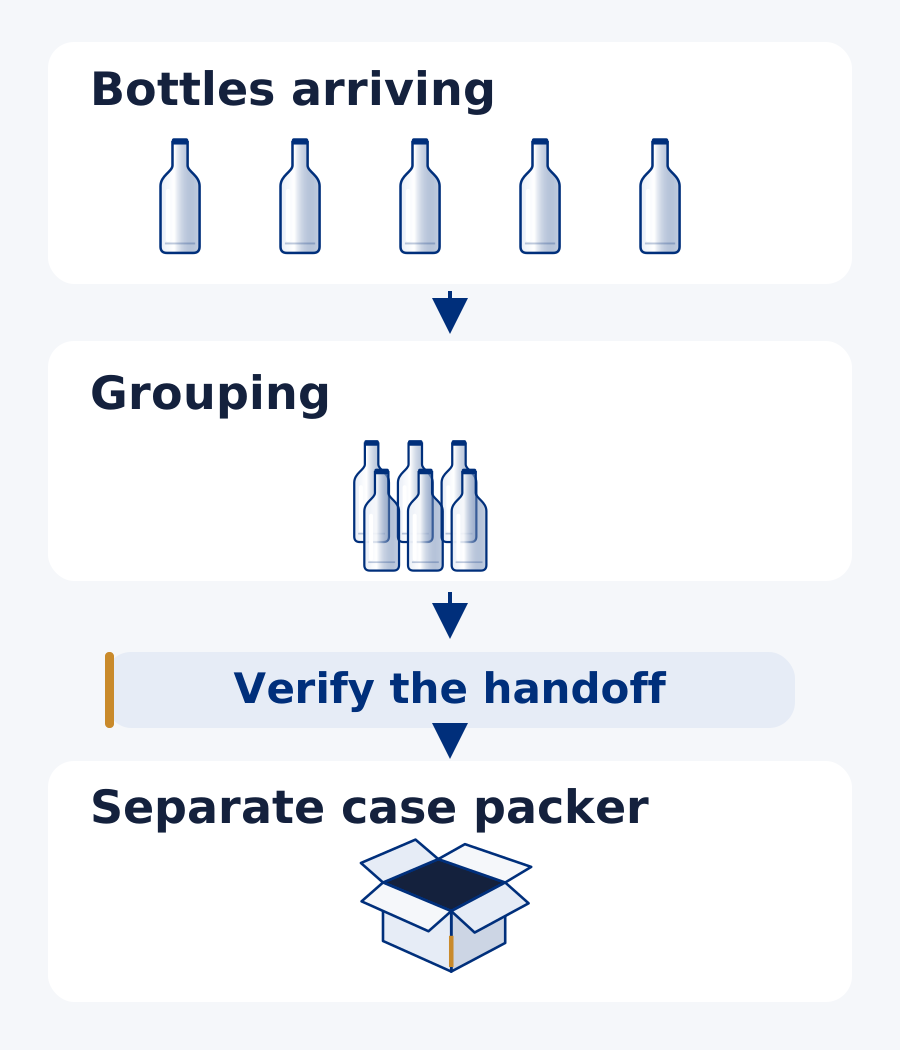
Ask the integrator to identify who controls arrival spacing, who authorizes a group transfer, and what happens when the packer stops. These are editorial recommendations for defining the handoff, not published RoboSELEX control specifications. Put the answers in the same layout used for planning a glass bottling line.
The condition of arriving containers also belongs in that discussion. The depalletizer and infeed guide addresses an earlier stage; it does not establish suitability at the filled-bottle packing transfer. Specify the bottle state at each interface rather than reusing one handling approval across the line.
Common mistake: Reading a broad statement about feeding different case packers as confirmation that an existing packer can accept this system without modification.
Takeaway: Obtain a defined handoff and stop/restart sequence from the responsible integrator.
Which published figures need conditions attached?
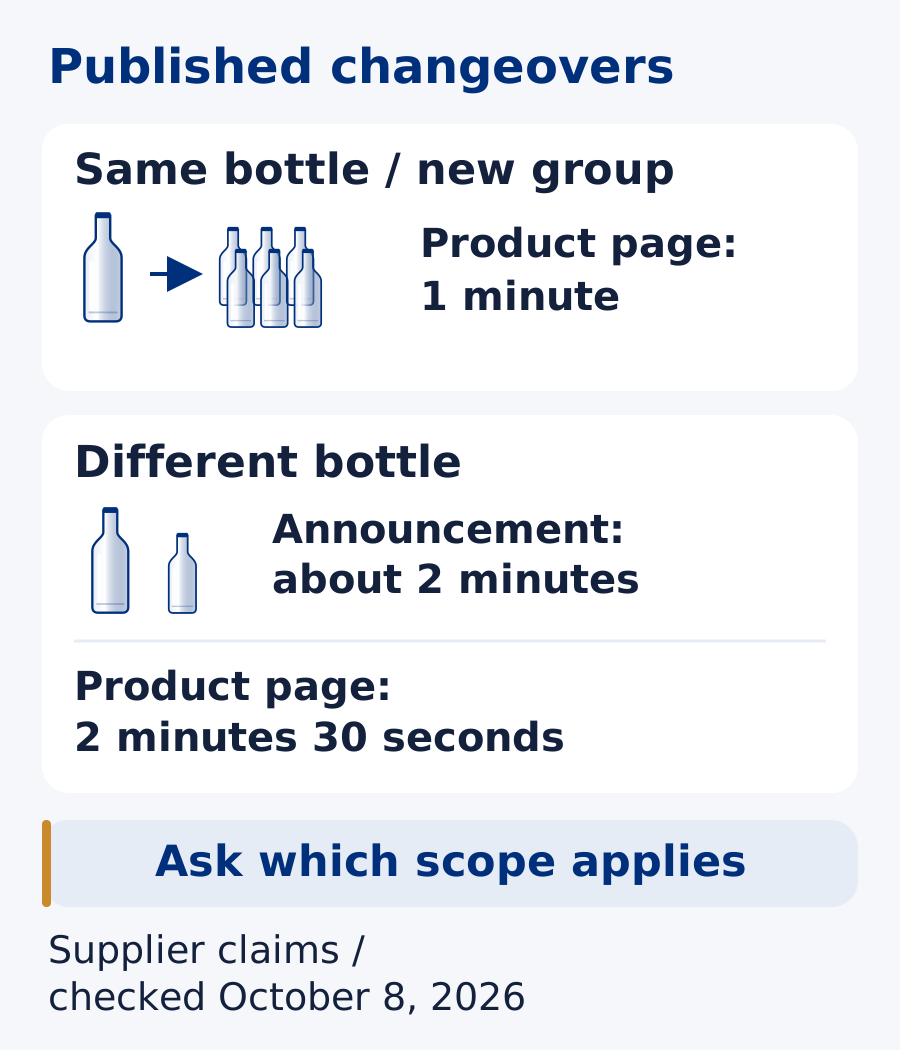
Sidel’s product page lists 80–320 bottles per minute and collations from 3 × 1 to 8 × 6 products, depending on product size. Those figures describe the offered system range. They do not pair each bottle, group and packing configuration with a demonstrated operating rate, and they are not a guarantee of finished-case output.
Swipe or scroll horizontally to see all columns.
| Published item | Source wording summarized, checked October 8, 2026 | What a glass-line team should request |
|---|---|---|
| Speed | Product page: 80–320 bottles/min | Rate for the exact filled bottle and group |
| Group size | Product page: 3 × 1 to 8 × 6 products, depending on size | Group drawing, orientation and packer acceptance |
| Same bottle, different collation | Product page: 1 minute | Defined start/end points and included adjustments |
| Different bottle | Product page: 2 minutes 30 seconds; March announcement: about 2 minutes | Written clarification for the proposed configuration |
Both sources come from Sidel. The discrepancy in the last row is unresolved; do not average the figures or choose the shorter one as a contractual target. Our bottle-changeover guide helps separate format work from the broader restart process.
If capacity is the reason for investigating the system, identify the constraint first. Compare the packing transfer with the required output from glass-bottle filling equipment and the downstream packing task. A faster grouping specification alone does not determine how many accepted cases leave the line.
Takeaway: Attach a bottle, group, rate and timing definition to every performance discussion.
What should be checked specifically for glass bottles?
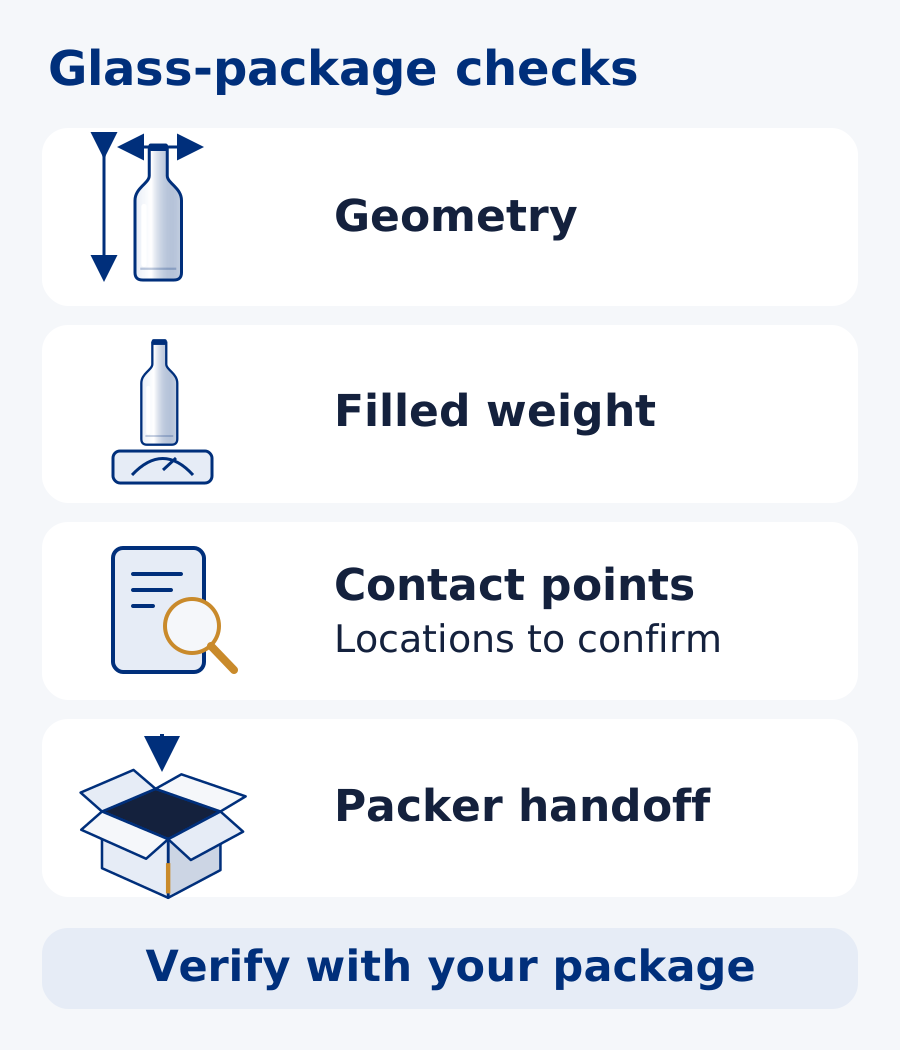
The reviewed material does not demonstrate that RoboSELEX handles a defined glass-bottle range. For this site’s readers, the next step is a sample-based assessment of geometry, filled weight, contact points and transfer behavior. The following checklist is our proposed review record, not a Sidel-approved test procedure or a statement of machine capability.
Swipe or scroll horizontally to see all columns.
| Review item | Record before a trial | Ask the supplier to demonstrate |
|---|---|---|
| Bottle geometry | Current drawing, shoulder/base profile and dimensional tolerances | Intended tooling and guide contact locations |
| Filled weight | Actual bottle, product and closure combination | Supported handling conditions for that combination |
| Bottle contact | Intended separation and contact points | Behavior during grouping, release and interruption |
| Label and decoration | Actual applied label or decorated sample | Condition after the proposed handling sequence |
| Packer handoff | Group orientation, case drawing and transfer arrangement | Acceptance of the group by the downstream machine |
| Defect response | Project rejection criteria | Agreed response to a damaged or incorrectly grouped bottle |
Start with the bottle specification checklist so that samples and drawings refer to the same revision. Include the completed package: closure and finish details identify components that a bare-bottle sample omits. Where surface condition matters, the bottle-labeling guide helps define the decoration being handled.
We recommend retaining representative samples and documenting observed damage against agreed acceptance criteria. The bottle-inspection guide explains the separate inspection task; a collator’s grouping controls should not be assumed to replace it.
Takeaway: Evaluate the complete filled glass package at its actual handling interfaces.
When does this announcement not answer your question?
It does not answer a request for a validated beverage-glass application, a universal retrofit, guaranteed puck removal or US availability. Sidel describes potential puck elimination for shaped bottles that are conveyable but unsuitable for accumulation. That conditional claim is not approval to remove carriers from an existing line.
Keep these open items together in the project record:
- Glass-bottle and beverage application qualification.
- The exact packer interface, required modifications and responsibility for integration.
- Price, US supply timing, installation and local service arrangements.
- Actual accepted output and whole-line effectiveness under stated conditions.
- Which bottle-changeover figure applies and what the timed activity includes.
Common mistake: Converting “without accumulation” into a promise that downstream interruptions have no production effect. Ask how the complete line responds to those interruptions.
Our judgment is to begin with drawings and samples if grouping is a real constraint, then request a configuration-specific proposal. Use the equipment RFQ checklist to preserve the unresolved conditions in the request. The announcement supports investigation, not a delivery schedule.
Takeaway: Move forward with a bounded technical review, keeping availability and application approval open.
Common questions
What is a case packer?
A case packer puts the products into their shipping case. RoboSELEX’s announced role is to group bottles for that packing operation. Compare the complete packing scope, including the transfer, rather than treating a collator specification as a complete machine specification.
What does a case packer do?
For this project, ask which machine receives the bottle group and places it into the agreed case. Record its group orientation, case and control interface. Those requirements remain separate from RoboSELEX’s published bottle-grouping claims.
What is a bottling line?
A bottling line combines the required operations around filling, closure application and subsequent handling. Our line-planning guide covers the larger scope. A grouping system’s rate does not establish the accepted output of that complete line.
Method, limitations and sources
This is an editorial interpretation of public supplier material checked on October 8, 2026. It adds a glass-package assessment checklist; it contains no independent machine trial, customer installation data or confirmed US delivery information. Media repetition of the same announcement is not a second performance validation. Illustrations show functions and review questions, not actual machinery.
- Sidel’s Interpack announcement, dated March 10, 2026: announced premiere, target-market discussion and changeover description.
- Cermex RoboSELEX product page, accessed October 8, 2026: grouping concept, published range and conditional puck-removal claim.
Change note: Added an announcement interpretation, source discrepancy table and glass-bottle review checklist.
Related guides
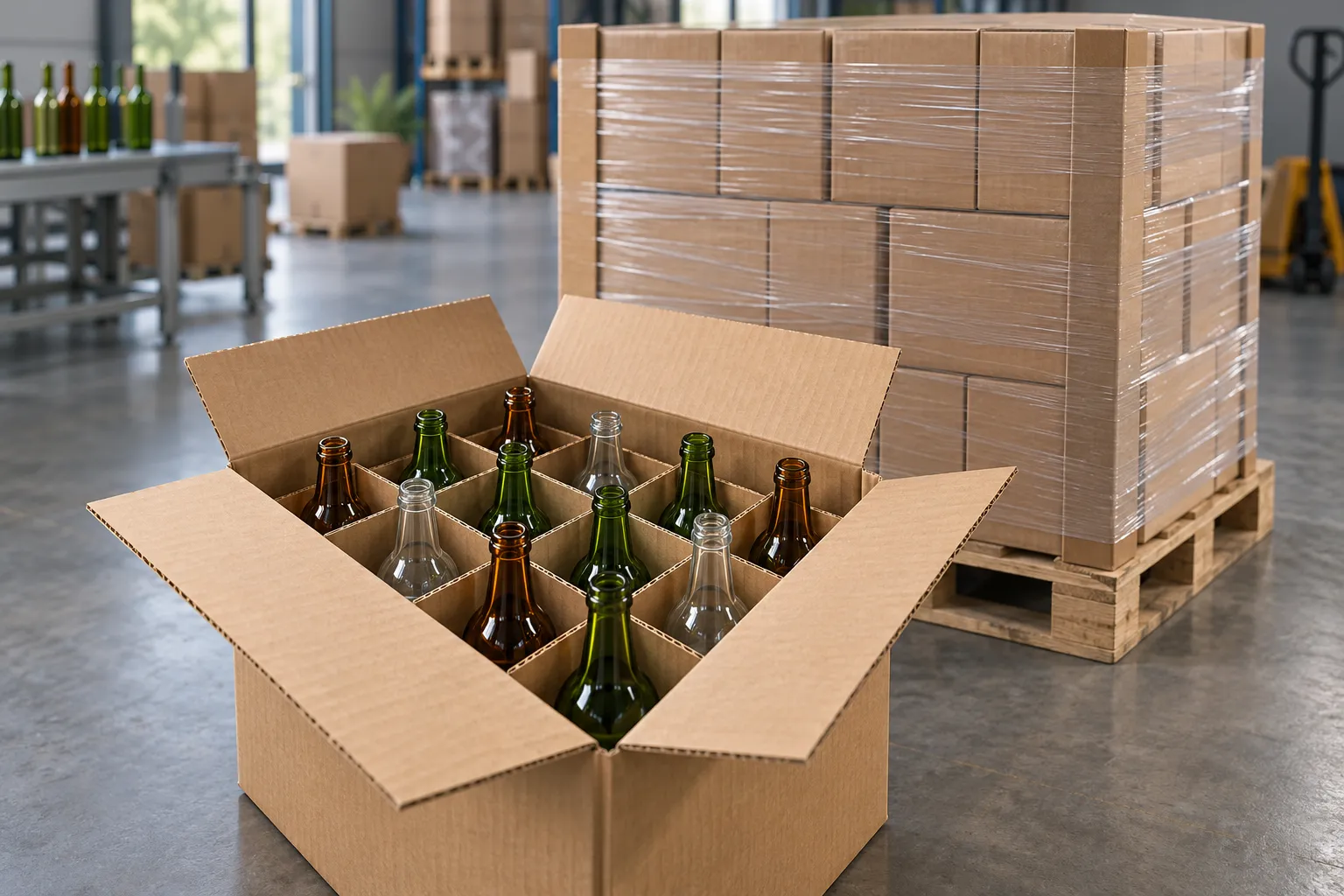
Case Packing and Palletizing for Glass Bottles: Layout and Protection
How to compare case styles, drop and pick-and-place packers, partitions, tier sheets and pallet containment for glass, and which logistics rules to confirm.
Read the guide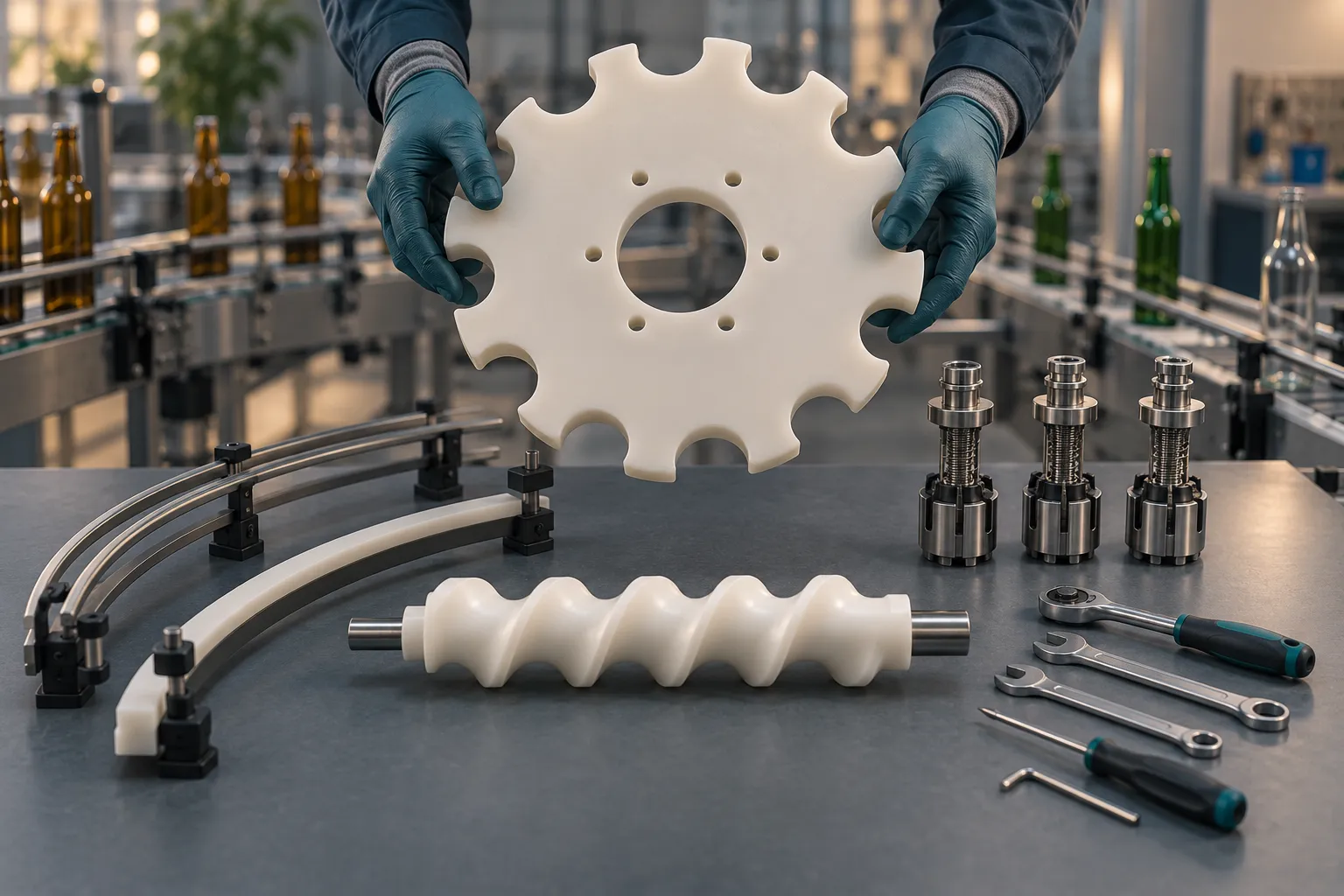
Bottling-Line Changeovers: What to Check Before Adding a New Bottle
Which change parts a new glass bottle touches, which bottle data to check, and how to run and document a trial before the bottle goes into production.
Read the guide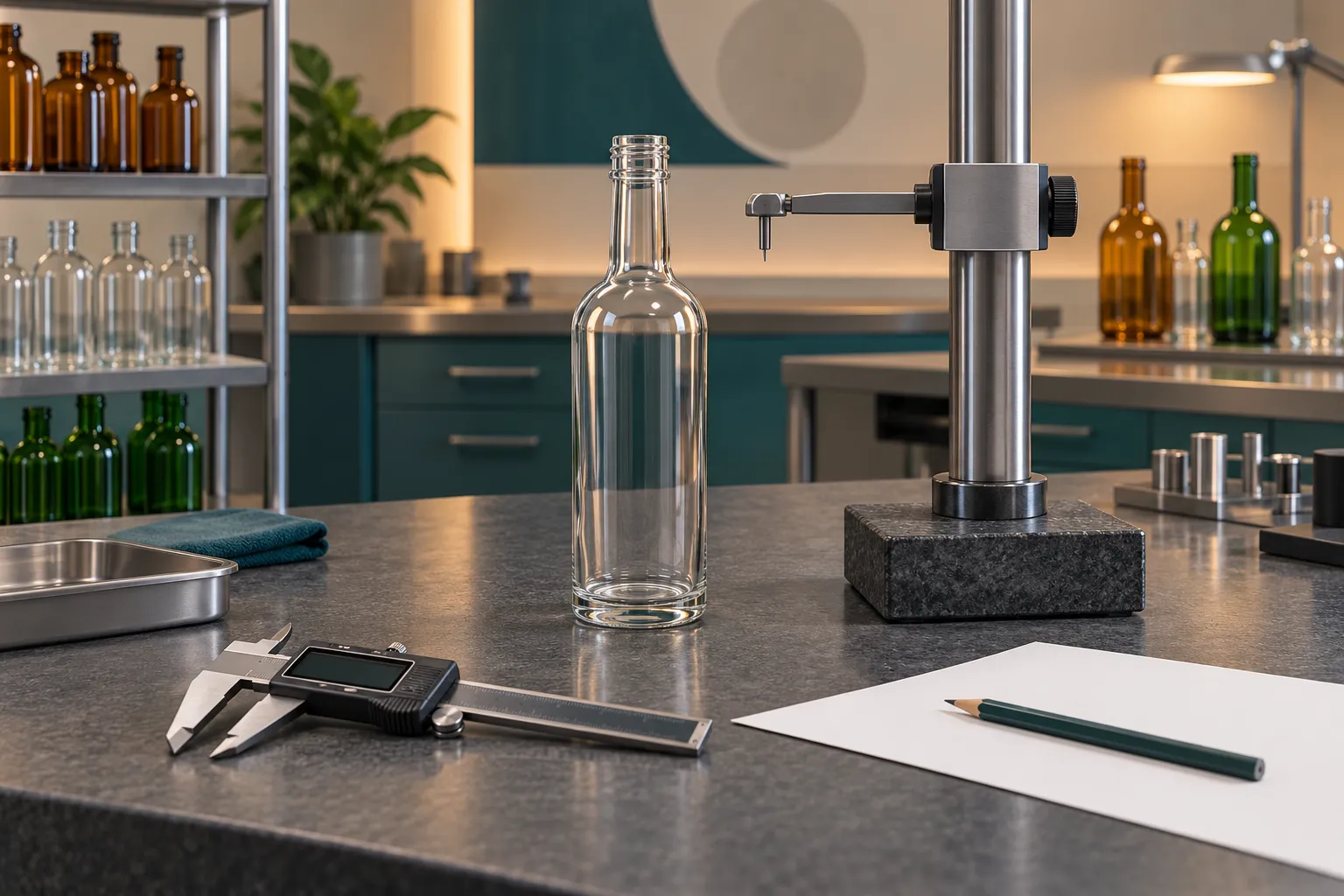
Glass Bottle Specifications: A Checklist for Supplier Enquiries
A checklist of what to state in a glass bottle enquiry: drawing dimensions, capacity and fill point, finish, color, strength, decoration, quality and packing.
Read the guide