
About SG Containers Review
SG Containers Review is a specialist publication from DeltaSpark with guides on glass containers, manufacturing, bottling lines and buying checklists.
SG Containers Review is a specialist publication operated by DeltaSpark. We publish practical information on glass packaging and the equipment used in bottling and packaging lines.
What we cover
The site is about how the container and the production process fit together. It covers bottle and jar specifications, closure compatibility, glass manufacturing, filling, capping, labeling, inspection and end-of-line packaging. It also has buying guides and checklists for preparing supplier enquiries and comparing proposals.
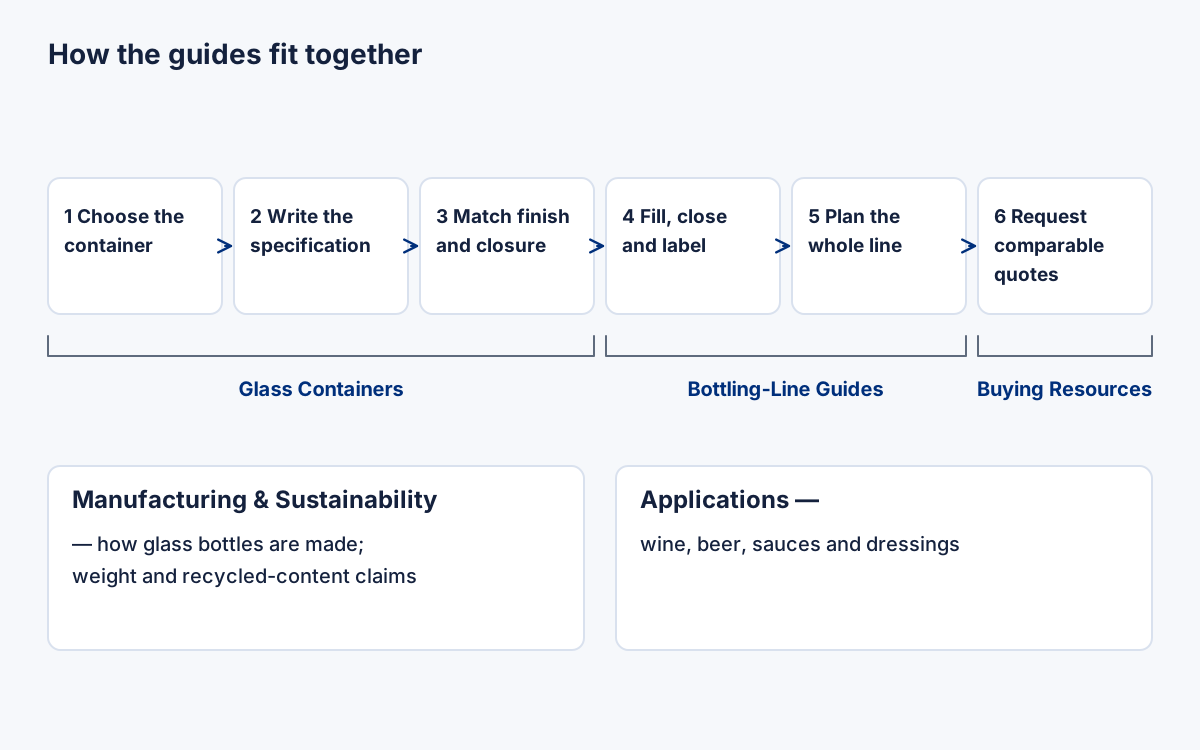
What you will find in each section
The Glass Containers section covers the object that everything else has to accommodate: bottle and jar types, dimensions, neck finishes, and the points where a specification can go wrong. The bottle specification checklist lists what a container specification should state, and the guide to neck finishes and closures explains why the finish and the closure have to be chosen as a pair.
The Manufacturing section explains how containers are produced and what that means for the buyer. How glass bottles are made follows the process from batch materials to finished ware, and recycled glass content looks at what recycled content claims do and do not tell a buyer.
The Bottling Lines section covers filling, capping, labeling, inspection and end-of-line packaging, and how each stage depends on the one before it. Glass bottle filling machines compares filling principles, and planning a glass bottling line treats the line as a whole.
The Applications section shows how container and line choices change with the product being packed, since a requirement that matters for one product may be irrelevant for another.
The Buying Guides section turns the technical material into working documents. The bottling equipment RFQ checklist helps a buyer ask several suppliers the same questions so the answers can be compared.
Who the guides are for
The guides are for people who have to make or support a packaging decision and need a reliable starting point: buyers preparing a supplier enquiry, plant and production managers who inherit a container or a line they did not choose, packaging and quality staff who write specifications, and project teams planning a new or changed line. They also help people entering the field see how container, closure and machine decisions connect.
The guides assume practical interest, not specialist training, and explain technical terms where they first matter. They do not replace a supplier’s documentation for a particular machine, a standard that applies to your product and market, or advice from someone who can inspect your own plant and product. Where a decision depends on those things, the guide says so.
How to use the guides
The sections can be read in any order. For a first project, this order follows the way the decisions depend on each other.
- Choose the container. Start with Glass Bottle Types and Sourcing: A Buyer’s Reference to see the common forms and how containers are sourced.
- Write the specification. Use the bottle specification checklist to describe the container completely and consistently.
- Match the finish and closure. Read neck finishes and closures before ordering either, because the two must fit each other and the capping equipment.
- Fill, close and label. Move to glass bottle filling machines and the related capping and labeling material in the Bottling Lines section.
- Plan the whole line. Use planning a glass bottling line to check how the stages, buffers and handling fit together.
- Request comparable quotes. Finish with the bottling equipment RFQ checklist.
Each guide ends with an “Evidence and limitations” section that lists its sources and states what the guide cannot establish. Start there to check a statement. When a guide has a substantive update, the header shows Updated and the month and year of that update. It does not show a day-level published date or a team byline. The change note at the end of the guide says what changed.
How we use sources
Articles draw on identifiable sources: manufacturer documentation, industry-body publications, applicable standards and clearly attributed reporting. We separate published specifications, supplier claims and our own editorial comparisons. Where information depends on a particular machine configuration, product or operating condition, the article says so. The full method is in the Editorial Policy.
How to apply these guides
Technical guides and comparisons summarize published specifications, standards and documented operating principles. Projects reported by other organizations are attributed to those organizations.
Cover illustrations and schematic diagrams explain line order and component relationships across general container and equipment categories.
Who operates this publication
DeltaSpark operates this publication. Relevant commercial relationships (common ownership or operation, supplier relationships, paid placements and referral arrangements) are disclosed where they apply to an article or link. Mentioning a company or product is not, by itself, an endorsement. See Disclosures for details and the Privacy page for how the site handles reader information.
SG Containers Review is not the corporate website of Saint-Gobain or the former Saint-Gobain Containers business, and it does not represent either organization. A different business previously used the domain name. The historical company reference is kept as a record of that earlier use and is not part of this publication’s guides.
Corrections
We welcome corrections and questions about our sources. Use the Contact page and identify the article and the statement you want reviewed.
Editorial byline
SG Containers Review Editorial is the editorial identity used for guides published by DeltaSpark on glass packaging and bottling-line equipment. It is not printed as a byline at the top of each guide.
It is an editorial byline, not a fictitious person, and it does not imply an undisclosed engineering team.