
Bottle Inspection Systems: Comparing What Each System Checks
Compare empty bottle, fill level, closure, label and code inspection by scope and limits, and ask for reject verification, test bottles and validation records.
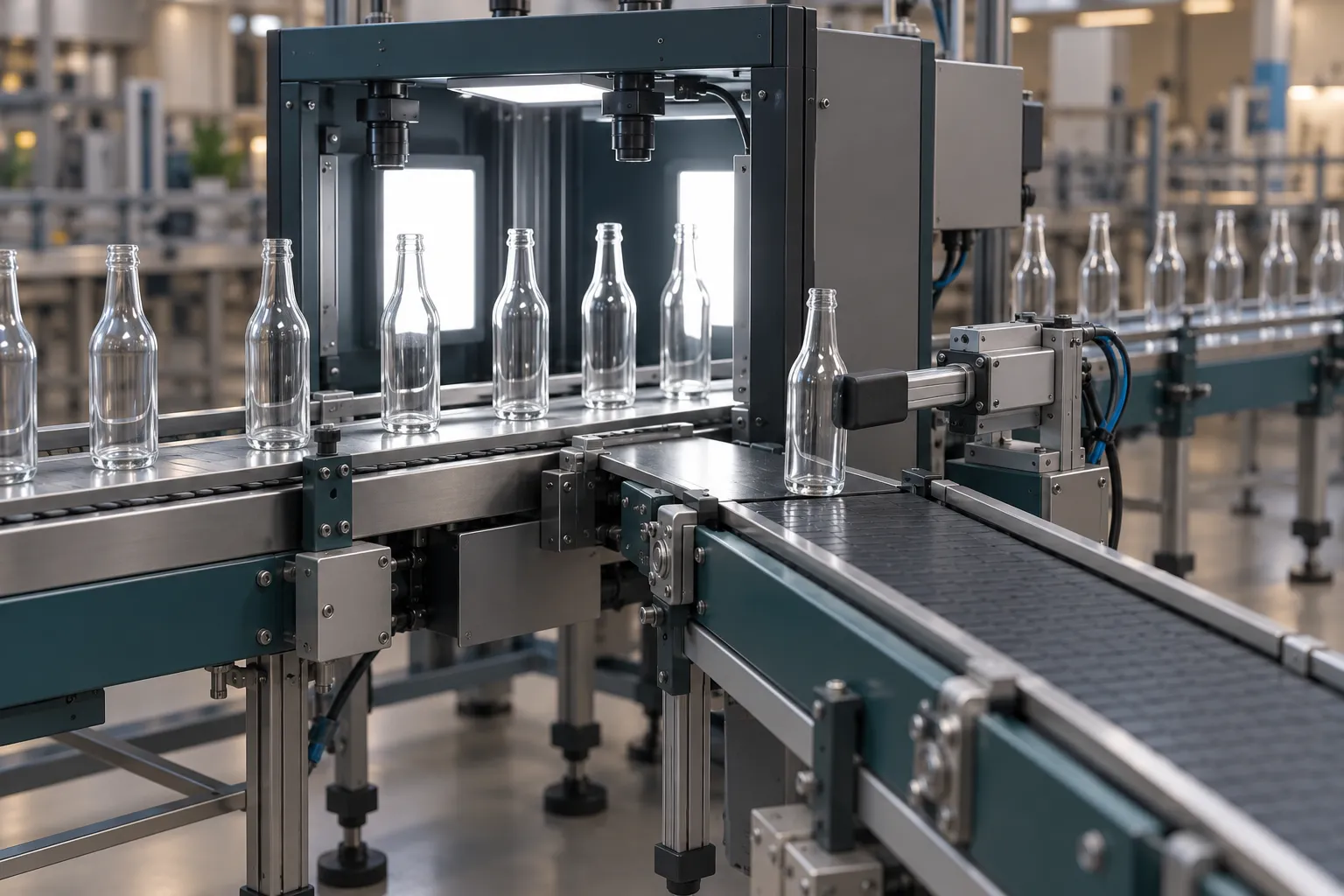
A defect missed before filling may be hidden by the product and escape later checks. Compare empty-bottle, fill-level, closure and label/code inspection as separate scopes, then verify that each detected fault is actually rejected.
Swipe or scroll horizontally to see all columns.
| Inspection scope | Position / acceptance question |
|---|---|
| Empty bottle | Before filling: base, sidewall, finish and residual liquid; challenge with the actual glass |
| Fill level | After filling: agreed level, volume or mass basis; account for foam and bottle variation |
| Closure | After closing: presence, seating and specified seal-related checks |
| Label and code | After application/printing: position, content and readability |
The detailed matrices below retain defect-specific limits. Use the printable validation checklist to record each supplier’s evidence; this comparison is compiled from public sources, not machine testing.
Where inspection sits on the line
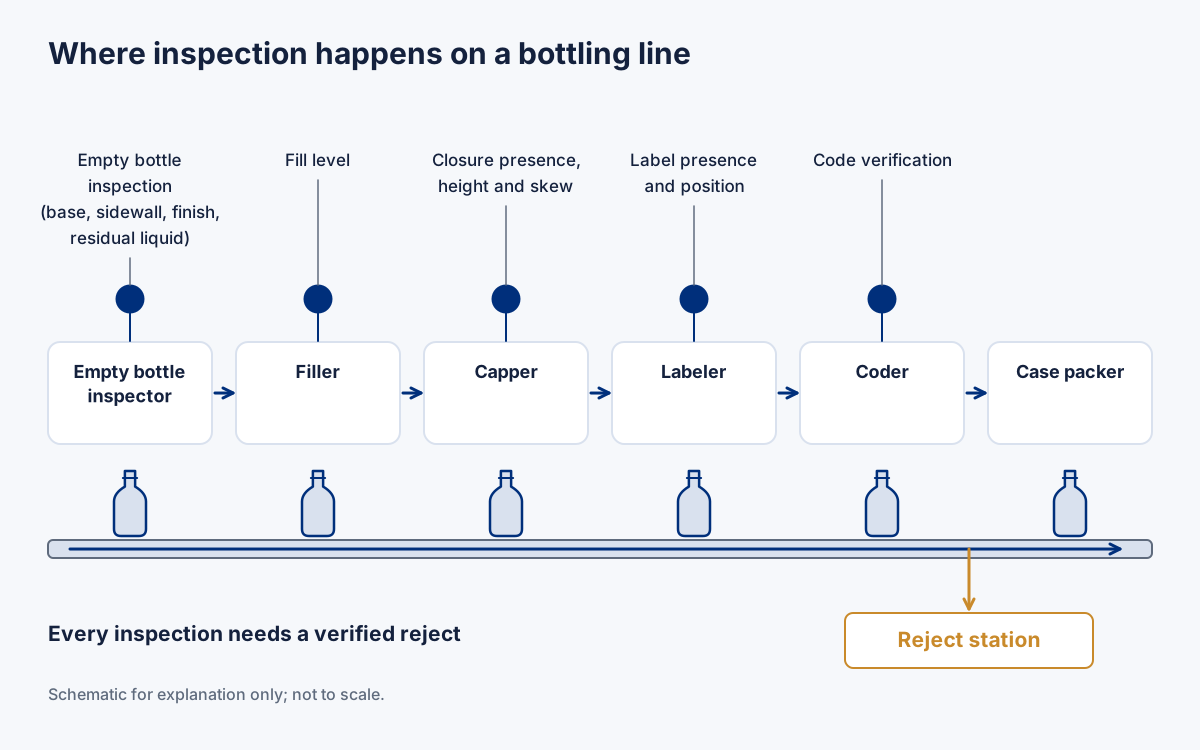
Antares Vision, an inspection maker, places the empty bottle inspector between the depalletizer (or bottle washer on returnable lines) and the filler. It describes three parts: a transport mechanism that presents each bottle consistently, an imaging system of cameras and lighting, and a processing unit that triggers a rejection device. It also states that filled-bottle inspection checks fill level, closure integrity, label placement and cap seating but cannot reliably identify structural container defects hidden behind the product, so the two steps complement each other.
A 2002 trade-journal report translated on Heuft’s website describes the same split for a returnables line and places a fill-level check, a closure check and a label check at different points after the filler. The details differ for new glass, but the stage-by-stage logic holds.
Takeaway: Put every required check on the line layout and name its handoff owner; a downstream package check does not replace an empty-bottle check.
Empty bottle inspection
Heuft’s 2002 report describes the typical checks. Base and finish are usually evaluated from one picture each, with transparent foreign objects such as foil sometimes needing a second, specially lit base check. Sidewall inspection is more complex because of the surface area: the bottle is photographed from several angles, by rotating it, by using mirrors, or both. Residual liquid, such as caustic solution, oil or varnish, is detected using high-frequency and infrared measurement. Heuft adds that an additional residual caustic check is often installed right before the filler as an HACCP safeguard.
Current manufacturer pages describe the same zones with newer technology. Heuft’s InLine II IX X-ray model page describes pulsed X-ray for detecting glass splinters on the bottle base, optical finish and thread inspection, quadruple sidewall inspection and image analysis that tells harmless water drops from defects. Filtec’s page for its empty bottle inspector says a solution should include inspection of sidewalls, base, finish and thread and optics able to find minute defects without false rejects.
Glass makers inspect their output too; see how glass bottles are made for the production-side checks. Receiving inspection at the bottler addresses transit damage, contamination and anything the maker’s inspection did not catch.
Takeaway: Agree the empty-bottle challenge set for your color, finish and decoration before accepting the proposed detection scope.
Fill level, closure, label and code checks
Heuft’s 2002 report describes fill-level measurement techniques as depending on product and container: a photocell in the simplest case, radiation absorption (with licensing and trained staff because of radiation protection rules), or high-frequency measurement. Modern devices, it says, also report how often a particular filler valve produced an underfilled container. A MarketBrief360 specification article adds a limit worth noting: fill height and fill volume track each other closely only when internal bottle volume is tightly controlled, and glass with dimensional variation or embossed panels can show different visible levels at similar volumes. Define whether you accept by level, volume or mass, as the filling machines guide explains.
For closures, the Heuft report lists checks from simple presence (light scanner or metal detector) up to position and correct fitting with a camera. Cameras also check that a tamper-evidence ring is intact on screw closures, and can identify protruding metal on crown caps. See the capping equipment guide for what the capper itself controls.
For labels, the same report describes presence checks with a light scanner, camera checks of date imprint, and alignment checks of single labels and of multiple labels relative to each other. It notes that a second fill-level check after the labeler can be more accurate because the product has settled. Label inspection depends on the label system; the labeling methods guide covers what the labeler controls.
For codes, Heuft describes an optional recognition unit for DataMatrix and QR codes on the bottle wall, retrofittable on its X-ray model. Code verification therefore needs a defined code position, content, print quality criterion and responsibility.
Takeaway: Define each threshold and measurement basis separately; checking that a cap or label is present does not establish all seal or print-quality requirements.
Detection scope versus limits
Swipe or scroll horizontally to see all columns.
| Check | What published sources say it covers | Limits to ask about |
|---|---|---|
| Empty bottle: base | Foreign bodies, chips, transparent film | Which defect types and sizes at rated speed with your bottle |
| Empty bottle: sidewall | Inclusions, cracks, impurities, foreign objects | Colored glass, embossing and decoration effects |
| Empty bottle: finish | Sealing surface, thread, chips and cracks | Ovality and underchip areas; whether all are included |
| Residual liquid | Caustic, oil, varnish | Which liquids; redundancy before the filler |
| Fill level | Underfill and overfill | Level versus volume; foam; container variation |
| Closure | Presence, position, fit, tamper ring | Height and skew thresholds; closure type |
| Label | Presence, alignment, date imprint | Panel geometry; transparent or foil labels |
| Code | Presence and readability | Position, content, print quality, retrofit |
Ask each supplier to state, per check, the minimum detectable defect and the conditions under which it was demonstrated. Antares advises requesting validated minimum detectable defect sizes at rated speed rather than typical values, confirming that rated speed is achievable with your bottle format and not only a reference bottle, and weighing false rejects against sensitivity. This is vendor guidance, but the questions apply whichever supplier you ask.
Matching glass defects to inspection stations
Glass defect detection on a bottling line starts from the defect, not the machine. The table groups defect types the way Antares Vision’s empty bottle inspection guide does and shows which station is meant to catch each group. The station assignments come from maker descriptions, so confirm them for the system you are quoted.
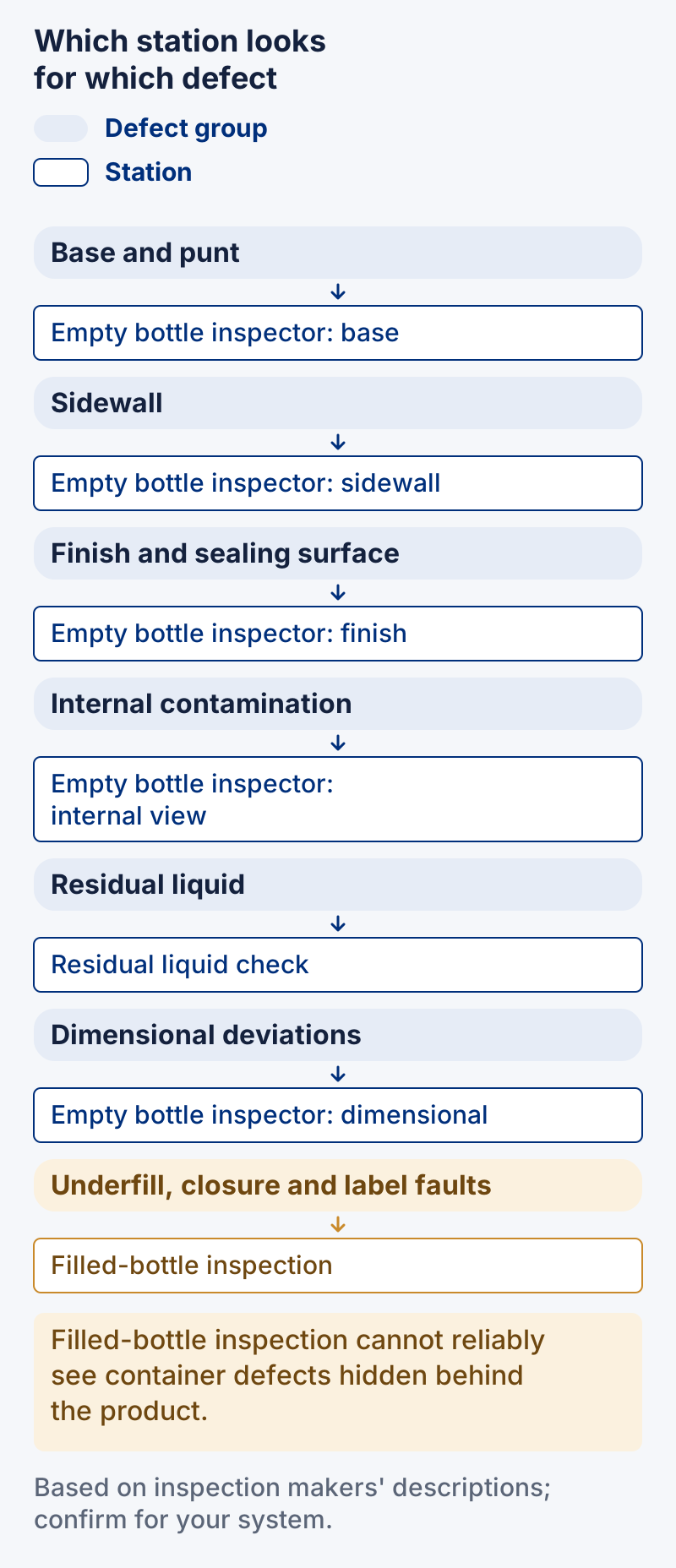
Swipe or scroll horizontally to see all columns.
| Defect group | Examples named by makers | Station that looks for it | What to confirm |
|---|---|---|---|
| Base and punt | Stones, seeds, cracks from the punt, chips on the base rim, glass splinters on the base | Empty bottle inspector, base station; Heuft offers pulsed X-ray for splinters on the base | Detection in your glass color and punt shape, including splinters sitting in residual liquid |
| Sidewall | Cracks, checks, blisters, inclusions, heavy mold seams | Empty bottle inspector, sidewall station viewing from several angles | Effect of embossing, applied labels and dark glass on what can be seen |
| Finish and sealing surface | Chips, cracks and out-of-round conditions on the mouth and sealing land | Empty bottle inspector, finish station; Heuft lists ovality detection as a finish option | Which finish features are inspected: sealing surface, thread, ovality |
| Internal contamination | Foreign particles, glass shards, paper, insects, transparent film | Empty bottle inspector, internal and base views | Transparent and thin objects that need special lighting |
| Residual liquid | Caustic, oil, varnish or washing liquid left in the bottle | Residual liquid check, often high-frequency and infrared measurement | Which liquids, and whether a second check sits right before the filler |
| Dimensional deviations | Height, lean, ovality, neck diameter out of specification | Empty bottle inspector, dimensional checks | Tolerances taken from your bottle drawing |
| Filled and closed package | Underfill, missing or misapplied closure, label faults | Fill level, closure and label inspection after the filler | See the scope table above |
Two limits follow from the same sources. Antares states that filled-bottle inspection cannot reliably identify structural container defects hidden behind the product, so a defect missed before filling is unlikely to be caught later. And defects created at the glass plant, in transit or on your own line all reach the same empty bottle inspector, so its test set should include each group you expect, not only the defects a supplier’s demonstration bottle shows.
Checking defect detection software and AI tools
Inspection makers now describe software that classifies defects rather than only comparing images against fixed thresholds. Antares says an AI engine classifies anomalies by type and severity and claims fewer false rejects from glass texture, mold marks and color gradients. Heuft says its image processing uses machine learning for object classification, that trained neural networks are used for tasks such as finding foreign objects, and that its filters distinguish water drops from defects. Software-based detection adds verification questions:
- What was it set up on? Ask which defect groups the software or rule set is configured for, and whether it was set up or trained with images of your bottle, color, embossing and decoration.
- What does it record? Antares says modern systems log each rejection with a time-stamped image and a defect classification. Ask for access to those images so quality staff can check whether rejects are real.
- How are changes controlled? New training, threshold changes and software updates can change detection. Ask that the challenge test set is rerun and recorded after each change, before production resumes.
- How is false-reject behavior measured? Keep good bottles with harmless features in the test set and record their reject count after every change.
- Who holds the data? Agree who owns images, trained recipes and settings, and whether they stay with the line if the service contract ends.
Defect-identification apps and photo-based tools can help classify defects found during receiving inspection or a complaint review. They are not a substitute for an inline inspector that has been challenged with test bottles on your line and bottle.
Reject mechanisms and their verification
Detection is only half the job. Antares describes the rejection device as typically a pneumatic pusher or diverter gate positioned downstream. Heuft describes reject systems with single or multiple segments, and its InLine II IR model page says up to four rejection systems can be connected so rejection can be sorted by fault type. Mojonex, an equipment vendor, notes that a reject station needs space, guarding, confirmation and a controlled destination, and recommends defining what happens to an empty container, missing cap, failed code or bad label.
Reject verification is a separate function. Heuft states that its integrated verification checks that every product identified as faulty is actually removed, and that every bottle is tracked so none remains uninspected. When comparing proposals, ask whether the system confirms removal by sensor, whether a failed reject triggers an alarm or stop, and who owns the signal between inspector, reject station and line control.
Takeaway: Test a failed-reject response as well as successful removal, and record which controller owns the alarm or stop.
Test bottles, challenge tests and validation records
A challenge test runs deliberately defective bottles through the line to show the inspector detects and the reject mechanism removes them. Maker pages describe standard test programs and test-bottle tracking: Heuft’s pages mention regular self-test programs for detection performance, and Filtec’s page lists test bottle tracking for its model. The exact method varies by maker, so ask for the procedure rather than assuming one.
Agree the test set before purchase. A useful set covers each defect class you care about, at the limit of your acceptance criteria, in your bottle, color and decoration. Add good bottles with harmless features such as water drops, mold marks and embossing to show false-reject behavior. The test set belongs to the bottler, who should be able to repeat it after changes.
Request these records:
- The inspection specification: checks, defect types, sizes and conditions.
- Factory and site acceptance results on your bottle and speed, including false-reject counts.
- The test-bottle set definition and the results at commissioning.
- Reject verification logs and the alarm or stop logic.
- Periodic self-test procedure and result storage; Heuft’s IR page mentions network-based documentation and archiving of results.
- Recipe or format validation for each bottle on the line.
- Audit or change records for sensitivity, threshold and recipe adjustments.
The line planning guide shows where inspection fits, and the RFQ checklist turns the items above into comparable proposal terms.
Questions to send suppliers
Copy or print this validation checklist for each bottle format. Attach the response or result; leave unresolved evidence open. These are supplier requests, not answered FAQs.
Swipe or scroll horizontally to see all columns.
| Check to record | Supplier response / evidence / owner / open action |
|---|---|
| Included stations and detectable defect groups | ____ |
| Minimum defect sizes; test speed, bottle and conditions | ____ |
| Good-bottle false rejects: color, embossing, decoration | ____ |
| Fill-level, closure and label thresholds; calibration | ____ |
| Reject device, removal confirmation and failed-reject logic | ____ |
| Detector fault / loss-of-air response | ____ |
| Challenge bottles, test procedure and test-set supplier | ____ |
| FAT/SAT, self-test and reject logs; format and retention | ____ |
| Bottle/recipe revision and sensitivity change history | ____ |
| Glass, closure and label assumptions in the proposal | ____ |
| AI setup images; retraining/update revalidation results | ____ |
Repeat the challenge set after the agreed recipe or software changes and keep the result with the format record.
Evidence and limitations
This guide stops where line configuration, product and the bottler’s own risk assessment decide what must be inspected. Maker pages describe capabilities and not independent test results, and a 2002 trade report describes returnable-bottle practice that may not match a new-glass line. No detection rates, speeds or false-reject numbers are given here because none are comparable across systems. Detection and reject performance on your bottle needs to be demonstrated, not inferred.
- Empty Bottle Inspection: Everything You Need To Know, Antares Vision Group: EBI location, components, defect categories by station, AI classification claims, rejection logging, complementary filled-bottle inspection and selection criteria (vendor source). Accessed October 8, 2026.
- Inspection systems in the filling plant, Heuft (translation of a 2002 trade journal report): inspection stages, fill-level, closure and label checks. Accessed October 8, 2026.
- HEUFT InLine II IX X-ray empty bottle inspector, Heuft: empty bottle inspection zones, pulsed X-ray splinter detection, ovality option, AI-based image analysis, reject verification, self-tests and code recognition option (manufacturer page). Accessed October 8, 2026.
- HEUFT InLine II IR empty bottle inspection, Heuft: multiple rejection systems, reject verification and result archiving (manufacturer page). Accessed October 8, 2026.
- Empty Bottle Inspection, Filtec: empty bottle inspection scope and test bottle tracking (manufacturer page). Accessed October 8, 2026.
- How to Specify Bottle Filling Lines for Carbonated Drinks, MarketBrief360: fill level versus volume on glass with dimensional variation. Accessed October 8, 2026.
- Container, Closure & Label Data for Compact Filling Lines, MUJIU Industry: reject station and validation-responsibility considerations (vendor source). Accessed October 8, 2026.
Related guides
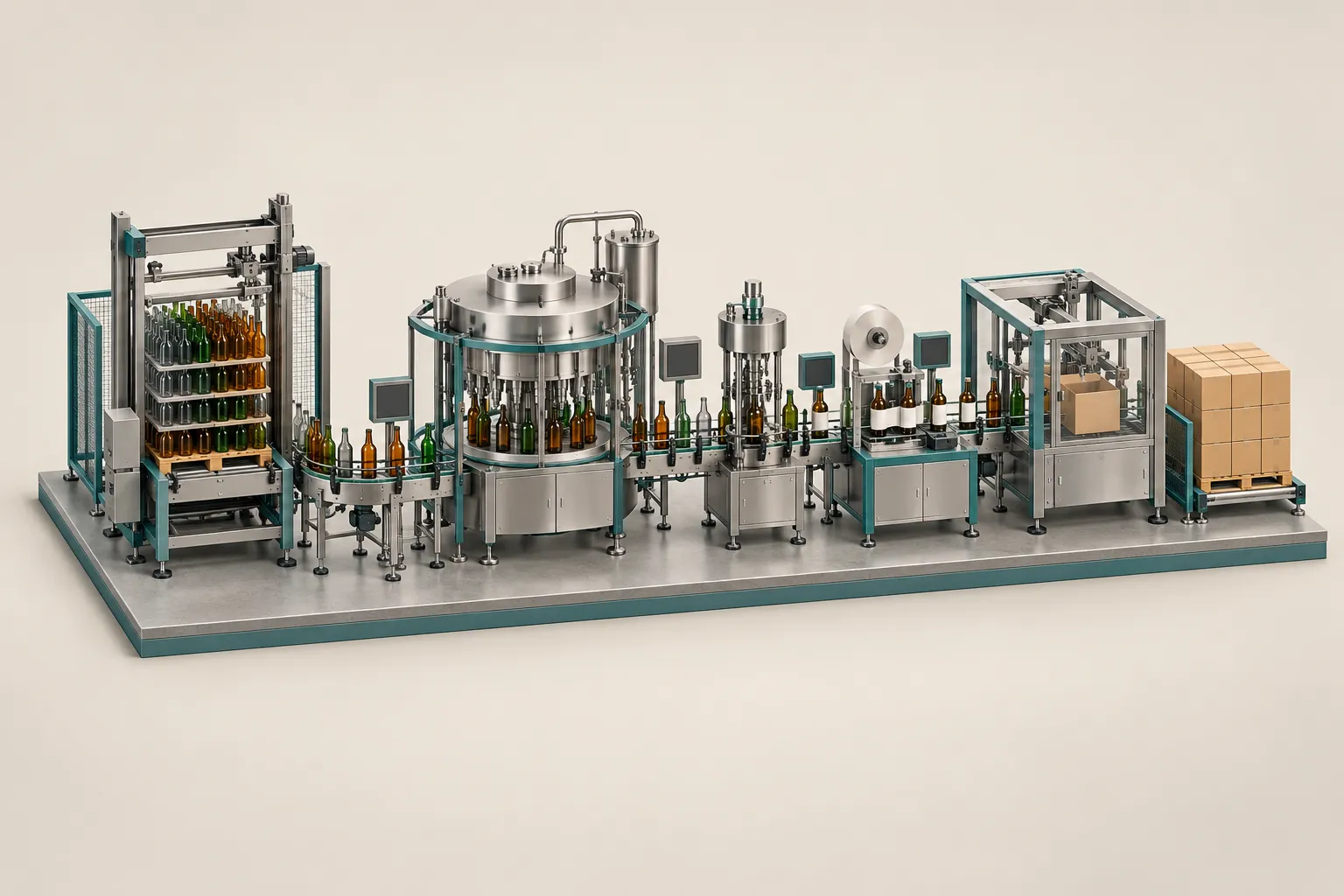
Planning a Glass Bottling Line: From Empty Bottles to Packed Cases
How to divide a glass bottling line into stations, size buffers around the bottleneck machine, and confirm machine interfaces before requesting quotes.
Read the guide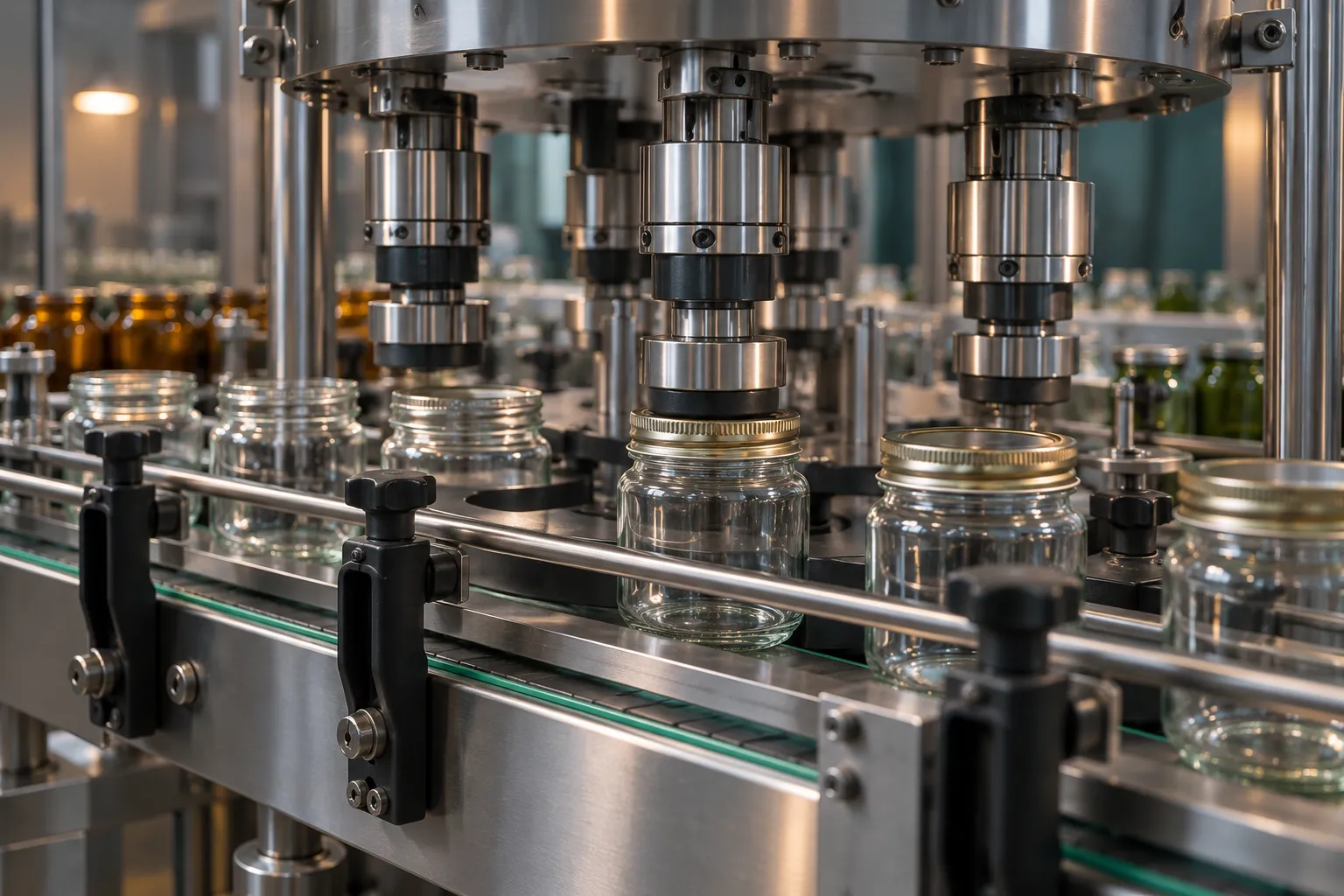
Choosing Capping Equipment for Glass Bottles and Jars
Prepare a capping requirement from finish and closure data: screw, ROPP, crown, lug, press-on and cork application, torque, and how to verify closures.
Read the guide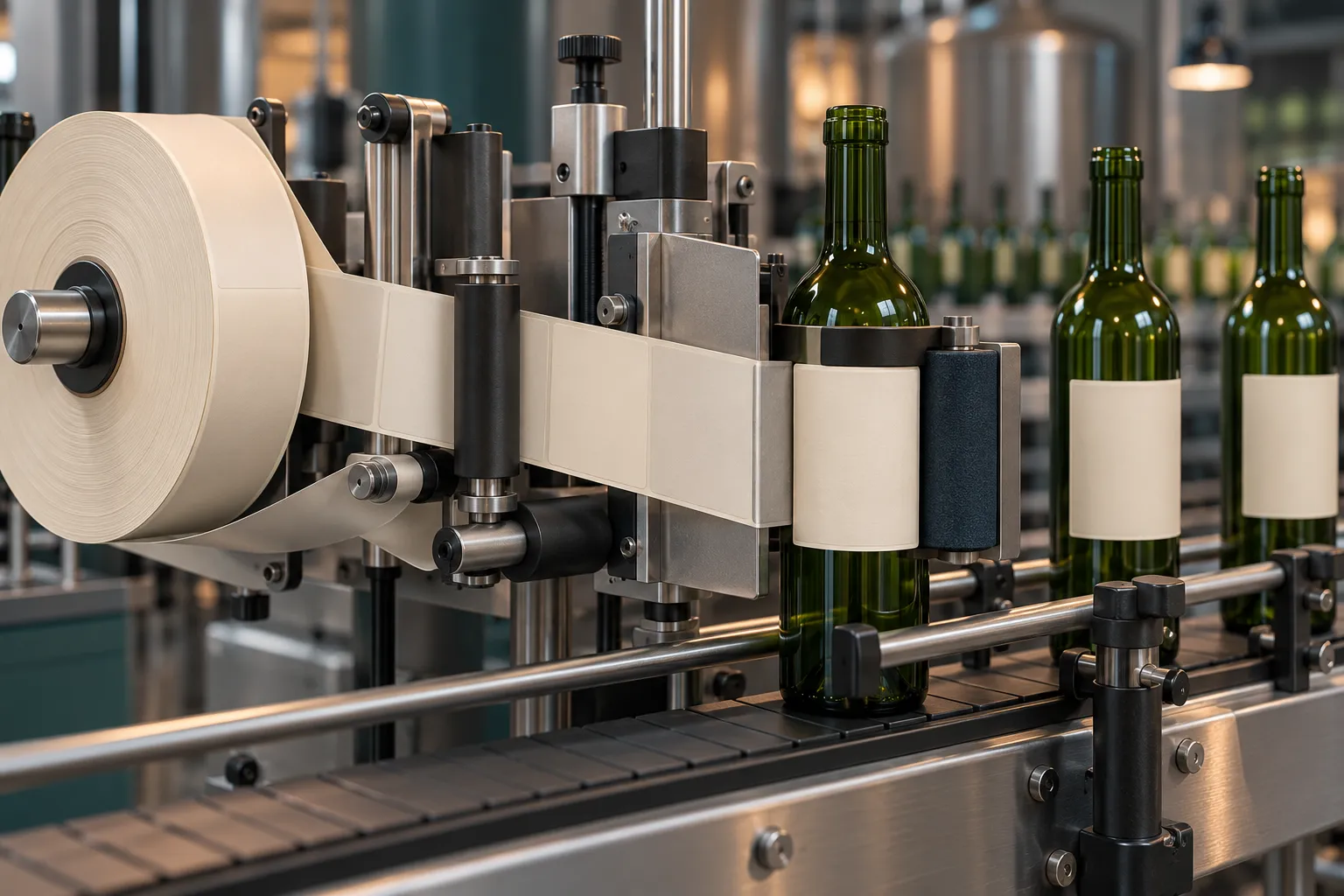
Bottle Labeling Methods: Pressure-Sensitive, Wet-Glue and Sleeve Systems
What pressure-sensitive, wet-glue and sleeve labeling each demand from a glass bottle, and which container and condensation conditions belong in a requirement.
Read the guide