
Bottle Depalletizers and Infeed Systems: A Selection Guide
How empty glass arrives (bulk pallets with tier sheets or cased), how layer sweep-off compares with other methods, and what to specify for single-filing.
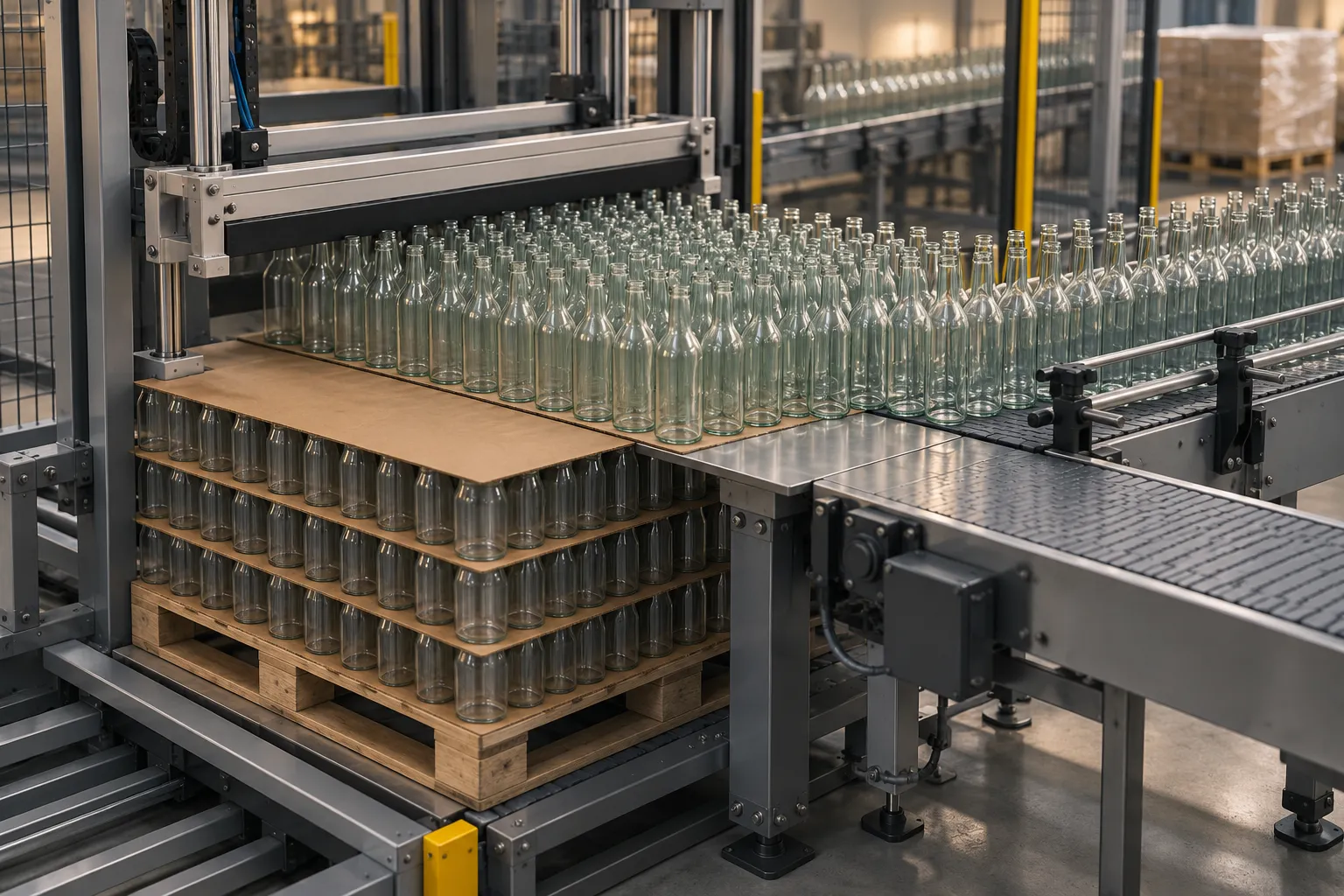
An infeed route that does not match the delivered glass can leave unpacking outside the machine scope and create damaging handoffs. Confirm the physical load with the glass supplier, then select unloading, dunnage removal and single-filing as one route.
Swipe or scroll horizontally to see all columns.
| Incoming format | Unpacking route to specify | Evidence to obtain |
|---|---|---|
| Bulk layers with tier sheets | Layer unloading plus sheet/frame and empty-pallet removal | Pallet/layer drawing, sheet data, bottle samples and transfer trial |
| Cased glass | Decaser/unpacker or defined manual handling | Case/partition drawing, bottle pattern and unpacking trial |
| Returnable crates | Crate checks, unpacking and washing route as applicable | Crate/bottle mix, sorting scope and washer handoff |
Use the incoming-glass handoff record to keep open items and acceptance evidence together. This guide compares requirements from public material; it does not rank machines.
From pallet to line
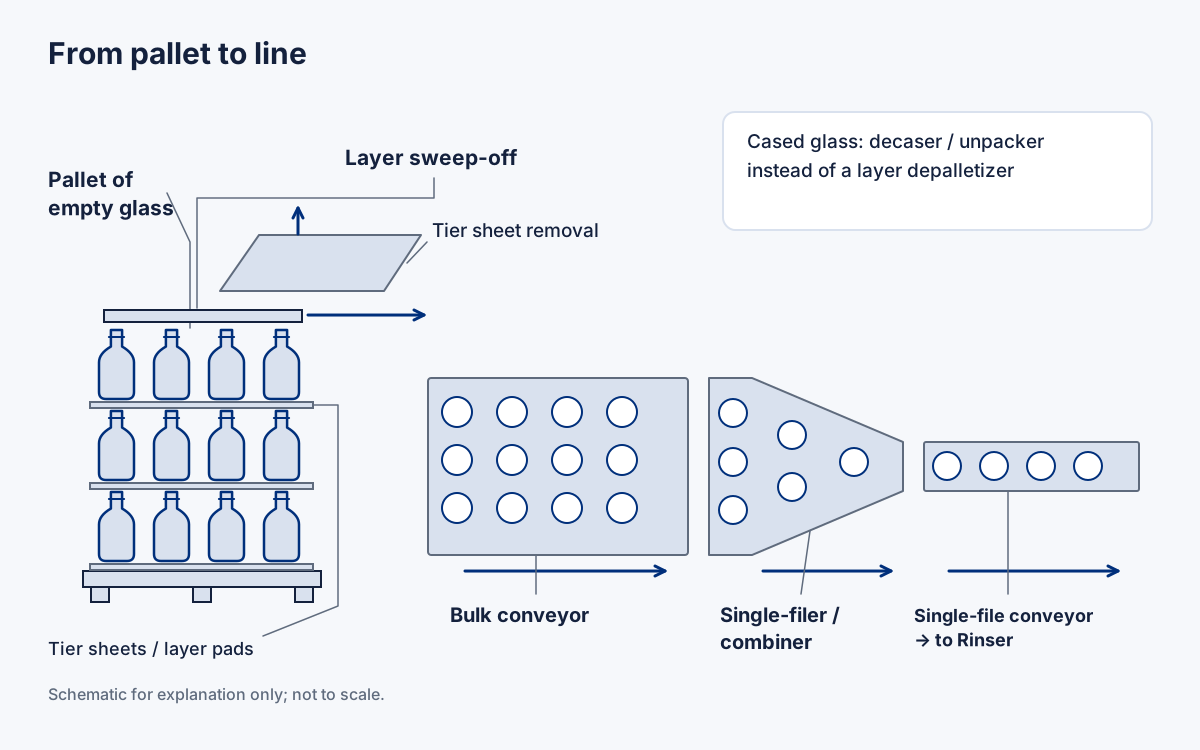
Bulk pallets with tier sheets
Waterloo Container, a glass distributor, describes bulk glass as ware placed directly on pallets at the factory without secondary packaging such as corrugated cases with partitions. Layers are divided with rigid tier sheets and strapped, and the whole pallet is wrapped, often with corner boards. The distributor lists lower packaging labor and less storage space as benefits; those are its commercial claims, but the format description is useful on its own.
Kaufman Engineered Systems, an integrator, describes a glass plant palletizing cell that built 440 bottles per tier and 10 layers per pallet using the plant’s pallets, sheets and top frames. That is one customer’s configuration, not a standard, but it shows what arrives at your dock: layers of loose bottles separated by sheets, topped with a frame. The cell also moves dunnage (pallets, sheets and top frames) automatically, which tells you that your receiving side has to deal with the same items in reverse.
Cased glass and reshipper packs
Cased glass arrives in boxes, usually with partitions, stacked on pallets. A decaser or unpacker lifts bottles out of the box, or the bottles are unpacked by hand. Waterloo notes that the cost of cased ware varies with fuel, freight, corrugated and labor, and that bulk delivery removes the case repack step. Compare the quoted packaging, handling and unpacking scope for your project; the format alone does not establish its total cost or equipment requirement. If a supplier calls a boxed pallet “bulk,” confirm what is physically on the pallet before quoting equipment.
Returnable-bottle plants also unpack crates; Heuft’s description of a returnables line notes that crate checks catch foreign bottles before unpacking. That is a returnable-glass concern. Most new-glass lines have a single known bottle and do not need it, but the principle carries over: confirm the bottle you receive is the bottle the line was set up for.
Layer sweep-off versus other approaches
Layer sweep-off is one published candidate for bulk glass. A-B-C Packaging Machine Corporation describes its Model 108 sweep-type depalletizer as squaring each layer before transfer, securing the layer below and its slip sheet while the top layer is swept off, and containing the layer on all four sides as it moves to the discharge conveyor. Optional features it lists include an empty pallet stacker, picture frame and slip sheet remover, a full pallet conveyor and a container single filer. These are one maker’s published features; other makers offer comparable but not identical options.
Treat other candidate routes as questions to the supplier, not proven alternatives with known performance:
Swipe or scroll horizontally to see all columns.
| Candidate | Evidence status | What to confirm |
|---|---|---|
| Layer sweep-off | Published maker description | Layer restraint, slip-sheet support and transfer trial |
| Whole-layer grip/lift | Project-specific supplier design | Grip points, filled layer mass and sheet-removal sequence |
| Row transfer or robotic picking | Project-specific supplier design | Bottle presentation, contact and recovery trial |
For each route, record top-frame, sheet and pallet removal and the recovery method for a fallen bottle or misaligned layer.
A-B-C also states that its machine changes over by entering new product and pallet parameters at the console, with no optional change parts for its quoted range. Treat this as a supplier claim and check it against your bottle range, especially for unusual shapes. The changeover guide covers verifying such claims.
Tier sheets, pallets and dunnage
Dunnage is the sheets, frames and pallets that protect the glass in transit. Plan for them as a material flow:
Swipe or scroll horizontally to see all columns.
| Item | What to settle |
|---|---|
| Tier sheets | Removal method, stacking, reuse or disposal, and what happens when a sheet sticks |
| Top frames and corner boards | Removal point, storage, and who retrieves them |
| Empty pallets | Stacking, magazine capacity, and forklift access |
| Straps and wrap | Removal before the depalletizer, and where the waste goes |
| Full pallet staging | Pallet condition, load stability and queue size at the infeed |
Kaufman’s cell monitors levels of pallets, sheets and top frames so the next piece is available automatically; at the receiving end, the same question applies in reverse.
Single-filing, glass contact and noise
After sweep-off, bottles arrive as a wide mass and must become a single file. This is where glass contacts glass. The UK Health and Safety Executive states that noise on bottling lines is generated as glass bottles strike one another along the conveyors, and that, short of substituting plastic, the only means of reducing noise at source is to space the bottles to prevent collisions. It also notes that marshalling at entrances to and exits from parts of the line makes spacing hard. In its case study, an enclosure over the conveyor gave about a 5 dB reduction, with an estimated 10 dB possible if the side panels extended to the floor.
For a buyer, that means asking how the single-file transition limits pressure and impact, not only whether it can reach the required output. Ask about:
- Accumulation behavior: whether bottles queue under pressure or are held apart.
- Guide and rail materials in contact with glass.
- Behavior at starts, stops and restarts.
- Noise limits you need to meet and at what location, and whether an enclosure is expected.
Contact also matters for scuffing and chips, not only noise. The case packing guide covers the other end of the line, where similar contact concerns arise.
Handoff to the rinser or air cleaner
Inline Filling Systems, an equipment maker, explains that bottle rinsers clean empty bottles before filling, using clean air, ionized air, water or a water-based solution, and that air rinsers are meant to remove dust or contaminants that settled during shipment from the container supplier. Its twist rinser inverts each container 180 degrees using change parts matched to each container size.
The infeed controls what the rinser sees. Ask for:
- Spacing and orientation at the handoff.
- The format-specific parts at the transfer, such as twists or grippers.
- How a fallen or jammed bottle is cleared without stopping the whole line.
- Where inspection sits in the sequence, and what the rinser can and cannot remove. Whether an air rinser removes glass chips specifically is not stated in these sources; ask the supplier and the glass manufacturer.
Heuft describes infeed checks that pre-sort a single-variety stream before empty bottle inspection and reject bottles that could harm the inspector. Read bottle inspection systems for what each check covers. For how depalletizing fits into the whole line, see the line planning guide; for how lighter or thinner glass behaves at infeed, see lightweight wine bottles.
Questions to send suppliers
Copy or print one handoff record per incoming format. These are supplier evidence requests, not answered FAQs.
Swipe or scroll horizontally to see all columns.
| Handoff field | Supplier answer / document / owner / open action |
|---|---|
| Pallet, layer and bottle pattern; glass-supplier revision | ____ |
| Tier sheets, top frames, straps, wrap and empty-pallet removal/storage | ____ |
| Bottle drawing and sample lot; taper and prohibited contact points | ____ |
| Unloading restraint, single-filing and accumulation method | ____ |
| Fallen/jammed bottle recovery and agreed safe clearance procedure | ____ |
| Change parts, recipe and format trial result | ____ |
| Rinser media, cleaning scope and stated glass-fragment removal limits | ____ |
| Handoff height, width, spacing and orientation | ____ |
| Acceptance conditions, observed damage, noise and evidence reference | ____ |
Use the bottle specification checklist to record the bottle inputs. Leave glass-fragment removal open until the supplier demonstrates the agreed capability.
Evidence and limitations
This guide stops where site layout, bottle shape and supplier equipment decide the answer. Bulk pallet patterns, machine features and noise figures are configuration-specific; none of the numbers cited here (tier counts, noise reductions) is typical. Equipment and distributor pages are marketing sources and were used for descriptions of formats and features, not performance claims.
- Benefits of Bulk Glass, Waterloo Container: bulk versus cased glass, tier sheets, strapping and corner boards. Accessed October 8, 2026.
- Bulk Palletizing Glass Bottles, Kaufman Engineered Systems: example of a glass-plant bulk palletizing cell, tier and layer counts, and dunnage handling. Accessed October 8, 2026.
- Model 108 bulk depalletizer, A-B-C Packaging Machine Corporation: manufacturer description of layer restraint, slip-sheet handling, options and changeover; reviewed October 8, 2026. Confirm the quoted model and bottle range.
- Reducing bottling line noise, UK Health and Safety Executive: glass-to-glass noise and enclosure case study. Accessed October 8, 2026.
- Bottle Cleaning Systems, Inline Filling Systems: rinser and twist air rinser descriptions. Accessed October 8, 2026.
- Inspection systems in the filling plant, Heuft (translation of a 2002 trade journal report): crate checks and infeed sorting before empty bottle inspection. Accessed October 8, 2026.
- HEUFT InLine II IX X-ray empty bottle inspector, Heuft: infeed pre-sorting before inspection (manufacturer page). Accessed October 8, 2026.
Related guides
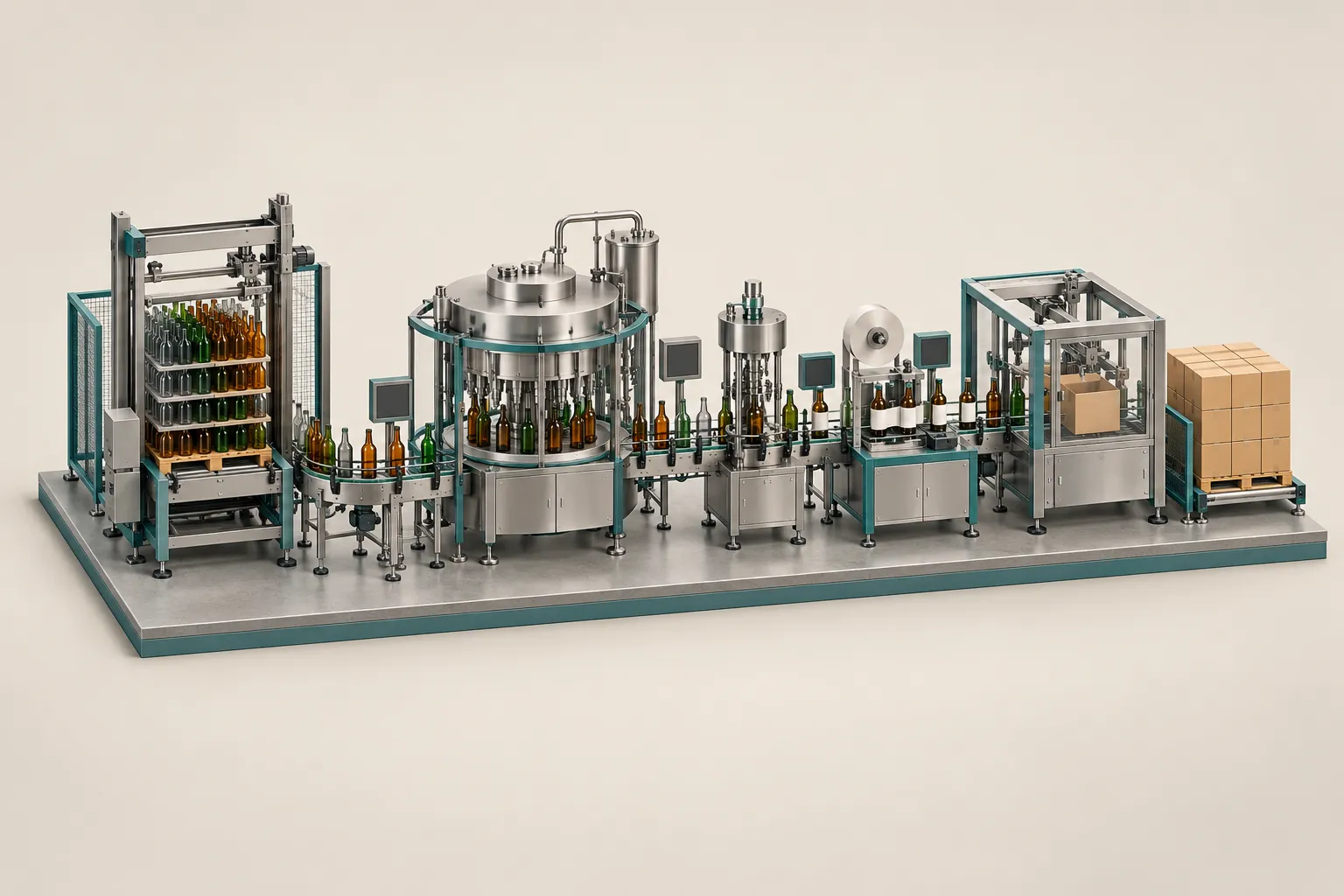
Planning a Glass Bottling Line: From Empty Bottles to Packed Cases
How to divide a glass bottling line into stations, size buffers around the bottleneck machine, and confirm machine interfaces before requesting quotes.
Read the guide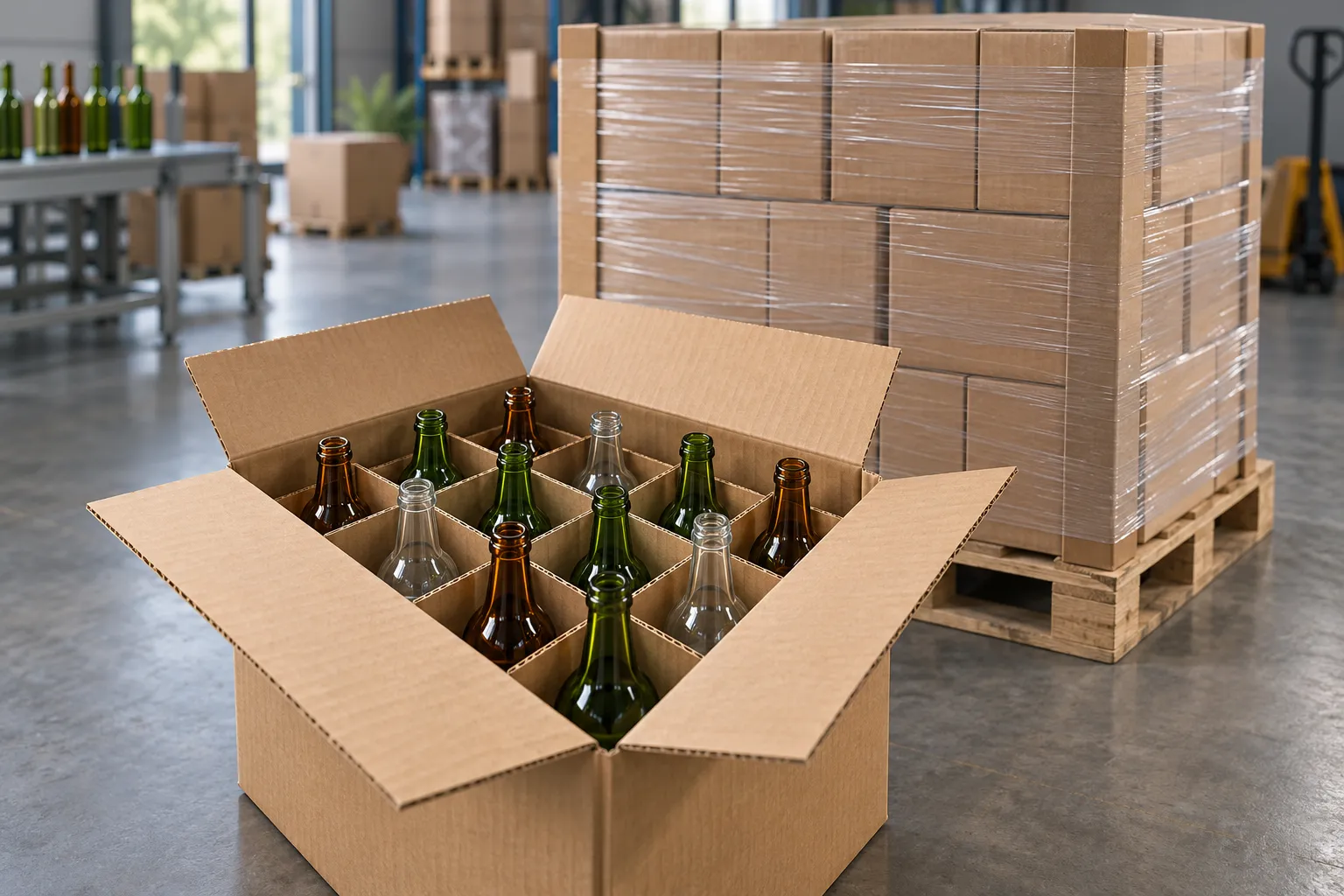
Case Packing and Palletizing for Glass Bottles: Layout and Protection
How to compare case styles, drop and pick-and-place packers, partitions, tier sheets and pallet containment for glass, and which logistics rules to confirm.
Read the guide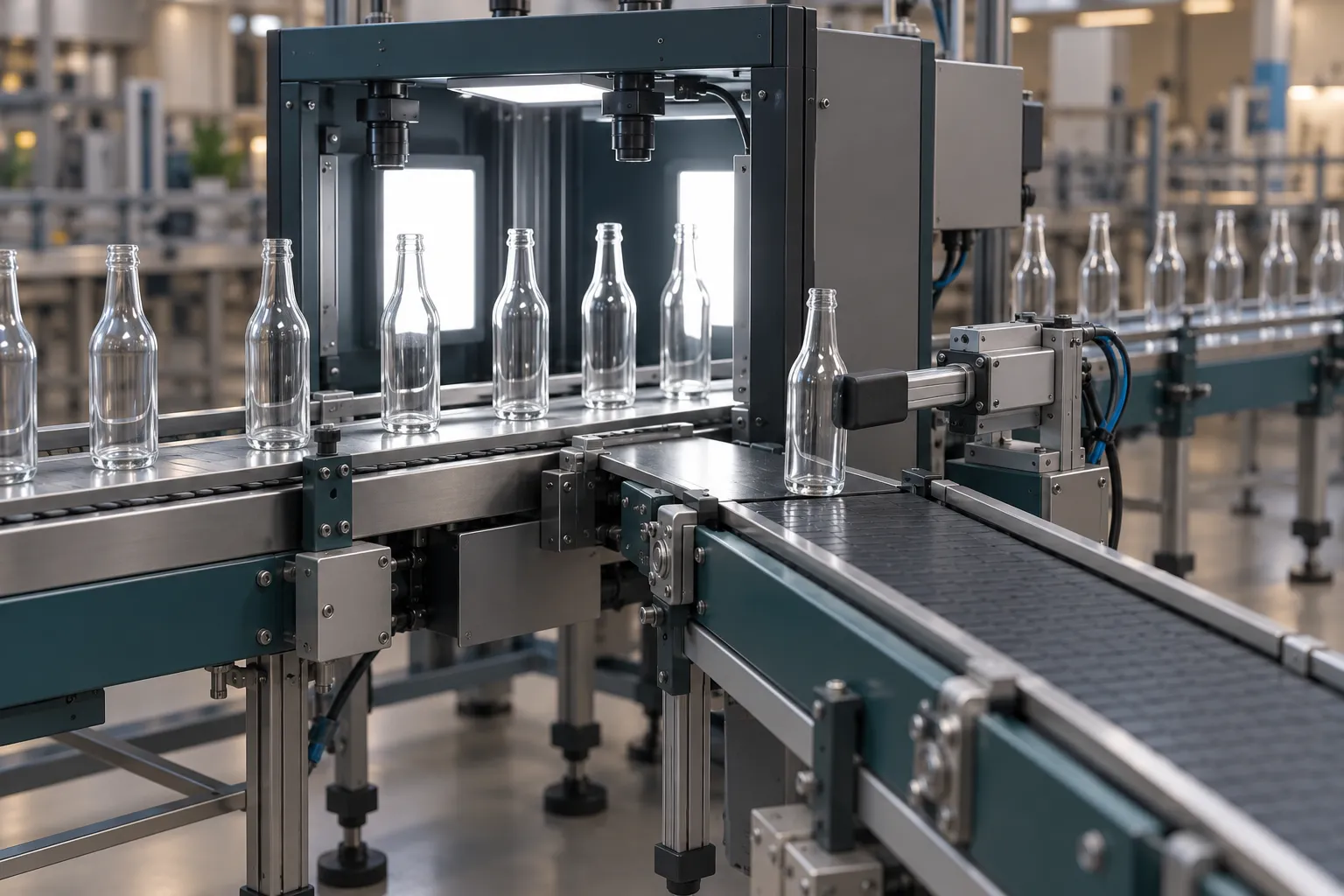
Bottle Inspection Systems: Comparing What Each System Checks
Compare empty bottle, fill level, closure, label and code inspection by scope and limits, and ask for reject verification, test bottles and validation records.
Read the guide