
Recycled Glass Bottles: Cullet Percentage and Quality
Cullet percentage, furnace energy, flint and amber color windows, and stone faults from ceramic fragments.
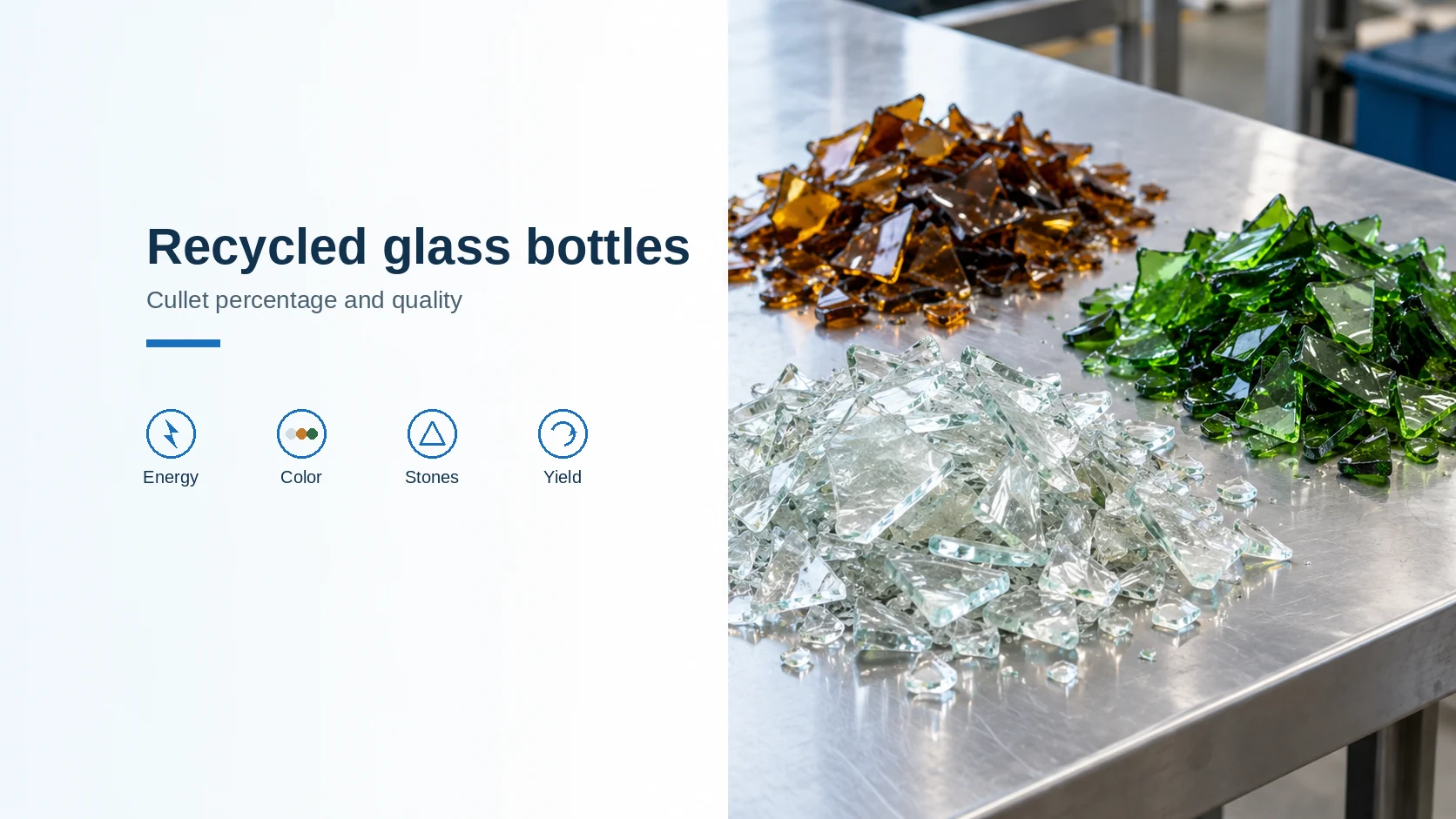
Raising the cullet percentage and then rejecting the bottles for color or stones spends the energy saving on the cold end. Recycled glass bottles can take a higher cullet share when the figure is external cullet, the color stays inside the flint or amber window, and ceramic fragments that will not dissolve have already been taken out.
Recycled glass bottles are specified by a cullet percentage and a quality limit together. FEVE’s May 2026 position paper states that every 10% increase in cullet use reduces furnace energy by around 2.5% and direct CO₂ by around 5%, while saving about 1.2 tonnes of virgin raw materials per tonne of cullet. The same paper says colour and quality decide whether that cullet is melted. A batch percentage that includes the plant’s own rejects is not the ISO 14021 recycled-content figure. Flint cullet is the tight color case; amber accepts more off-color glass; ceramic fragments above about 2 mm are the stone risk.
Swipe or scroll horizontally to see all columns.
| Input or item | Published value or boundary | Why it matters |
|---|---|---|
| Energy step | About 2.5% less furnace energy per 10 percentage points of cullet (FEVE, May 2026; large-furnace rule of thumb, October 2021) | Turns a cullet increase into an energy change |
| Direct CO₂ step | About 5% less direct CO₂ per 10 percentage points (FEVE, May 2026) | Separate from the 580 kg LCA figure per tonne of cullet |
| Virgin raw materials | About 1.2 tonnes avoided per tonne of cullet (FEVE, 2021 and 2026) | Mass balance, not a carbon factor |
| Recycled content | External cullet plus other recycled material, divided by packed glass; internal process cullet excluded (FEVE/FERVER, October 2021, citing ISO 14021:2016) | Stops a total-batch percentage being copied into a claim |
| Flint color | Generally no more than 0.5 wt% green glass added as cullet in commercial flint (WRAP/GTS, March 2004) | The tight window for clear bottles |
| Stones | Many fragments under about 2 mm dissolve; larger undissolved fragments can sit in the wall (WRAP, 2004) | Links contamination mass to rejects |
The manufacturing section is the parent for this calculation. How a supplier’s claim is worded sits in recycled glass content. Where cullet enters the furnace sits in how glass bottles are made.
Swipe or scroll horizontally to see all columns.
| Cullet decision | What the figure measures | Dominant failure mode | Prevention |
|---|---|---|---|
| Total cullet in the batch | Furnace feed, which can include the plant’s own rejects | The number is filed as recycled content | Use the external-cullet formula for the claim |
| Ten more percentage points of cullet | A published energy and direct-CO₂ step for large furnaces | Applying the step when color or stones force the cullet back out | Keep the color window and the inorganic limit on the same row |
| Flint melt with green cullet | Color of the finished article | Grey flint after extra decolouriser, or a green cast | Stay at or below about 0.5 wt% green glass in commercial flint |
| Amber melt with green cullet | A wider color tolerance | Treating a 2004 batch-share remark as a current delivery promise | Record the plant’s own amber color limit beside the published window |
| Ceramics and stones in the cullet | Particles that may not dissolve | Stone inclusions and cold-end rejects | Compare the lot with the size-based inorganic limit before the melt |
What the percentage is allowed to count
Count external cullet when the sentence is a recycled-content claim. Count every glass kilogram in the batch only when the sentence is a furnace feed rate. The two percentages share the word cullet and answer different questions.
FEVE and FERVER, in their October 2021 joint paper, define recycled content from ISO 14021:2016 as the proportion of recycled material in a product. Pre-consumer and post-consumer material count. Glass generated in the glass process and reclaimed inside that process does not. Their formula is:
Recycled content = (external cullet + other recycled material) / packed glass
The paper dates the EU average at 52% in the 2012 life-cycle assessment and says the figure is product dependent. It also says glass bottles can technically be made with up to 100% recycled glass when the cullet is available and suitable. FEVE’s May 2026 paper reports a later European average recycled content of 53.55%. Those are dated averages, not the bottle on an order.
O-I’s recycling-facility page, retrieved 20 October 2026, says cullet makes up at least 60% of the batch on average, and that the cullet is consumer containers plus rejected containers from the plant. The same page says purified cullet is ground to 10–40 mm. The 60% includes internal rejects, so it is a batch share, not the numerator of the 2021 formula. Recycled glass content lists the claim fields that have to be filled before either number is reused.
If the percentage includes the plant’s own rejects, keep it out of an ISO 14021 recycled-content cell. The October 2021 paper excludes glass reclaimed inside the glass process. A higher batch share can still be the right furnace figure.
What 10 percentage points do to furnace energy
Each extra 10 percentage points of cullet, on the FEVE factor, cuts furnace energy by about 2.5% and direct CO₂ by about 5%. The factor is a published step, and it moves only if the furnace actually melts that extra cullet.
FEVE’s May 2026 paper states the step directly: every 10% increase in cullet use reduces furnace energy consumption by around 2.5% and direct CO₂ emissions by around 5%, and about 1.2 tonnes of virgin raw materials are saved per tonne of cullet. The October 2021 paper gives the same energy step as a rule of thumb for large furnaces and says the result can vary with furnace size. O-I’s page states a plant range of 2.5–3% less energy for every 10% of cullet added to the batch, and says cullet lowers the melting point of the mixture. Use the source that matches the furnace you are describing. Do not average 2.5 and 3 into a new constant.
For one step of 10 percentage points:
E_new = E_base × (1 − 0.025)
Worked example on an editorial scale, not a named furnace meter. Take E_base = 1,000 energy units at 40% cullet. At 50% cullet:
E_new = 1,000 × 0.975 = 975
The reduction is 25 units, which is 2.5% of 1,000. The same step applied to direct CO₂, using the May 2026 factor of about 5%, gives 1,000 × 0.95 = 950. That 5% step is not the October 2021 life-cycle statement that 1 tonne of cullet reduces CO₂ by 580 kg. The 580 kg figure is per tonne melted, on the life-cycle basis the paper cites from a December 2016 FEVE study. The 5% figure is a change in furnace direct CO₂ when the cullet share rises by 10 points.
Virgin raw materials use a third equation from the same papers:
M_avoided = 1.2 × M_cullet
Ten extra tonnes of cullet avoid about 12 tonnes of virgin raw materials. The May 2026 paper also says enhanced colour-sorting increases flint cullet, for which demand stays structurally strong, and that mandatory recycled-content targets would ignore the colour and quality constraints that decide uptake.
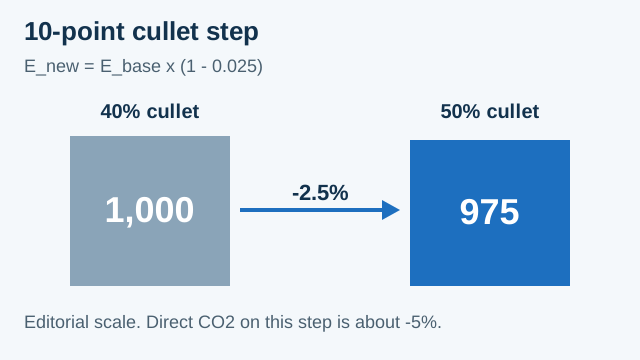
If the furnace cannot accept the extra cullet because of color or stones, the 2.5% step does not apply. The October 2021 paper already limits the energy rule of thumb to large furnaces and flags variation with size. It also says renewable electric melting was, at that date, limited to small flint furnaces with limited recycled glass. A small flint furnace is the wrong place to paste the large-furnace step without the plant’s own energy figure.
Where flint and amber stop accepting off-color cullet
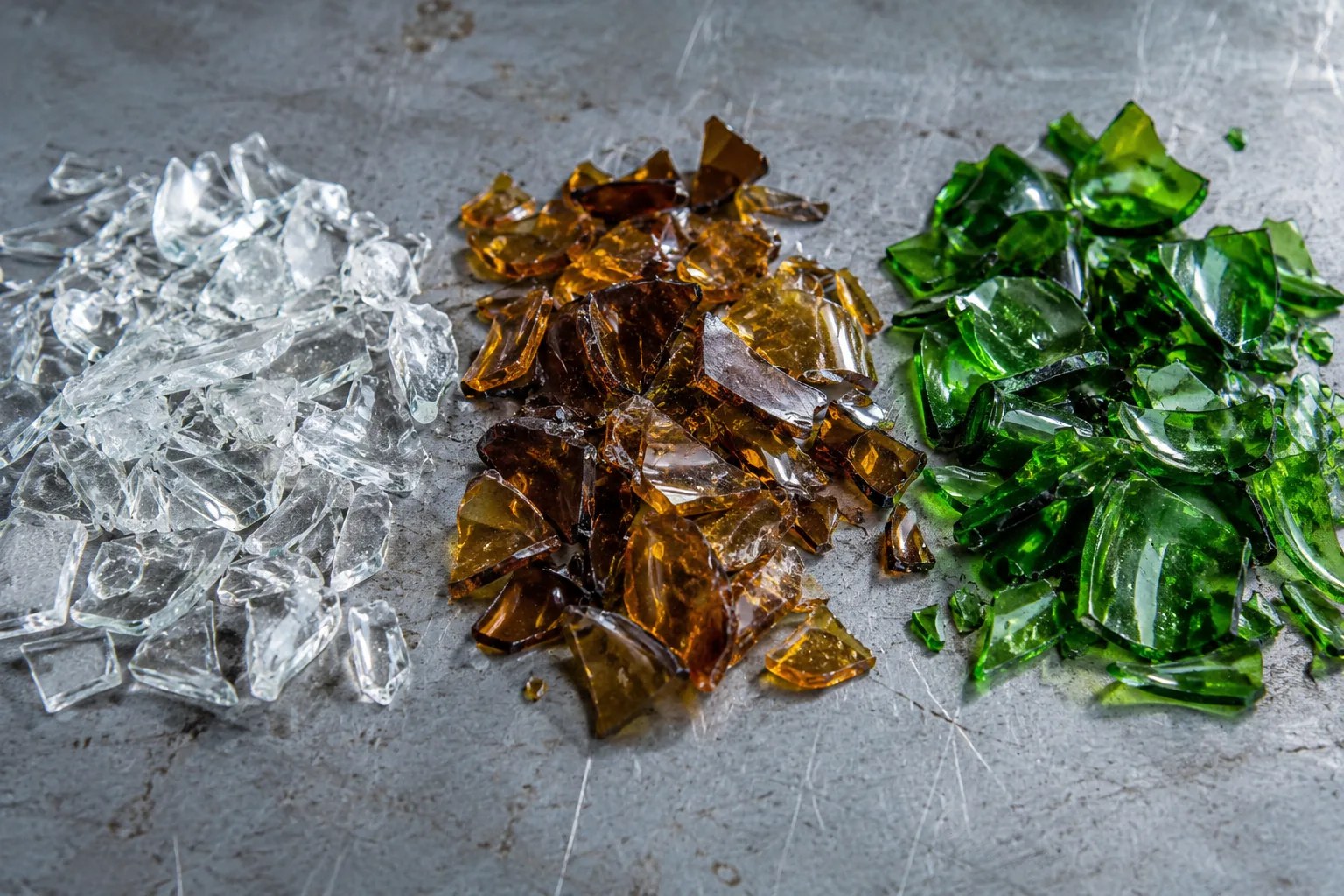
Flint is the tight window. Amber accepts more green and clear glass in the cullet. The documents read for this page do not print a separate extra-flint percentage, so extra flint or high-white flint has to be tighter than commercial flint and has to come from the furnace’s own color specification.
The WRAP/GTS feasibility study published in March 2004 (project GLA0023) describes commercial green container glass as coloured by about 0.25 wt% chromium oxide and 0.35 wt% iron oxide, and amber as coloured essentially by 0.5 wt% iron oxide in a reduced state. Flint can take only trace chromium and iron. The study says a decolouriser can hide a slight green or yellow cast and can also grey the glass and cut light transmission. It states that commercial flint generally has no more than 0.5 wt% of green glass added as cullet, and that the addition then in use was up to 0.5% in the final glass.
The same study says amber is far more tolerant and that up to 30% green cullet can be used in amber glass. That 30% is a share of the amber melt in a 2004 UK feasibility discussion, not a purity limit inside a pile already sold as amber cullet. At the time, the study said amber production was using about 20% cullet, mainly because amber cullet was short. Treat 30% as a research statement with a date, not as a 2026 delivery commitment.
WRAP’s companion 2004 report on inorganic limits prints a typical manufacturer specification for furnace-ready cullet (Table 3). The color rows are:
Swipe or scroll horizontally to see all columns.
| Cullet sold as | Typical limit on other colors | Typical levels then reported |
|---|---|---|
| Clear (flint) | Amber under 2%; green under 2% | Amber negligible; green 0.5% |
| Amber | Green under 10%; clear under 12% | Green 0–10%; clear 2–8% |
| Green | Amber under 10%; clear under 12% | Amber 0–10%; clear 0–10% |
The bars below use the Table 3 limits. The 0.5 wt% line is the finished-flint addition from the colour study. They are different denominators.
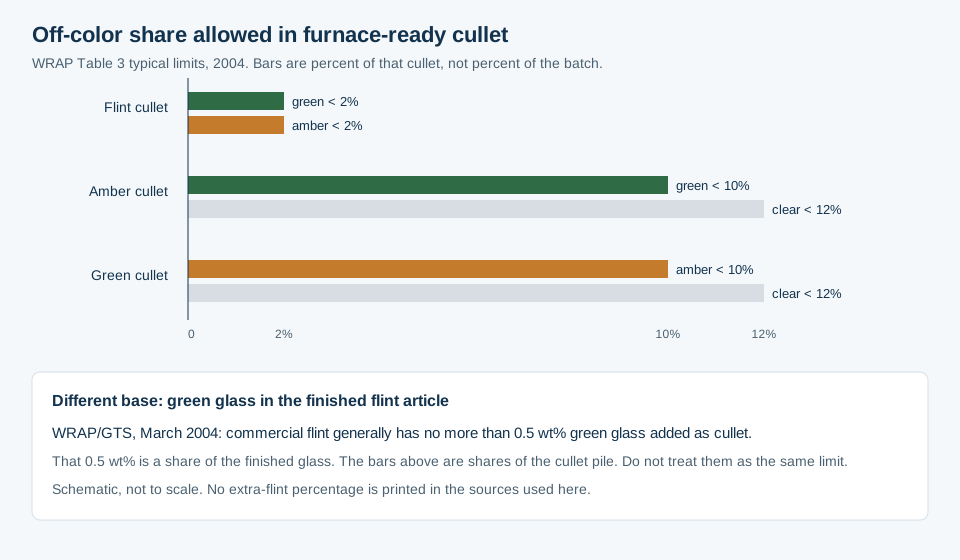
If finished commercial flint would contain more than about 0.5 wt% green glass from cullet, keep that green cullet out of the flint melt. The March 2004 study says commercial flint generally stays at or below that addition, and that further decolouriser can grey the glass. Equality with 0.5 wt% is the edge the study describes as the general maximum, not a recommendation to run above it.
Table 3 is a 2004 typical specification, and the study says no single UK standard for furnace-ready cullet existed then. A current plant can be tighter, especially for extra flint. Nothing retrieved here assigns a numeric extra-flint cullet cap. Record that cap from the furnace color specification, and keep it beside the 0.5 wt% commercial-flint line so the two are not swapped.
When inorganic fragments become bottle stones
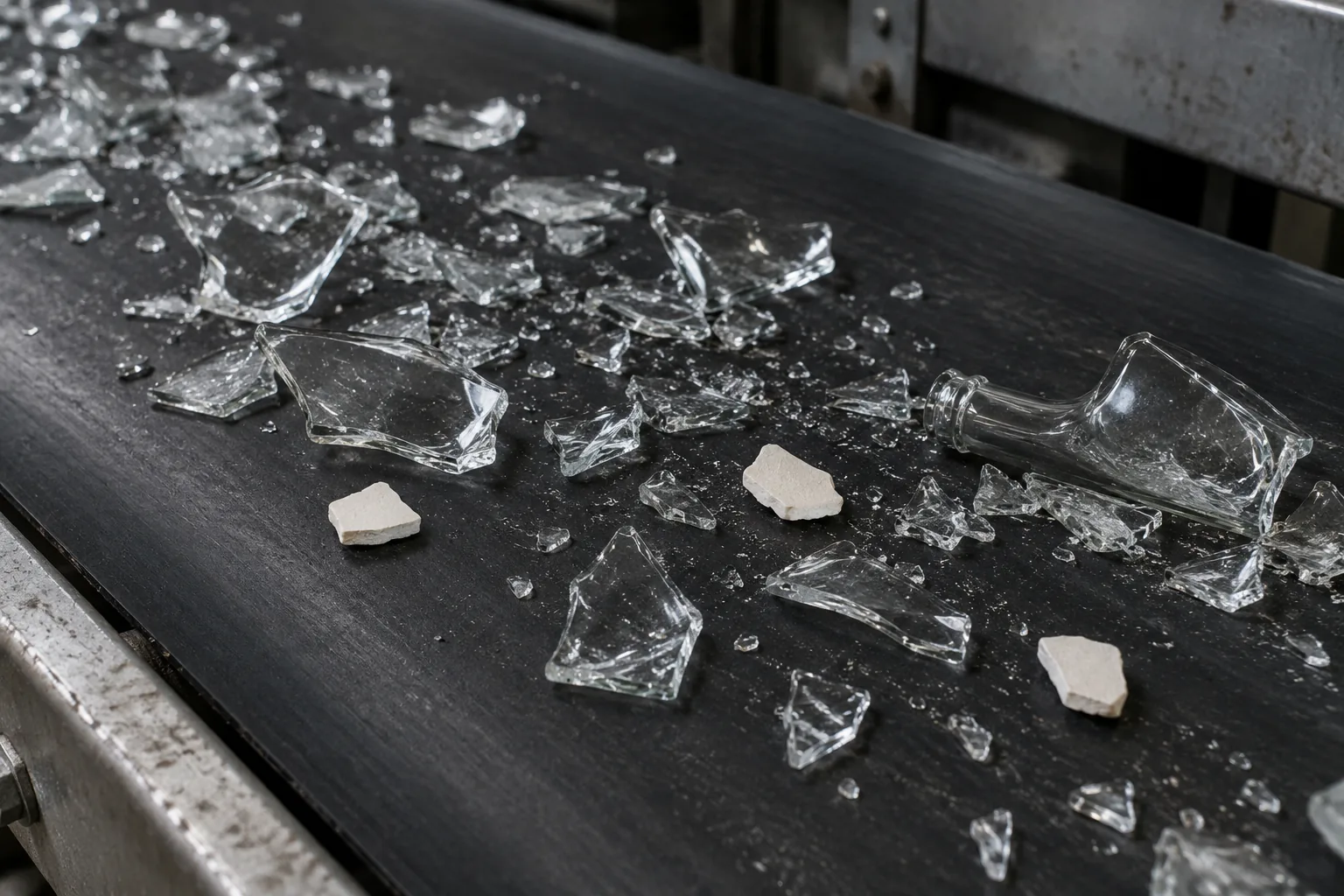
A ceramic chip that does not dissolve becomes a stone in the wall. Mass concentration matters less than the number of fragments large enough to survive the melt.
The 2004 WRAP inorganic report describes container furnaces running up to 1,600°C, with feedstock taking around 16 hours to pass the melting stage. It says many stones smaller than 2 mm dissolve in that time, and that solubility depends on composition, with more refractory materials the least soluble. Fragments that do not dissolve go on into forming and embed in the wall. The embedded stone is a stress concentrator, which is why cold-end inspection rejects the bottle. The report’s practical removal target was inorganic fragments above 2 mm. It says that, at economic throughput, the equipment then in use was achieving separation at around 8 mm. A gap between 2 mm and 8 mm is the size band where a fragment can be both harmful and still in the cullet.
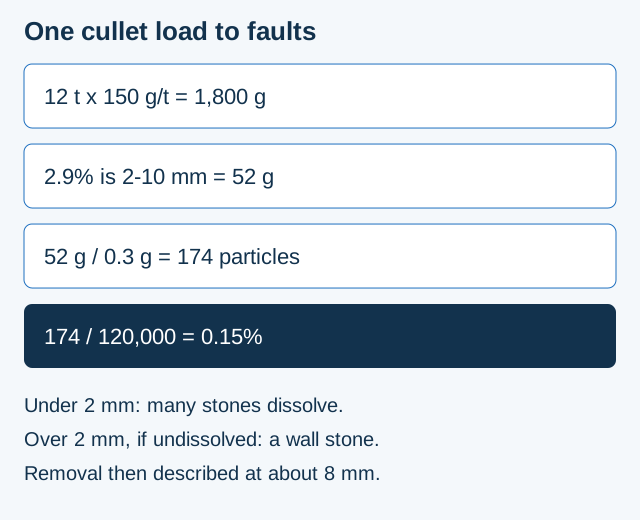
The same report’s worked example is the arithmetic to copy, not a new plant trial:
- Incoming load: 12 tonnes
- Inorganic contamination: 150 g/tonne, so 1,800 g
- Fraction sized between 10 mm and 2 mm: 2.9%, so 52 g
- Average mass of those fragments: 0.3 g, so 174 particles
- Cullet ratio: 40%, so the particles are dispersed in
12 / 0.40 = 30tonnes of glass - Bottle weight: 250 g, so
30,000,000 / 250 = 120,000bottles - Faults, assuming one particle makes one fault:
174 / 120,000 = 0.15%
Fragments above 10 mm are assumed removed before this count. The report also notes that a 100 mm by 100 mm piece of crockery, about 130 g, is unlikely to pass the picking line, while a 5 mm fragment of about 0.3 g has a much better chance.
Commission Regulation (EU) No 1179/2012, Annex I, is a different gate: when cullet ceases to be waste, for direct re-melting. Retrieved from legislation.gov.uk on 20 October 2026, the annex limits non-glass components to:
Swipe or scroll horizontally to see all columns.
| Component | Annex I limit |
|---|---|
| Ferrous metals | ≤ 50 ppm |
| Non-ferrous metals | ≤ 60 ppm |
| Non-metal, non-glass inorganics, cullet size > 1 mm | < 100 ppm |
| Non-metal, non-glass inorganics, cullet size ≤ 1 mm | < 1,500 ppm |
| Organics | ≤ 2,000 ppm |
The annex names ceramics, stones, porcelain and pyro-ceramics as the inorganic examples, and paper, rubber, plastic, fabrics and wood as the organic examples. Because 1 g/tonne equals 1 ppm:
C_ppm = m_g / M_t
Worked example. A 1.000 tonne lot of cullet larger than 1 mm contains 80 g of those inorganics. C = 80 / 1 = 80 ppm, which is under the printed limit of 100 ppm. The same 80 g in cullet of 1 mm or smaller is judged against 1,500 ppm, not against 100 ppm. At 120 g in the coarser lot, C = 120 ppm, which is not under 100 ppm.
WRAP Table 3’s typical furnace-ready limits are not the annex. Ferrous metals match numerically at under 50 g/tonne, which is 50 ppm. Non-ferrous metals are under 20 g/tonne in Table 3 and ≤ 60 ppm in the annex. Ceramics and stones are under 20 g/tonne in Table 3, while the annex uses the 100 ppm / 1,500 ppm size split. Table 3 also lists organics at 3,000 g/tonne and particle size under 50 mm. The annex requires the cullet to meet a customer specification, an industry specification, or a standard for direct re-melting, and it bars mixed municipal solid waste, healthcare waste and hazardous waste as input. O-I’s 10–40 mm grind is a preparation size on that catalog page, not a contaminant limit.
If a non-glass fragment is larger than about 2 mm and does not dissolve in the roughly 16-hour melt, treat it as a stone risk. The 2004 report says many fragments under 2 mm dissolve and that economic separation was then about 8 mm. A lot that passes a mass limit can still fail when the surviving pieces are few and large. Glass bottle defects is the receiving record for a stone once a bottle exists. Bottle inspection systems cover the cold-end check that catches it.
Table 3 also prints typical levels, not only limits. For ceramics and stones it shows clear cullet at 20–40 g/tonne beside a typical limit of under 20 g/tonne. That 2004 contrast means a “typical” clear cullet could already sit on the wrong side of the limit the same table states. Read the column heading before copying a range into a specification.
What the rejects do to yield and to the recycled-content figure
The 0.15% fault rate is lost saleable bottles first. If those bottles are remelted, they raise internal cullet and do not raise the ISO recycled-content percentage.
Under the WRAP assumptions, 174 faulted bottles at 250 g are:
174 × 250 g = 43,500 g = 43.5 kg
Saleable bottles in that model are 120,000 − 174 = 119,826, if each critical particle faults one bottle and no other defect is present. The report does not price the loss. The hidden cost is the rejected mass, the inspection load, and any hold on the lot. Putting a currency figure on it requires the plant’s own yield and labor record.
FEVE’s October 2021 formula excludes glass generated in the process and reclaimed there. Remelting the 43.5 kg as internal cullet can increase the total glass in the next batch without increasing recycled content. A campaign that looks richer in cullet on the furnace log can look unchanged, or worse, on the recycled-content statement if external cullet was displaced or if the claim was never external-only. That is the yield link back to the percentage section.
The May 2026 energy step still applies only to cullet the furnace keeps. A 10-point increase that is later reversed because of stones does not deliver the 25-unit reduction in the editorial example. Record the cullet share that was actually melted, the color window, and the inorganic result on one specification row. The bottle specification checklist is where those rows belong.
Method and sources
Retrieved 20 October 2026. FEVE, “Glass packaging circularity and cullet uptake” (May 2026), supplies the 53.55% European average, the 1.2 tonne raw-material factor, the 2.5% energy step and the 5% direct-CO₂ step. FEVE and FERVER, “Joint position paper on Recycled content” (October 2021), supply the ISO 14021 formula, the internal-cullet exclusion, the 52% figure from the 2012 assessment, the up-to-100% technical statement, the 580 kg life-cycle CO₂ figure per tonne, and the large-furnace caveat on the energy step. O-I’s recycling-facility page on glass-catalog.com supplies the 10–40 mm grind, the “at least 60%” batch share that includes plant rejects, and the 2.5–3% energy range.
WRAP/GTS, “Feasibility study for the reduction of colour within the glass furnace” (March 2004, GLA0023), supplies the oxide additions, the 0.5 wt% green-in-flint statement, and the 30% green-cullet-in-amber research statement. WRAP/GTS, “Recovered container glass: development of test methods and inorganic contamination limits” (2004), supplies Table 3, the 2 mm / 16 hour / 8 mm process description, and the 12-tonne worked example. Commission Regulation (EU) No 1179/2012, Annex I, as published on legislation.gov.uk, supplies the end-of-waste non-glass limits. Local copies of the FEVE and WRAP PDFs match the files at the publishers’ URLs by SHA-256.
No extra-flint percentage, no current furnace energy meter, and no dollar cost are stated, because those documents do not contain them. British Glass and a Cornell library page were not used: those two fetches did not return a readable text. The diagrams repeat only the relationships and the numbers cited above.
Related guides
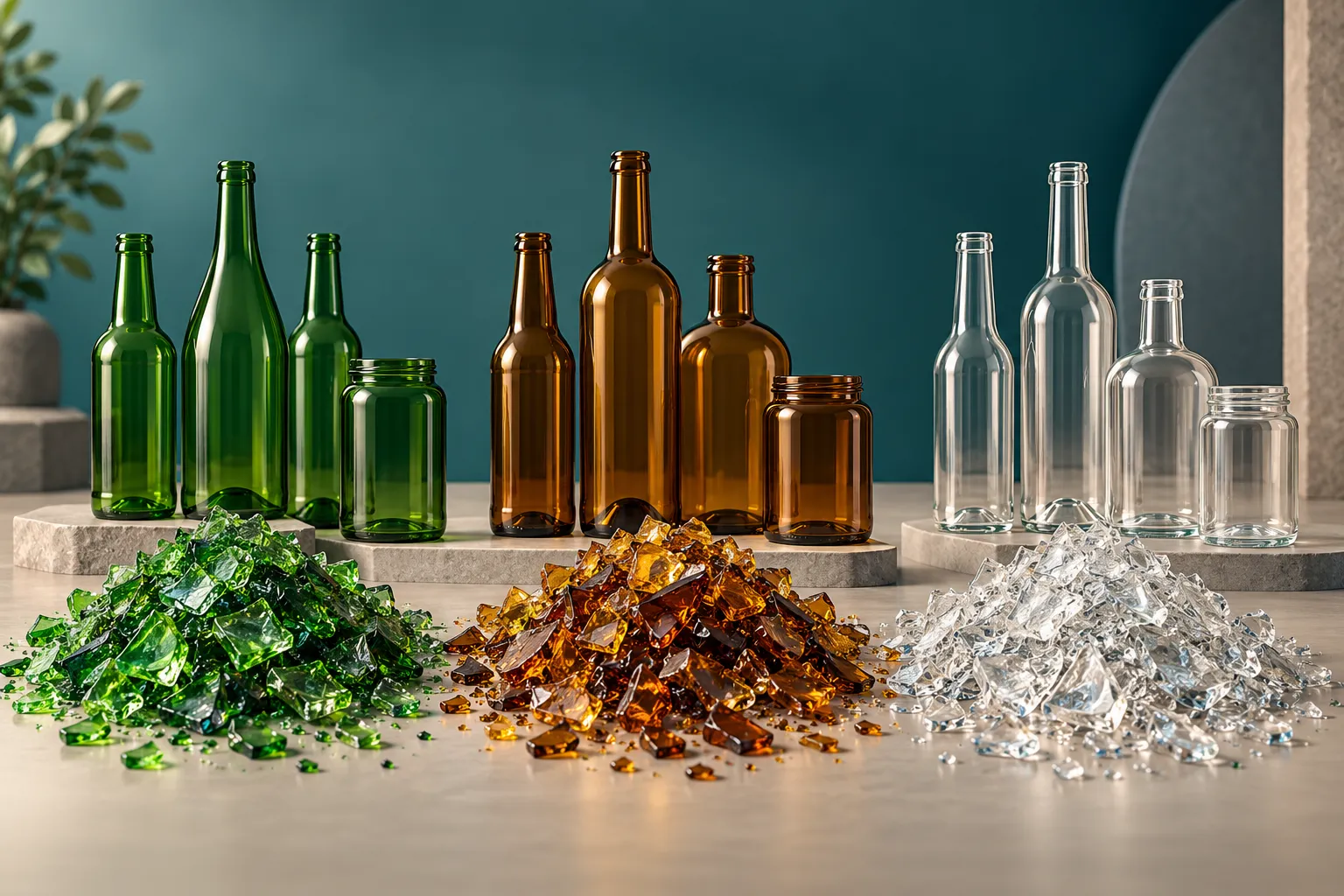
Recycled Glass Content: How to Read Supplier Claims
How to read a recycled glass content claim: cullet types, plant averages vs product figures, reporting period, colour limits and verification to request.
Read the guide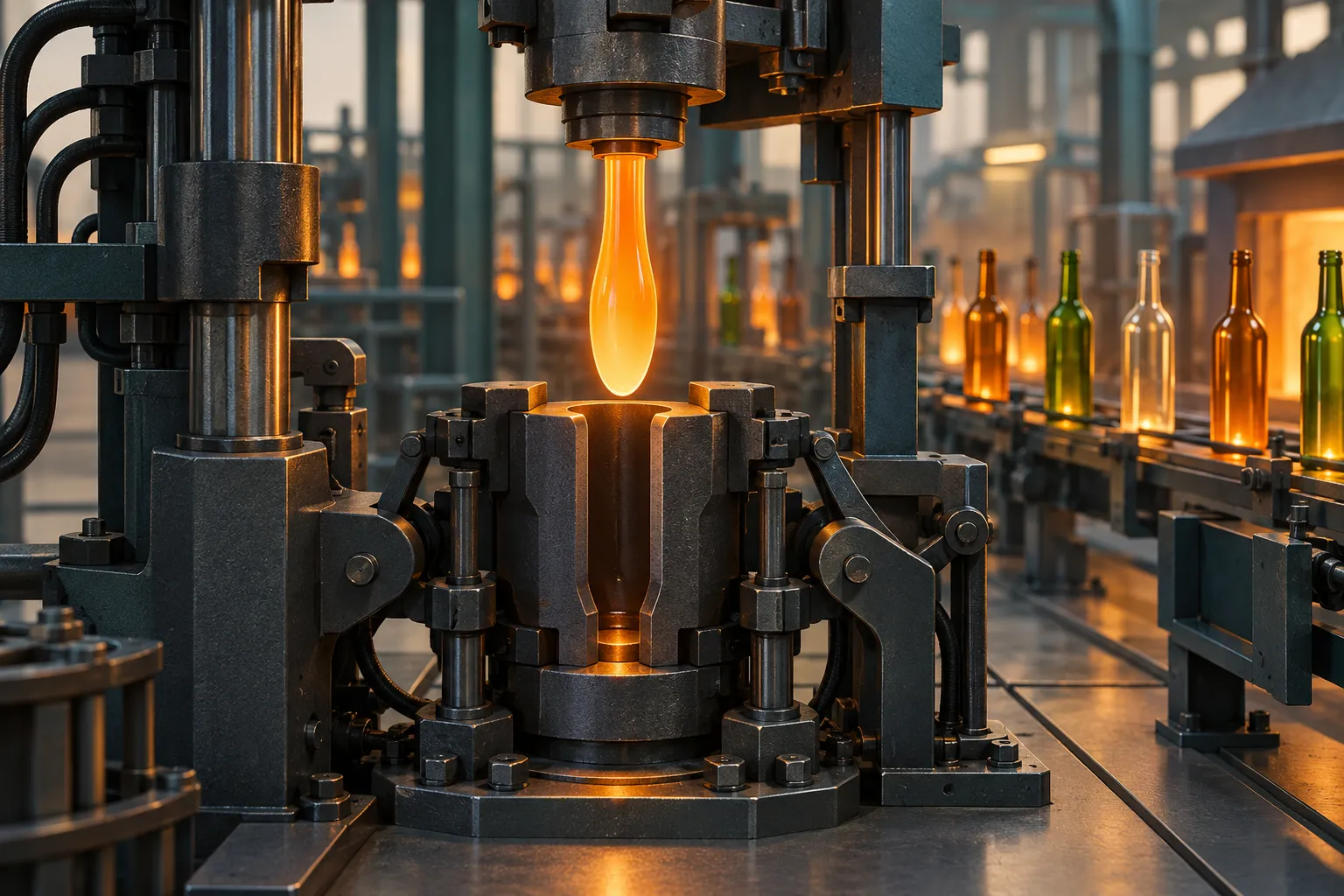
How Glass Bottles Are Made: From Batch Materials to Inspection
A plain-language walk through glass bottle manufacturing: batch, furnace, forehearth, gob feeding, IS machine forming, coatings, annealing and inspection.
Read the guide
Glass Bottle Defects: A Buyer’s Receiving and Supplier Report
Identify glass bottle defect locations, preserve lot and sample evidence, and use a receiving report to separate observations from supplier findings and release decisions.
Read the guide