
Accutek vs. E-PAK: Comparing Published Bottling Equipment Scope
Compare published Accutek and E-PAK bottling categories. Blank cells are items those pages do not state, including glass finish, price, and a shared line rate.
A catalog match that skips the bottle finish wastes a trial when the two proposals describe different containers. The opened Accutek and E-PAK pages list equipment categories, and they leave glass neck finish, price, and a shared line rate blank.
Buyers who have already narrowed a glass-line shortlist to Accutek and E-PAK need one sheet of published scope, not a winner. Accutek’s filling and bottling category pages, fetched 6 October 2026, name liquid fillers, some dry fillers, and several handling machines. E-PAK’s homepage, fetched 11 October 2026, names filling, capping, plugging, labeling, date coding, and bottle handling, including a volumetric piston filler and molten-product fillers. Neither page states a neck finish, a closure size, or a rate for one defined glass bottle. Read the table as company wording. A blank cell means that page did not state the item.
- Accutek’s SAPD-1 card is the only opened sentence that names glass containers.
- E-PAK’s homepage names bottles, jars, vials, and ampoules, and it does not use the word glass.
- Capping and labeling appear as Accutek integration wording and as named E-PAK machine types.
- Price, delivery, and a matched line rate stay blank. This page does not compare model speeds.
Swipe or scroll horizontally to see all columns.
| Published item | Accutek, category pages fetched 6 October 2026 | E-PAK, homepage fetched 11 October 2026 |
|---|---|---|
| Automation named for liquid filling | Automatic and semi-automatic liquid filling systems | Manual, semi-automatic, and fully automatic filling machines |
| Piston or volumetric filling | SVF semi-automatic volumetric piston fillers; AVF automatic volumetric piston fillers; servo piston filler (E-SPF); Accu-Doser mini-dose filler | Volumetric piston filler under featured machines; volumetric and gravimetric machines in the filling copy |
| Gravimetric or net-weight filling | AccuWeight net-weight fillers for liquid or semi-liquid products into drums or buckets, 0.5–6 gallons (2–25 L); separate dry-product weight fillers | Gravimetric machines named |
| Overflow filling | SAPOF semi-automatic pressure overflow fillers for low to medium viscosities and foaming products; APOF automatic pressure overflow fillers, with 200 cps named on that card | |
| Timed-flow volumetric filling | Pinch, Mini-Pinch, and automatic pinch models named for thin liquids, oils, and creams | |
| Vacuum filling | AccuVac series for nail polish, perfumes, light oils, and other liquids in small amounts | |
| Pump or positive-displacement filling | SAPD-1 and SAPD-2; APD series; screw pump for grease, pastes, lotions, and heavy creams | |
| Molten or hot-product filling | Molten product fillers featured; hot or molten filling named; candles and molten products listed | |
| Corrosive or hazardous duty | Auto corrosive filler (ACF), named as a timed-flow volumetric filler; the retrieved card ends there | Filling systems for hazardous and corrosive environments; hazardous-location labeling machines; acids and corrosives listed |
| Glass, as a word on the page | SAPD-1 card: rigid plastic, metal, and glass containers | |
| Neck finish or closure size | ||
| Small-container note | Accu-Doser card: trays of small bottles, vials, syringes, and cartridges; stated dose 0.1 mL to 200 mL | Containers as small as a cup, tube, vial, or ampoule; also bag, pouch, sachet, jar, and cup fillers |
| Capping | Bottling page: equipment that integrates filling, capping, and labeling. No capper model card in the retrieved text | Spindle cappers featured; capping and plugging named |
| Labeling | Same integration sentence. No labeler model card in the retrieved text | Hazardous-location labeling machines featured; labeling named |
| Date coding | Date coding named | |
| Bottle handling | Elevator loader and a tabletop bottle cleaner (Bottle-Blower) named; those retrieved cards are incomplete | Cap sorting elevator, rotary turntables, standard conveyors, and cooling conveyors; bottle handling named |
| Price | ||
| Line rate for one defined glass bottle |
A filled cell is a company statement from the page named in the column. It is not a trial result, and it is not evidence that the other company lacks that machine.
What do the opened pages list?
Accutek’s filling-machines page presents a catalog of fillers. The retrieved text includes net-weight, timed-flow, vacuum, piston, positive-displacement, overflow, siphon, auger, and corrosive filler names. The page header says it is showing 41 results. This comparison uses only the cards present in the 6 October 2026 text, and it does not treat that header as a complete specification sheet.
E-PAK’s homepage presents the company as a manufacturer of in-line liquid packaging machinery and lists featured machines: a cap sorting elevator, hazardous-location labeling machines, a volumetric piston filler, spindle cappers, molten product fillers, rotary turntables, standard conveyors, and cooling conveyors. The same page says the firm offers machines for filling, capping, plugging, labeling, date coding, and bottle handling.
An E-PAK article dated 30 September 2026, fetched 6 October 2026, discusses standard versus custom-engineered filling machines. It lists gravity, overflow, piston, pump, pressure, net-weight, and molten fillers as common types of standard machines. That list is an explanation of machine types, not a catalog of E-PAK models, so those names stay out of the E-PAK column except where the homepage itself names the type.
Takeaway: Use a category only where the opened page names it.
Where is glass stated, and where is the cell blank?
Accutek’s SAPD-1 card says the single-head semi-automatic positive-displacement pump filler is designed to handle rigid plastic, metal, and glass containers. That sentence does not give a finish, a capacity, a fill height, or a closure. Other Accutek cards in the retrieved text name drums, buckets, vials, syringes, cartridges, and small bottles. They do not repeat the word glass.
E-PAK’s homepage names bottled water, still beverage, jars, cups, tubes, vials, and ampoules. It also names a sister company, Change Parts, Inc., for bottle-handling change parts and cap-handling change parts. It does not say those change parts are for glass, and it does not give a finish designation.
The neck finish and closure guide is the place to write the finish, liner, and closure the line will actually run. The bottle specification checklist holds the drawing revision, brimful capacity, and fill point. Neither Accutek nor E-PAK page supplies those fields.
Takeaway: A glass cell stays blank until the page, or a later datasheet, names glass for that machine.
Which functions sit next to the filler?
Accutek’s bottling-machines page says bottling machines fill liquid into bottles and that Accutek designs equipment integrating filling, capping, and labeling. The retrieved product cards name a cotton inserter that can run with bottle feeders, counters, and cappers; a case packer; an elevator loader; mixing tanks that use heat-conducting oil through jacket inlets; and a tabletop bottle cleaner. Several of those cards stop mid-sentence in the retrieved text, so this page does not finish the description.
E-PAK’s homepage puts spindle cappers, hazardous-location labelers, conveyors, and turntables on the same featured list as the volumetric piston filler. It also names plugging and date coding. It does not state which of those machines are included with a filler and which are separate purchases.
The glass bottle filling machines guide separates fill method, product, and bottle before a supplier name enters the file. The capping equipment guide covers closure and torque questions the two catalogs do not answer. Put conveyor, capper, and labeler on the same scope sheet as the filler. Planning a glass bottling line is the wider layout record.
Takeaway: Record whether capping, labeling, and conveying are in the machine scope or outside it.
What should you record before a trial?
Write one row per question and leave the answer empty until each company fills it for the same bottle drawing. Do not copy a rate from an Accutek model card into that row. Those cards include rates, and the E-PAK pages opened here do not state a rate for the same bottle, product, and counting window. This page does not compare model speeds.
Swipe or scroll horizontally to see all columns.
| Question for both companies | What to attach | Accutek answer | E-PAK answer |
|---|---|---|---|
| Which catalog machine is proposed? | Product name and viscosity | ||
| Which container is accepted? | Current bottle drawing | ||
| Which closure is accepted? | Finish, liner, and closure sample | ||
| What is included with the filler? | Capper, labeler, conveyor, coder, as separate lines | ||
| What rate applies? | Bottle, product, and the counting window |
Keep the two answer columns blank until the replies arrive. The bottling equipment checklist is the longer record for scope, acceptance, and documents. It does not contain Accutek or E-PAK facts.
Takeaway: One drawing and one product description go to both companies.
When does this page not choose a supplier?
It does not choose one when the product is carbonated, when the bottle is a specific finish, or when the decision is price, service, or delivery. None of those items is stated as a comparison in the opened pages. It also does not choose one when a later datasheet fills a blank cell. Replace the blank with the new wording and the new date, and keep the other cell blank if that company still has not stated it.
Our reading is that the pages support a scope sheet and a list of questions. They do not support a rank, a purchase, or a claim that one catalog covers glass bottling more completely.
From Buying Resources, the next file is the bottle drawing, then the two catalog answers on that drawing.
Common questions
Does a featured machine name mean it fits this glass bottle?
No. A featured name shows that the company published that machine type. Fit still needs the bottle drawing, the product, and the closure. The glass cell in the table is blank for E-PAK, and Accutek’s glass wording is limited to the SAPD-1 card.
Should a blank cell be read as a no?
No. A blank cell means the opened page did not state the item. It is not a finding that the machine is absent from the catalog.
Method, limitations and sources
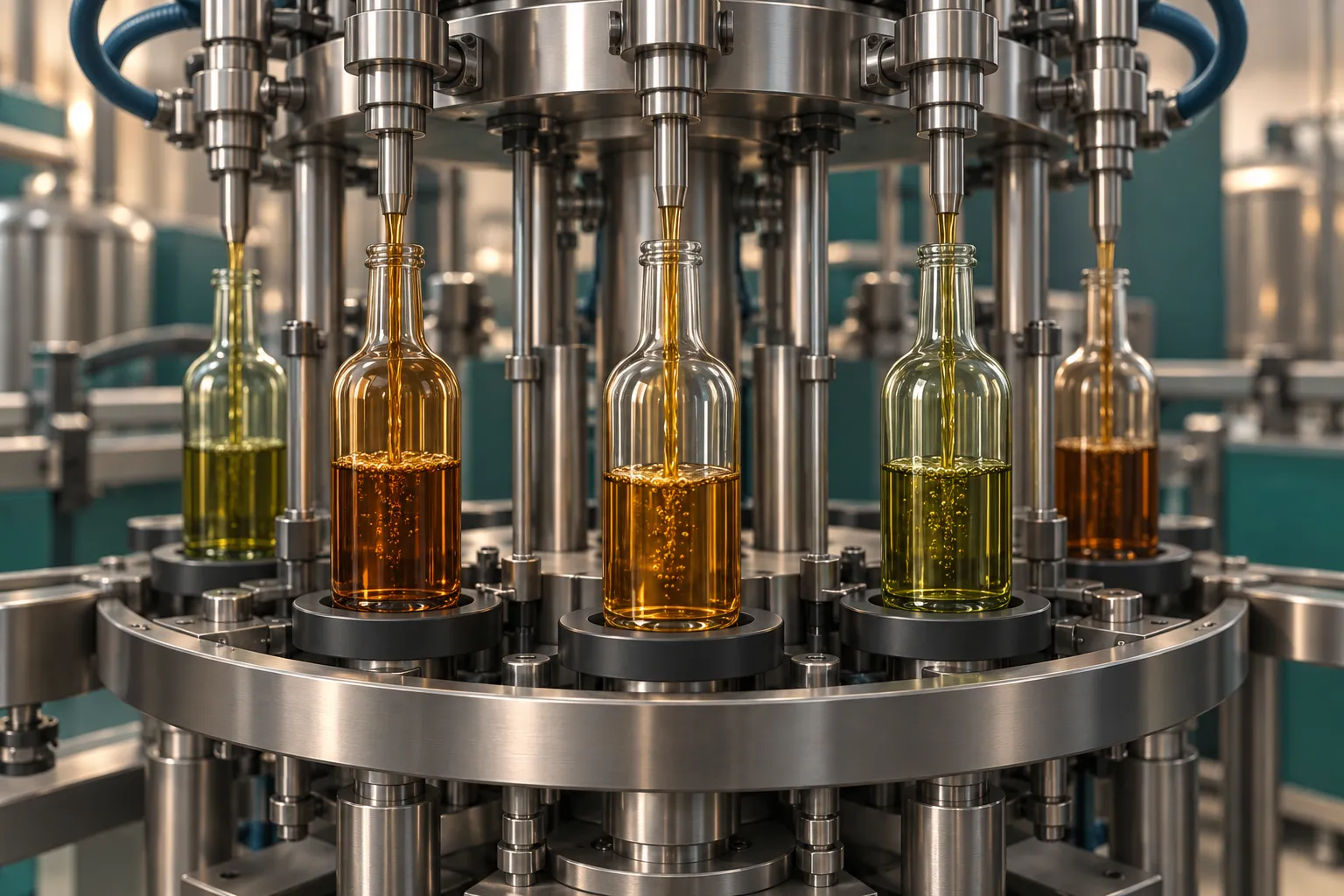
This is a compilation of public company pages, not a machine trial and not a ranking. Accutek text was retrieved from the research library on 6 October 2026. The E-PAK homepage text was fetched on 11 October 2026 after a live homepage request returned a block on an earlier attempt. The E-PAK article was retrieved on 6 October 2026 and is used only to keep a general filler-type list out of the catalog column. Model cards that stop mid-sentence are quoted only through the last complete claim. Photographs show unlabeled bottles, caps, nozzles, and a conveyor. They are not Accutek or E-PAK machines and they are not a test.
- Accutek Packaging, filling machines page, fetched 6 October 2026: accutekpackaging.com/filling-machines/.
- Accutek Packaging, bottling machines page, fetched 6 October 2026: accutekpackaging.com/bottling-machines/.
- E-PAK Machinery homepage, fetched 11 October 2026: epakmachinery.com.
- E-PAK Machinery, “Custom-Engineered vs. Standard Filling Machines,” dated 30 September 2026, fetched 6 October 2026: epakmachinery.com/blog/custom-engineered-vs-standard-filling-machines/.
Change note: Added a published-scope table for Accutek and E-PAK, with blank cells where those pages do not state the item.
Related guides
Glass Bottle Filling Machines: How to Compare Filling Principles
Compare gravity, vacuum, counter-pressure, piston and flowmeter filling for glass bottles by product, container and line fit, and learn what to ask suppliers.
Read the guide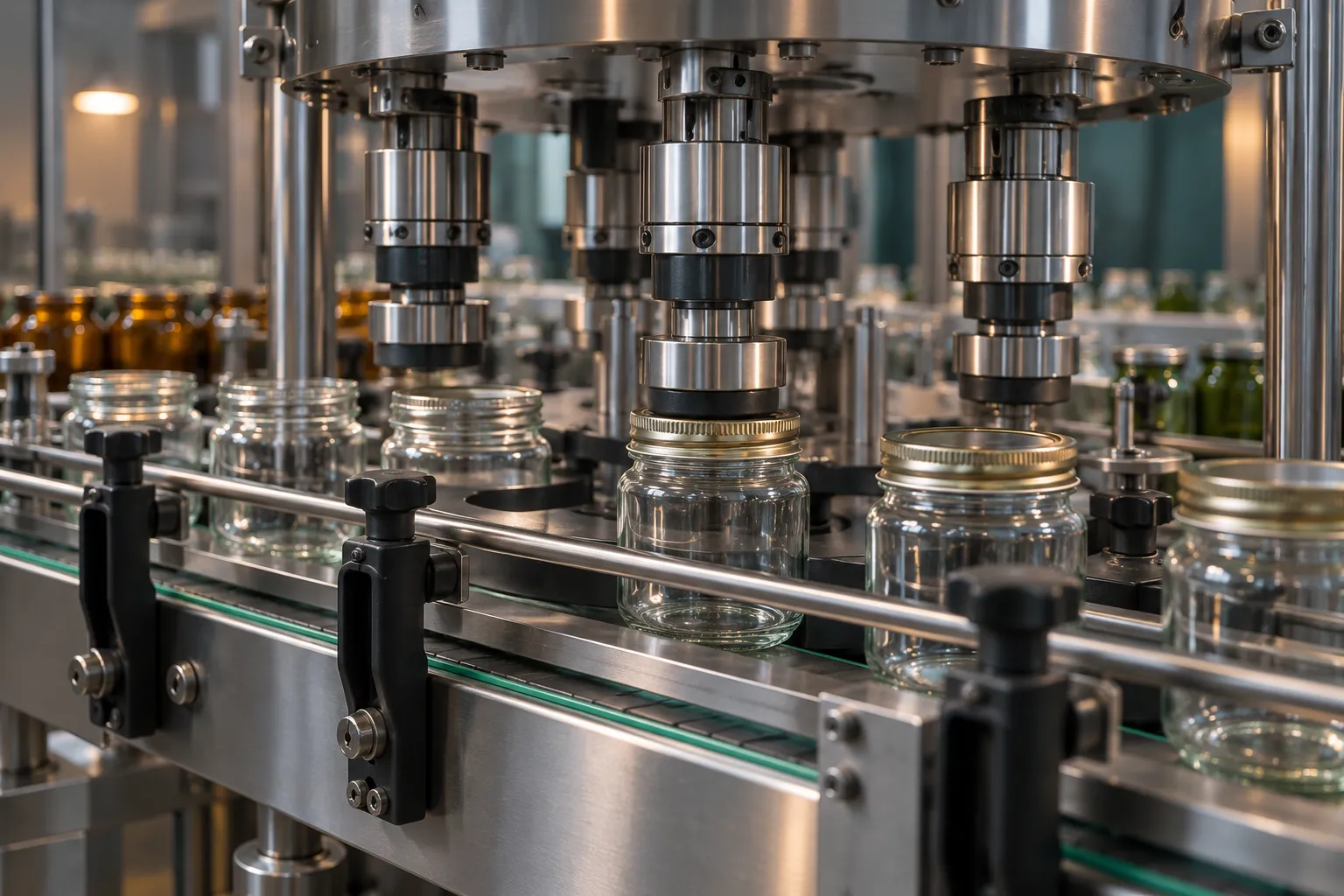
Choosing Capping Equipment for Glass Bottles and Jars
Prepare a capping requirement from finish and closure data: screw, ROPP, crown, lug, press-on and cork application, torque, and how to verify closures.
Read the guide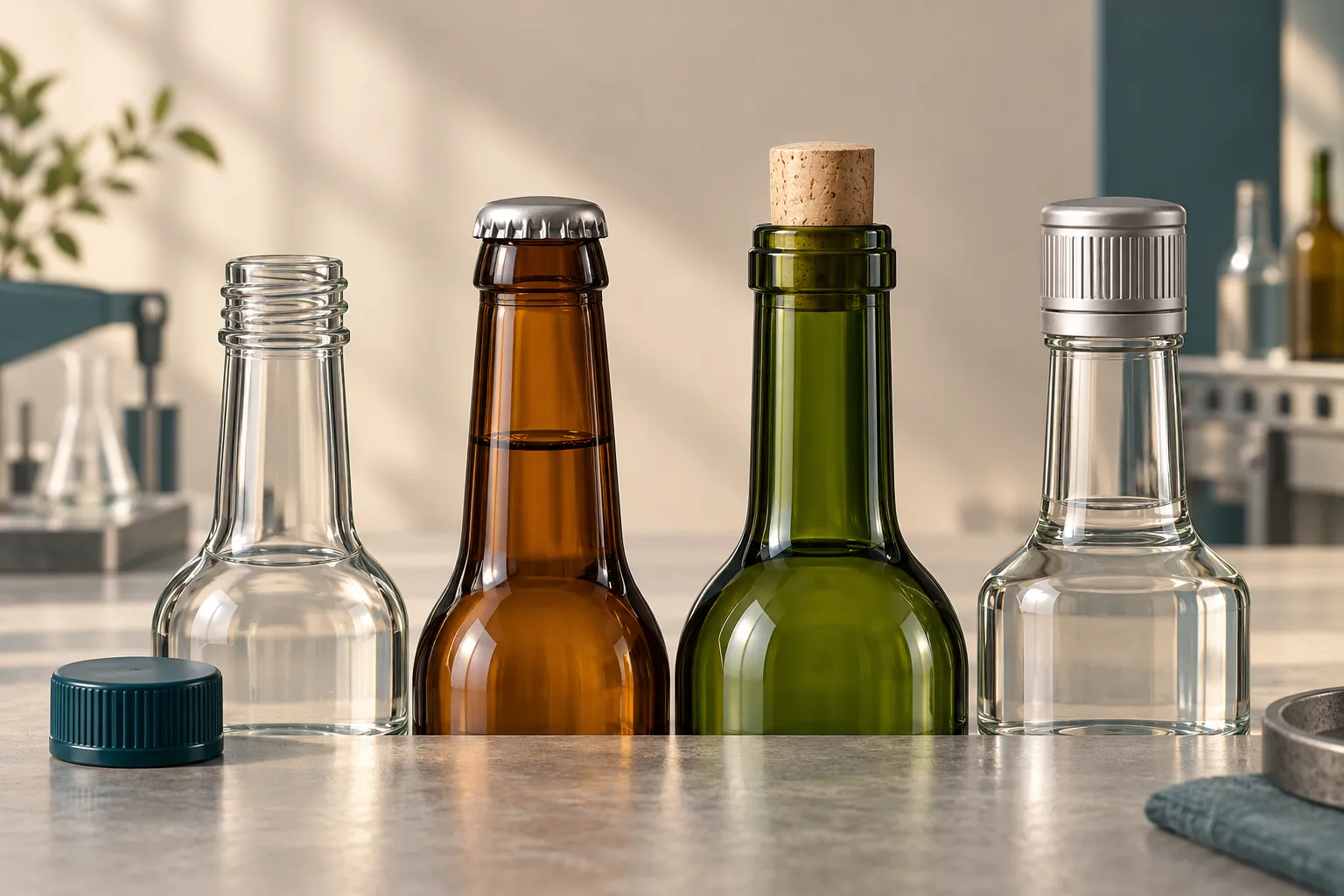
Bottle Neck Finishes and Closure Compatibility
How to read finish designations such as 28-400 and the T, E, I, H and S dimensions, and why a matching nominal diameter does not prove a closure fits.
Read the guide