
Spirits Bottle Checklist: Fill Size, Closure and Line Trial
Separate the US distilled-spirits sizes in 27 CFR 5.203 from brimful capacity, the neck finish, and the line trial. Unknown cells stay blank.
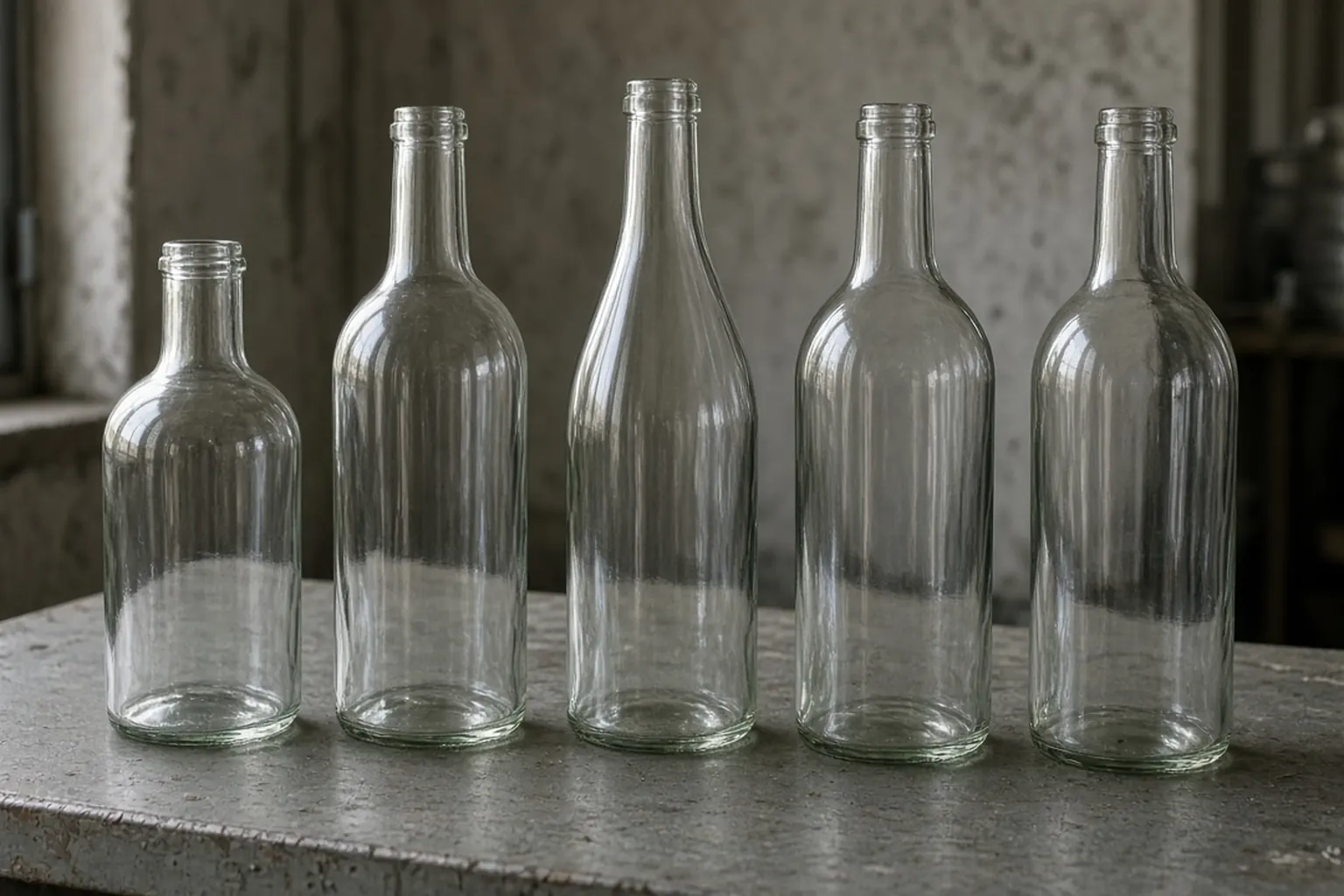
Ordering glass from the labeled volume alone rejects the bottle when the filler and the capper need a different capacity and a different finish. The labeled volume for a US distilled spirit has to be one of the metric sizes in 27 CFR 5.203, and brimful capacity, neck finish, and the line trial stay blank until a drawing and a plant record supply them.
A US spirits brand that is about to order glass needs one sheet that keeps the authorized standard of fill apart from the bottle’s brimful capacity, the closure, and a line trial. The eCFR display of 27 CFR 5.203, current as of 7 October 2026, lists the metric sizes authorized for distilled spirits, whether bottled in the United States or imported. That list is a container-size rule. It does not state a neck finish, a brimful volume, or a fill height. GloryStarPack’s sample-approval page, fetched 11 October 2026, asks the buyer to record nominal fill and brimful capacity as separate lines, and to check the production-intent bottle on the filler and the closer. This page copies the current size list and leaves the bottle-specific cells empty.
- Paragraph (a) numbers twenty-five authorized metric standards of fill for distilled spirits.
- The 10 January 2025 TTB final rule names fifteen additional sizes and says the old split between cans and other containers is gone.
- Brimful capacity, finish designation, liner, and line-trial notes are supplier or plant records. Those cells stay blank here.
- This sheet is not a legal opinion and does not adopt another country’s fill rule.
Swipe or scroll horizontally to see all columns.
| Record | What the opened source states | What this order still has to fill in |
|---|---|---|
| Standard of fill | 27 CFR 5.203(a), eCFR display current as of 7 October 2026: the twenty-five metric sizes listed below | Which one of those sizes is the labeled volume on this product |
| Brimful capacity | GloryStarPack’s checklist says to record brimful capacity where relevant. It gives no number | Supplier drawing: value, unit, tolerance, method |
| Neck finish and closure | The same checklist says to use the exact closure, liner, gasket, or reducer intended for the order. No finish code is stated | Finish designation, closure part, liner |
| Line trial | The same checklist says to confirm nozzle clearance, capping or crimping setup, and conveyor stability on production-intent samples | Plant record for this bottle and this closer |
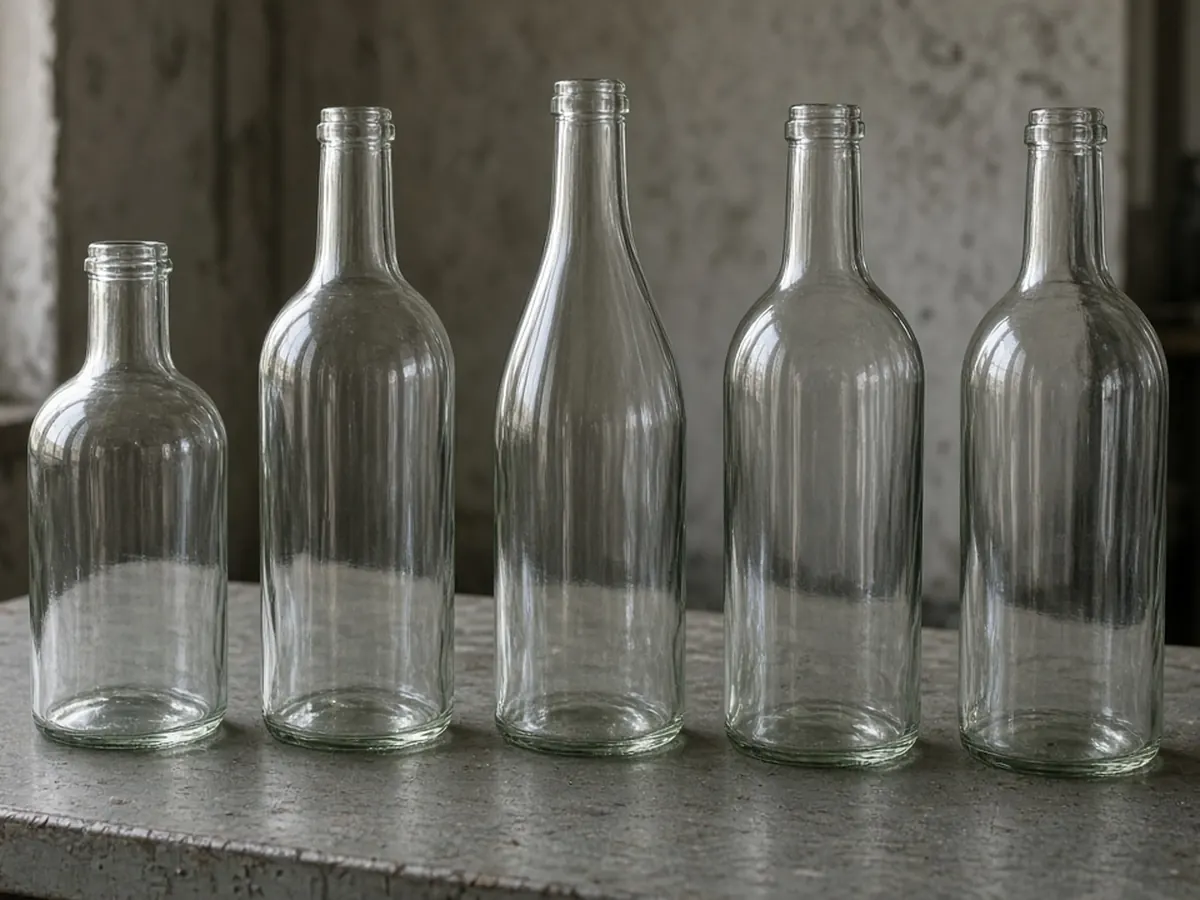
Which sizes does 27 CFR 5.203 authorize?
Paragraph (a) numbers twenty-five authorized metric standards of fill for distilled spirits, whether domestically bottled or imported. The eCFR page states that it is displaying title 27 up to date as of 7 October 2026, and that title 27 was last amended on 25 September 2026. The same page says the text is authoritative but unofficial, and that the eCFR is not an official legal edition of the CFR.
Swipe or scroll horizontally to see all columns.
| Item | Authorized standard of fill |
|---|---|
| (1) | 3.75 liters |
| (2) | 3 liters |
| (3) | 2 liters |
| (4) | 1.8 liters |
| (5) | 1.75 liters |
| (6) | 1.5 liters |
| (7) | 1.00 liter |
| (8) | 945 mL |
| (9) | 900 mL |
| (10) | 750 mL |
| (11) | 720 mL |
| (12) | 710 mL |
| (13) | 700 mL |
| (14) | 570 mL |
| (15) | 500 mL |
| (16) | 475 mL |
| (17) | 375 mL |
| (18) | 355 mL |
| (19) | 350 mL |
| (20) | 331 mL |
| (21) | 250 mL |
| (22) | 200 mL |
| (23) | 187 mL |
| (24) | 100 mL |
| (25) | 50 mL |
The section source line reads: T.D. TTB-176, 87 7579, 9 February 2022, unless otherwise noted. The amendment note on the section reads: T.D. TTB-200, 90 FR 1876, 10 January 2025.
TTB’s Regulations and Rulings Division, on a page dated 8 January 2025 and last updated 18 February 2026, says a final rule effective 10 January 2025 authorizes 15 additional standards of fill for distilled spirits: 187, 250, 331, 350, 355, 475, 500, 570, 700, 710, and 945 milliliters, and 1.5, 2, 3, and 3.75 liters. The page says those sizes are in addition to sizes already listed at 27 CFR 5.203. The same announcement says all standards of fill for distilled spirits are now approved for cans and for containers other than cans. It also lists new wine sizes under 27 CFR 4.72. Those wine sizes are not distilled-spirits sizes, and this checklist does not use them.
Paragraph (b) says paragraph (a) does not apply to imported distilled spirits in the original containers in which they entered customs custody before 1 January 1980, or to imported distilled spirits bottled or packed before 1 January 1980 and certified as such in a statement signed by an official authorized by the appropriate foreign government. A current order that is outside those two sentences is not covered by that exception.
A labeled volume that is not in the table is not an authorized standard of fill under the text opened here. Choosing a size from the table does not set the bottle’s brimful capacity.
Takeaway: Write the labeled volume only as one numbered size from paragraph (a), and keep the 7 October 2026 display date with it.
How is brimful capacity different from the labeled volume?
The standard of fill is the container size the regulation authorizes. Brimful capacity is the volume of the bottle to the rim, which a drawing has to state on its own line. GloryStarPack’s sample-approval checklist, fetched 11 October 2026, tells the buyer to record the supplier item code or mold reference, the nominal fill, the brimful capacity where relevant, the bottle weight, and the key dimensions. It also says to check height, body diameter or width, the label panel, base stability, and pallet or divider limits. It does not give a brimful number, a headspace, or a fill height.
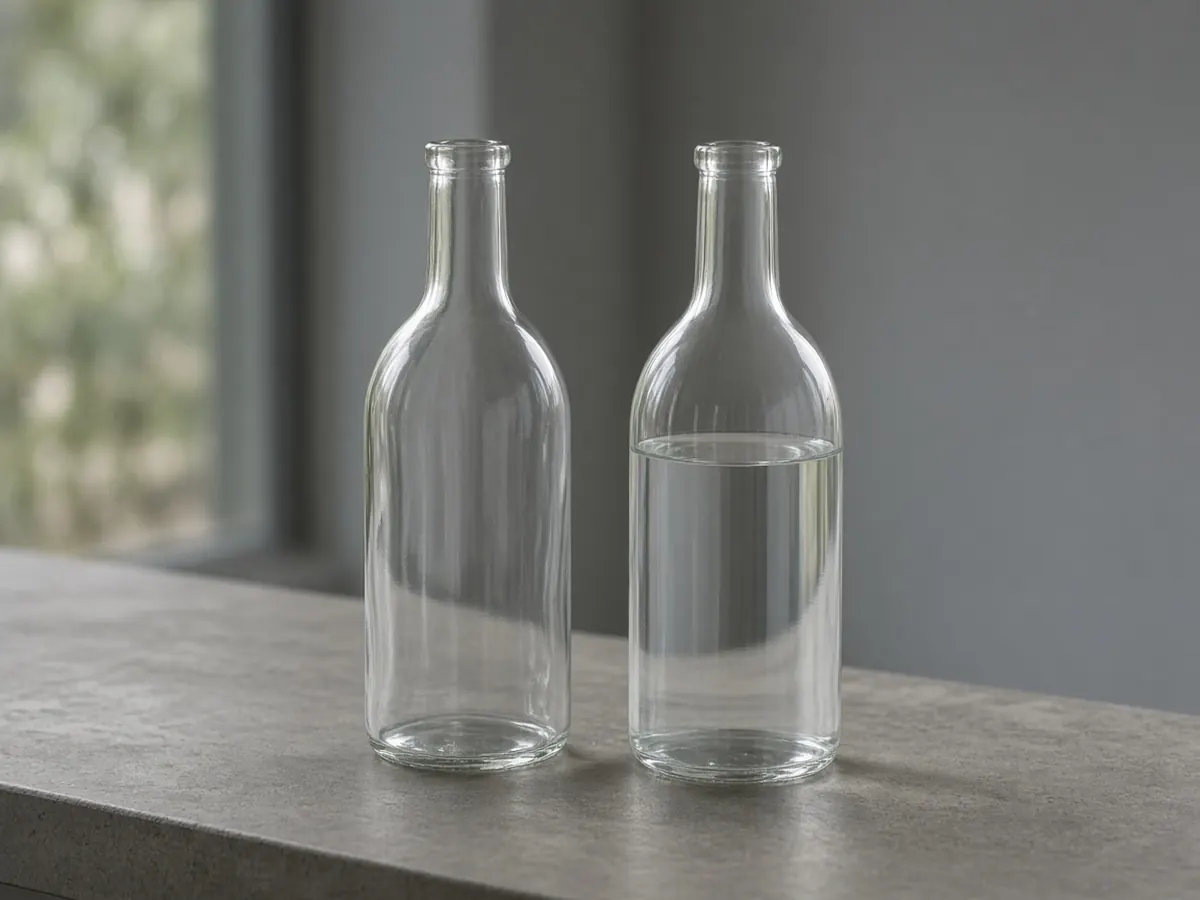
The liquid line in that picture is not a measurement and is not a standard of fill.
The bottle specification checklist is where the drawing revision, the brimful capacity, and the fill point are collected for any glass bottle. This page does not repeat that general form. It adds the 27 CFR 5.203 size list that a spirits label has to match.
Takeaway: Leave brimful capacity blank until the current drawing states the value, the unit, and the method.
What closure facts belong on the same sheet?
GloryStarPack’s checklist says to use the exact closure, liner, gasket, reducer, pump, or sprayer intended for the order, and to review seating, application, removal, leakage, opening force, dip-tube length, and overcap clearance. For pressurized, carbonated, hot-filled, or thermally processed products, it says to define the bottle specification and a project-specific validation before production. It does not name a neck finish.
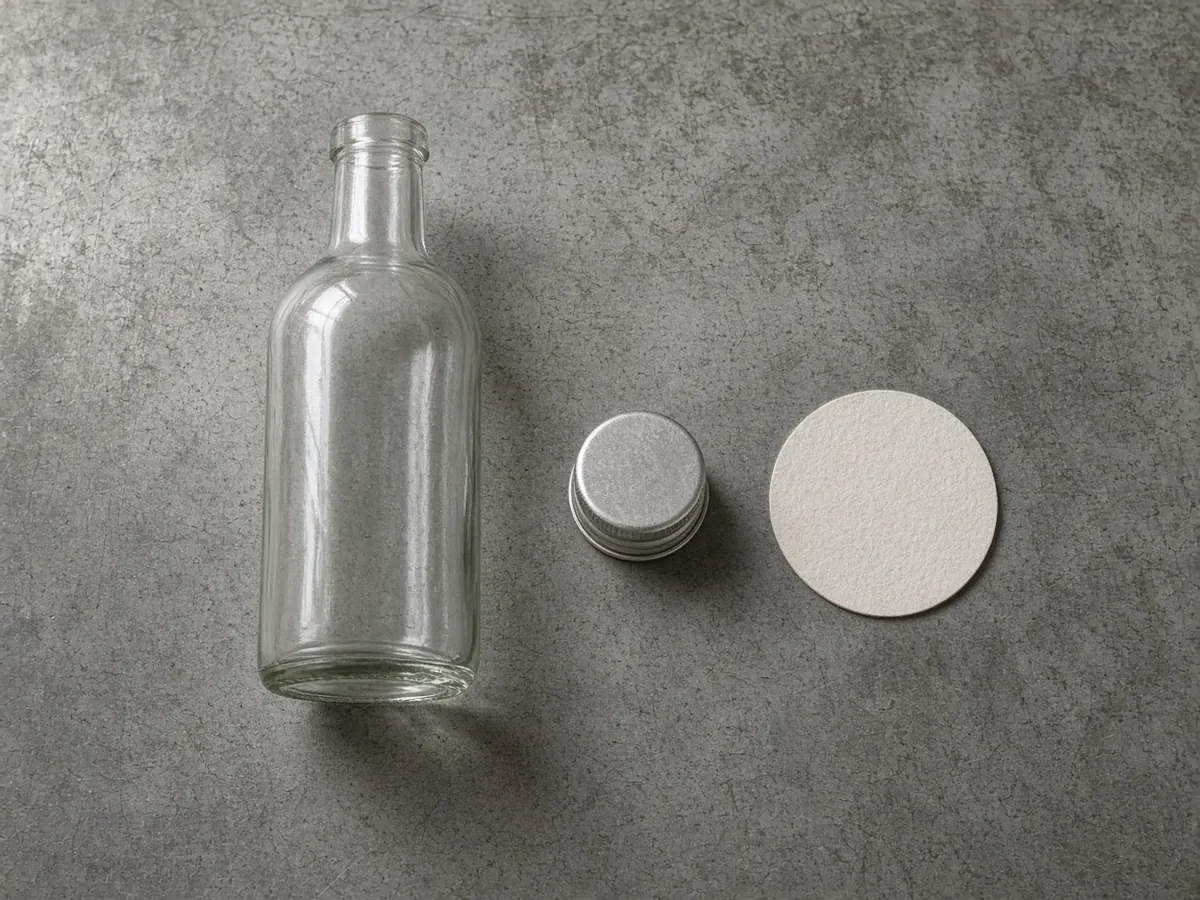
No finish code is printed on those objects, and this page does not assign one.
Write the finish designation, the closure part, and the liner on the order sheet when the supplier drawing names them. Until then the cells stay empty. Bottle neck finishes and closure compatibility is the general record for finish and closure. Choosing capping equipment for glass bottles and jars is the closer side. Neither page supplies a spirits finish.
Takeaway: A cap in the sample room is not a finish designation until the drawing names the finish and the liner.
What should the line trial record?
GloryStarPack’s checklist says to confirm conveyor stability, filling-nozzle clearance, and the capping or crimping setup with production-intent samples, then to approve dividers, cartons, and the pallet pattern on the final decorated bottle and closure. It says an approval sample is a project reference, not a universal performance certificate. It does not state a line speed, a nozzle diameter, or a torque.
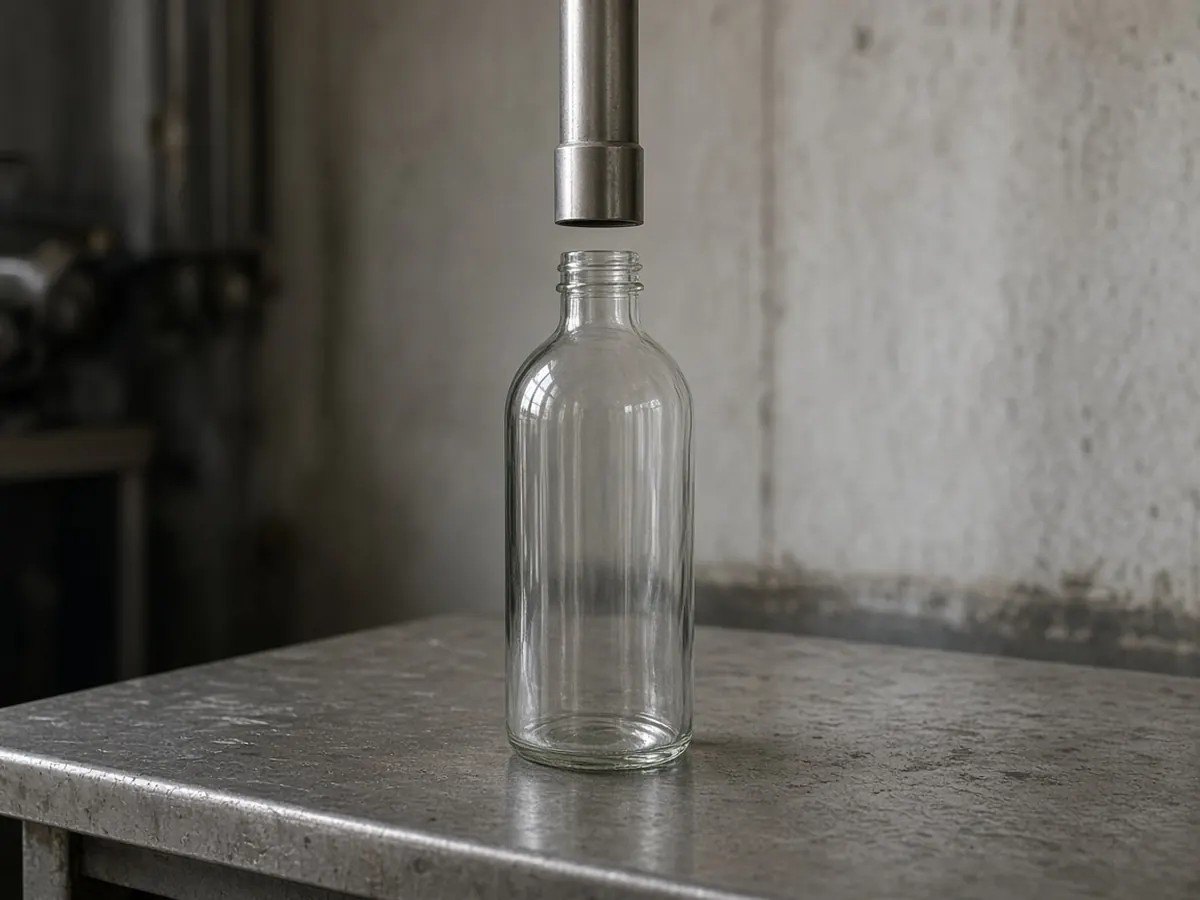
The gap in that picture is not a clearance specification.
Record, for this bottle and this closer, the nozzle clearance, the capper or crimper setup, the conveyor stability, and whether the trial used the closure and liner named on the drawing. Leave the row empty until the plant writes it. The same GloryStarPack page points to an ASTM glass-container standards index, to ISO 2859-1:2026, and to ASTM D4169 as references for sampling, pressure, thermal shock, and distribution testing. This page did not open those standards, so it does not copy a method, an acceptance limit, or a pass value from them.
Takeaway: A line-trial row names the bottle, the closure, and the station that ran. It does not borrow a speed from another job.
Copy this sheet and leave the unknown cells blank
Swipe or scroll horizontally to see all columns.
| Check | Regulatory text opened for this page | Supplier or plant record | This order |
|---|---|---|---|
| Labeled volume | One size from 27 CFR 5.203(a), eCFR as of 7 October 2026 | Which size is on the label | |
| Exception in 5.203(b) | Only the two pre-1980 import cases quoted above | Does either sentence apply? | |
| Can or other container | TTB, 8 January 2025: standards of fill are approved for cans and for containers other than cans | Container type on this order | |
| Brimful capacity | Not in 5.203 | Drawing value, unit, tolerance, method | |
| Neck finish | Not in 5.203 | Finish designation on the drawing | |
| Closure and liner | Not in 5.203 | Part numbers for the exact closure and liner | |
| Nozzle clearance | Not in 5.203 | Result on the production-intent sample | |
| Capper or crimper | Not in 5.203 | Setup used in the trial | |
| Conveyor and packing | Not in 5.203 | Stability, dividers, carton, pallet pattern |
Empty cells are empty because the opened regulation and the opened supplier checklist do not state a value for this bottle. Do not fill them from a catalog photograph or from a previous order.
When this sheet does not decide the order
It does not decide the order when the product is wine. The TTB announcement puts new wine sizes in 27 CFR 4.72, and this page does not copy that list. It does not decide food-contact, heavy-metal, or pressure tests. A Zhonghai Glass article fetched 11 October 2026 discusses FDA and EU food-contact points, and the fetched text does not cite 27 CFR 5.203. Those points are not copied here. It does not decide another country’s or a state’s fill rule. It does not replace the bottle specification checklist or the capping equipment guide.
From Applications, the next file is the drawing, with the labeled size taken from the table and the other cells still blank.
Questions to keep with the drawing
- Which numbered size in 27 CFR 5.203(a) is the labeled volume, and is the citation the eCFR text current as of 7 October 2026?
- Does paragraph (b) apply to this import, or is the bottle outside those two pre-1980 sentences?
- What brimful capacity, unit, tolerance, and method does the current drawing state?
- What finish designation, closure, and liner are on that same drawing?
- Which line-trial note records nozzle clearance, the closer setup, and conveyor stability for that bottle and that closure?
Method, limitations and sources
This is a compilation of the eCFR text, the TTB announcement, and one supplier sample-approval page. It is not a legal opinion, not a line trial, and not a ranking of bottle makers. The photographs show unlabeled bottles, a cap, a disk, a metal tube, and a liquid line. They are not measurements and they are not a plant record.
- Electronic Code of Federal Regulations, 27 CFR 5.203, displaying title 27 up to date as of 7 October 2026, fetched 11 October 2026: eCFR section 5.203.
- Alcohol and Tobacco Tax and Trade Bureau, “TTB Adds New Standards of Fill for Wine and Distilled Spirits,” 8 January 2025, page last updated 18 February 2026, fetched 11 October 2026: TTB standards-of-fill announcement.
- GloryStarPack, “Glass Bottle Sample Approval & QC Checklist,” fetched 11 October 2026: sample-approval checklist.
- Zhonghai Glass, “An Expert’s 3-Point Checklist,” 22 September 2025, fetched 11 October 2026. Read only to confirm the fetched text does not cite 27 CFR 5.203. Its food-contact numbers are not used.
Change note: Added the 27 CFR 5.203 size list and a blank order sheet for brimful capacity, closure, and the line trial.
Related guides
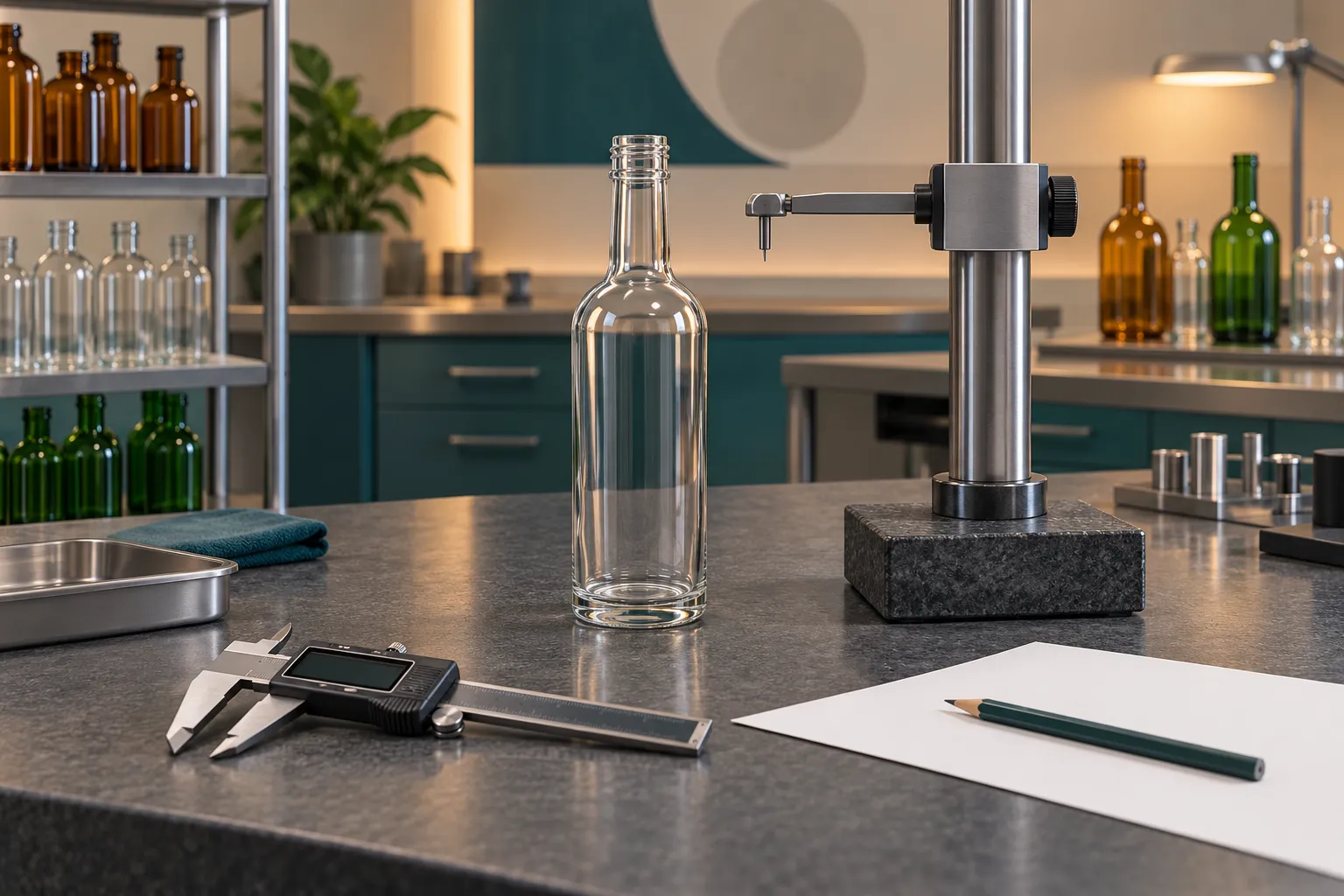
Glass Bottle Specifications: A Checklist for Supplier Enquiries
A checklist of what to state in a glass bottle enquiry: drawing dimensions, capacity and fill point, finish, color, strength, decoration, quality and packing.
Read the guide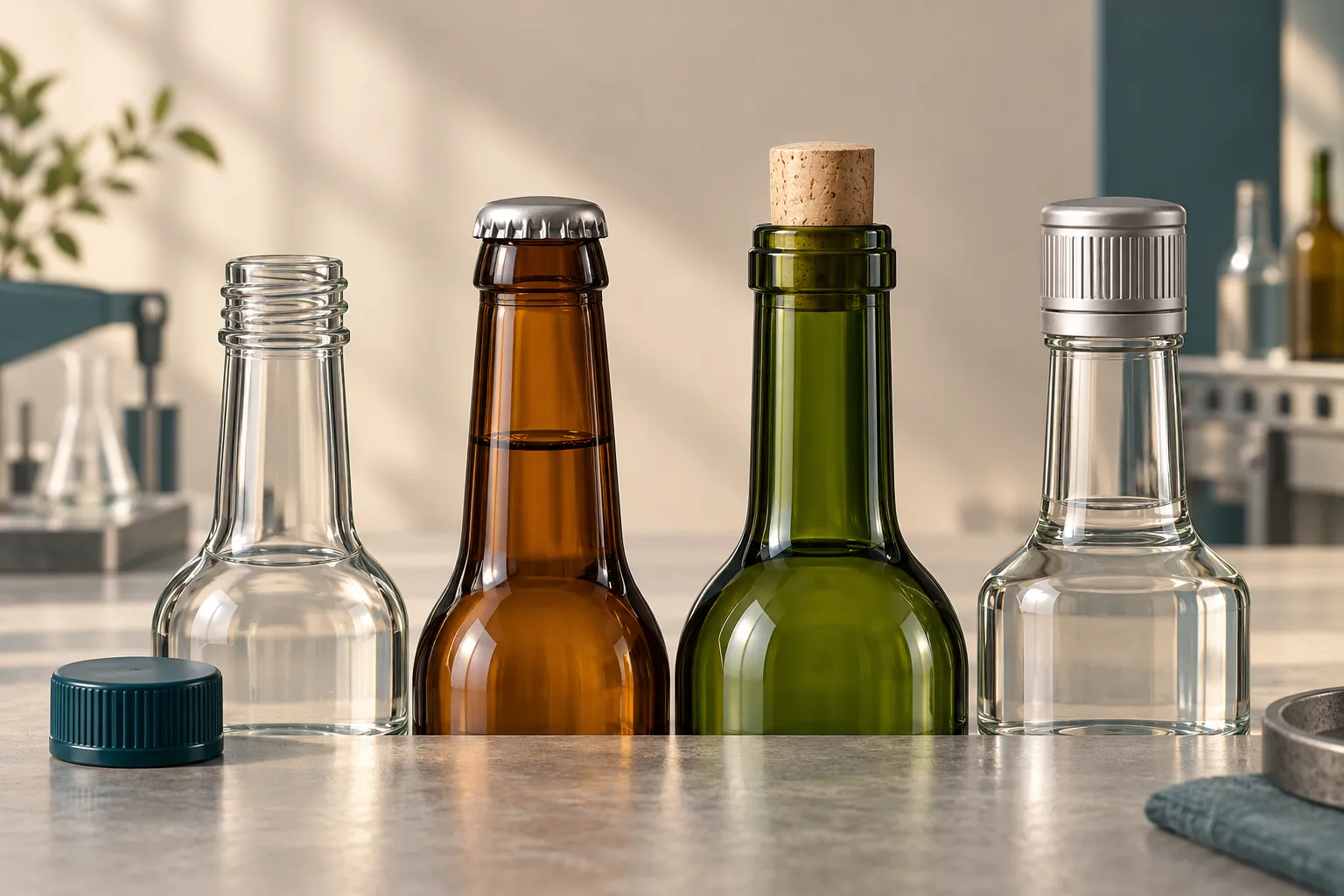
Bottle Neck Finishes and Closure Compatibility
How to read finish designations such as 28-400 and the T, E, I, H and S dimensions, and why a matching nominal diameter does not prove a closure fits.
Read the guide
Choosing Capping Equipment for Glass Bottles and Jars
Prepare a capping requirement from finish and closure data: screw, ROPP, crown, lug, press-on and cork application, torque, and how to verify closures.
Read the guide