
Glass Water Bottle Supplier: Pressure Rating and Finish Specs
Prepare a glass water bottle supplier brief: review pressure test methods, compare crown and screw finishes, and request filled-package seal checks.
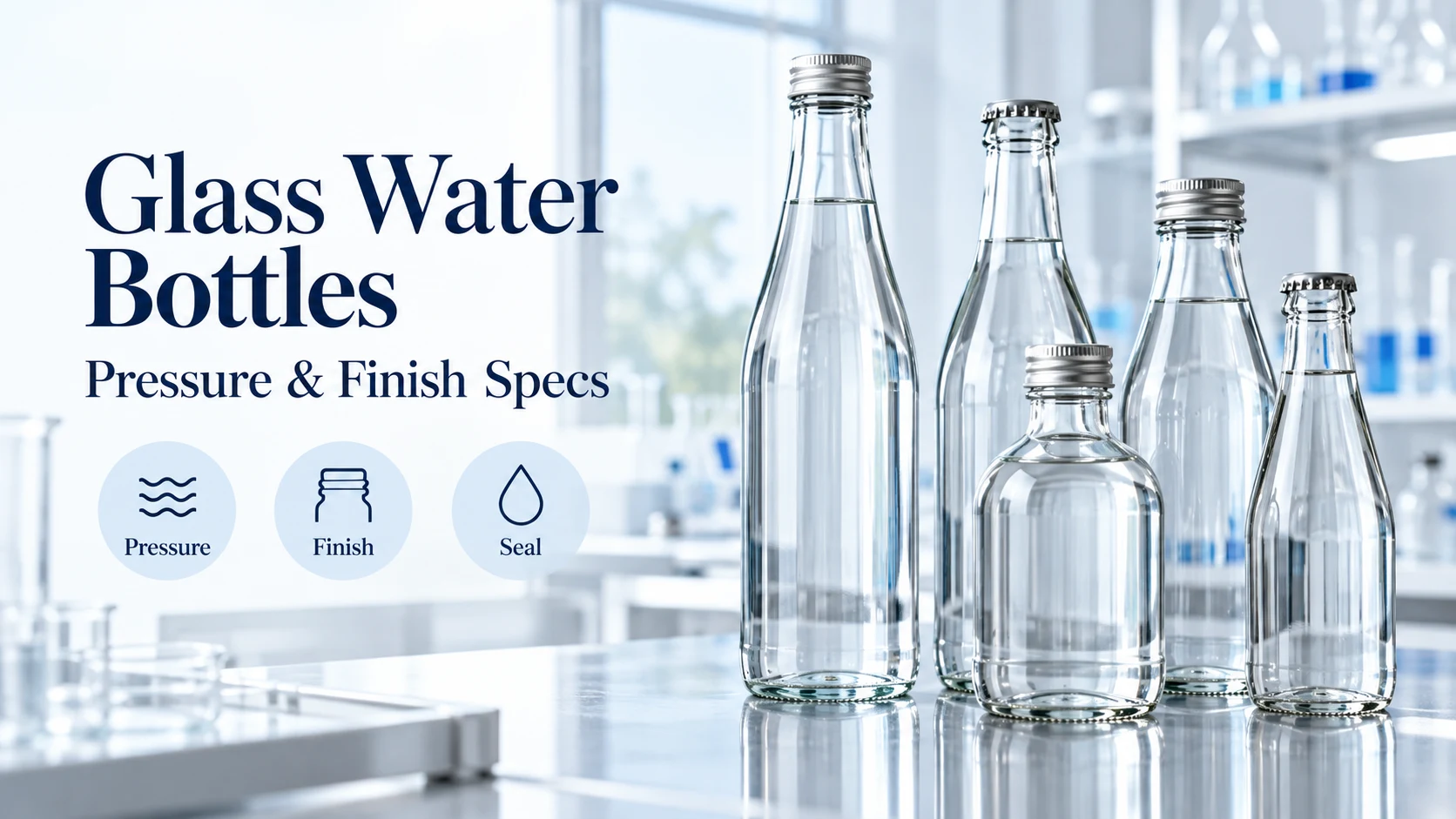
Choose a glass water bottle supplier by reviewing the proposed bottle, finish drawing and filled-package checks together. Start your enquiry with the intended water product and filling conditions, then request a pressure-test report for the proposed bottle and a named closure specification. Keep the bottle test, closure selection and finished-package acceptance criteria as separate items in the purchase brief.
For sparkling water glass bottle specs, work through pressure, finish and seal in that order. For still water, retain the finish, headspace and seal review. Use the glass containers overview to organise the wider container selection.
What should a supplier pressure report contain?
Ask for the bottle article, test method, sample identification, test conditions and acceptance criterion together. Require the report to identify whether the pressure was held or increased during the test.
Method A applies uniform internal pressure for a predetermined period. Method B applies internal pressure increasing at a predetermined constant rate.
Use these ISO test-method descriptions to frame the report request. Ask the supplier to identify the method and edition used, then attach the applicable result to the proposed bottle drawing.
Campden BRI’s internal-pressure test establishes pressures a container can withstand when used for carbonated drinks. In the demonstrated test the container is filled with water and water is hydraulically pumped through the system.

Keep your purchasing questions explicit:
- Which bottle article and drawing revision does the report cover?
- Which pressure method and acceptance criterion were used?
- What product, carbonation and temperature conditions are proposed?
- Which checks will apply at receipt and during filling?
ROPP vs crown finish: compare the actual specification
Put the finish designation and drawing in the enquiry, alongside the requested closure. Use the following documented finish distinctions to organise the shortlist.
| Selection topic | Documented specification | Enquiry action |
|---|---|---|
| Tall crown | The ISO tall crown document specifies dimensions of the 26 mm tall crown finish for beverage glass bottles. | Request the tall crown drawing. |
| Shallow crown | The ISO shallow crown document specifies dimensions of the 26 mm-shallow crown finish for beverage glass bottles. | Request the shallow crown drawing. |
| Screw finish for carbonated water | BVP-type finishes are not intended for carbonated products. | Ask for the proposed pressure-service finish designation. |
| Returnable screw finish | The 28 mm screw finish designated MCA 7,5 R is for returnable glass. | Request the matching returnable-glass drawing. |
The finish designations MCA, BVP or BVS replace the designations ROPP and PP.
Use the named finish when comparing offers. Ask each bidder to return the same drawing fields and identify the proposed cap, liner and application setup.
The tall crown finish is designed to use a metal crown cap. Cetie’s crown-capping guide concerns caps whose seal is provided by a plastic liner. The guide includes glass finishes adapted to pry-off or twist crown applications.
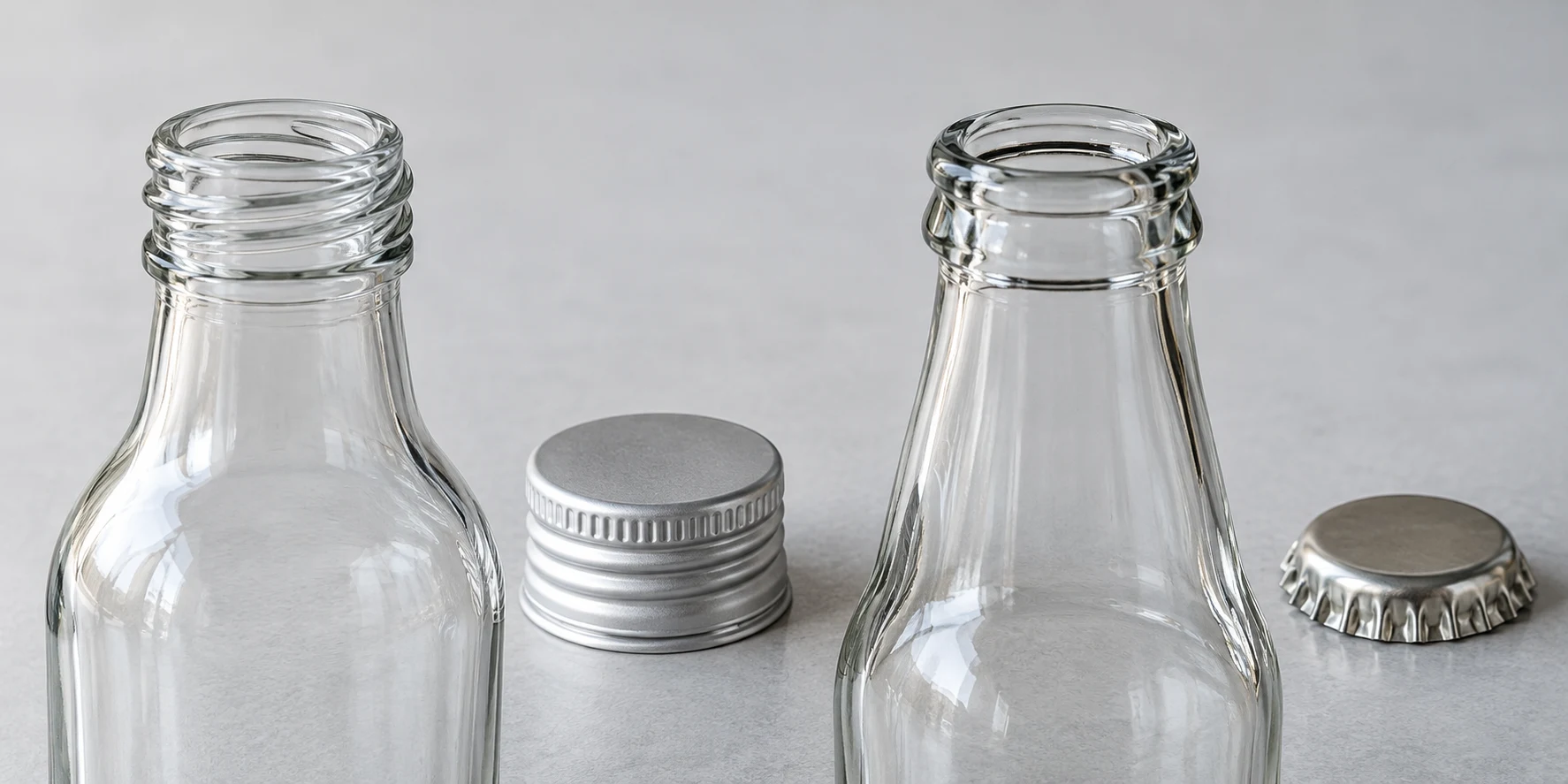
Before choosing between screw and crown, ask how the proposed package will be opened, which closure will be applied and which finish drawing will accompany the order. Record the answer for each candidate. Continue the drawing review with the neck finishes and closures guide.
How will the filled bottle be checked?
Request a filled-package test plan alongside the empty-bottle report. Assign an acceptance criterion and an owner to each check before the trial.
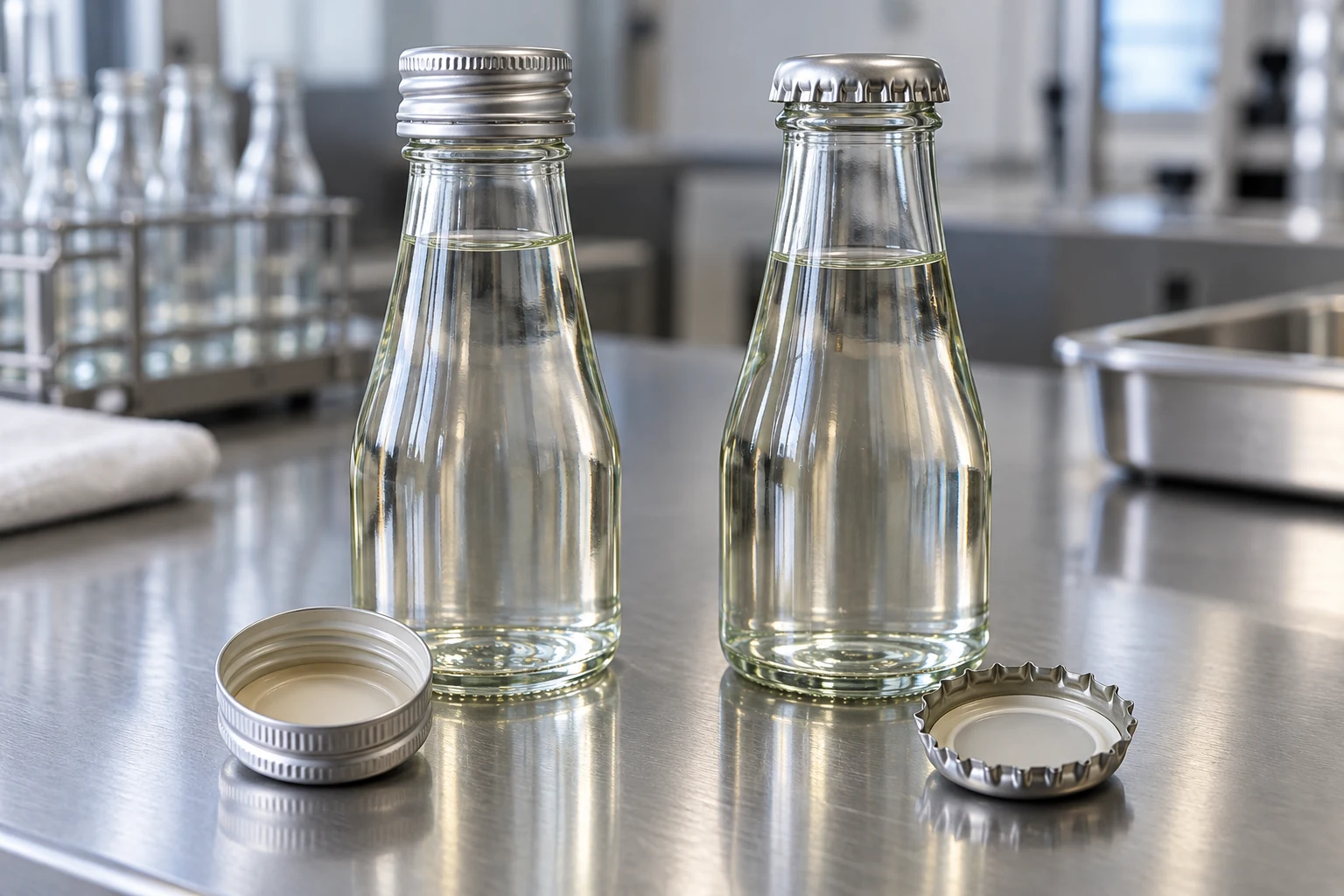
Cetie’s screw-cap seal-testing methods evaluate an aluminium screw cap applied on a filled glass bottle. The proposed tests serve product development, routine filling checks, or troubleshooting. The secure seal test applies to aluminium screw caps and crown caps. Opening-torque testing is described for ROPP aluminium closures on glass bottles.
For a screw-cap proposal, request both the seal-check plan and the opening-torque check. For a crown proposal, request the seal-check plan and the selected opening style. Record the cap and liner identifiers next to the bottle article in the trial paperwork.
What changes for still water and returnable bottles?
The filler is responsible for the actual headspace achieved in the filled product. Still liquids in rigid containers have physical behaviour relevant to headspace requirements.
For a still-water enquiry, include the intended fill level and ask the filler to document the achieved headspace. Keep that record with the bottle and closure trial.
Cetie’s pressure-strength guidance addresses internal-pressure strength standards at manufacture. The guidance addresses pressure-strength standards at bottler receipt. The guidance also addresses pressure-strength standards that might apply to a refillable-bottle pool.
For a returnable project, ask for separate acceptance arrangements at manufacture, receipt and reuse. Include the intended return route and inspection plan in the enquiry; ask who will approve the bottle for the next filling cycle.
Supplier enquiry checklist
Send the same brief to each shortlisted supplier and request a written response against each item:
- Product: still or sparkling water, intended carbonation and temperature conditions.
- Bottle: article reference, drawing revision, capacity and intended fill level.
- Finish: exact designation, drawing and proposed closure identifiers.
- Pressure: test method, report, conditions and proposed acceptance criterion.
- Seal: filled-package checks, closure application setup and trial approval owner.
- Returnable project: inspection plan and acceptance arrangements through reuse.
Attach the bottle specification checklist to organise the drawing review. Use the supplier qualification guide for the wider purchasing conversation.
Questions to settle before ordering
What pressure rating should I request for sparkling water?
Request a bottle-specific pressure report and state the intended product and filling conditions. Ask the supplier to identify the test method and propose an acceptance criterion for the selected bottle. Review that proposal alongside the filled-package trial plan.
What should I put after “ROPP” in the enquiry?
Request the exact glass-finish designation, drawing and closure identification. Ask the bidder to address the intended water product explicitly, then return the seal and opening-check plan with the offer.
What should I ask about a crown closure?
Identify tall or shallow finish, the intended opening style and the proposed cap and liner. Request the finish drawing and a filled-package seal-check plan before approving the combination.
Sources
- ISO — Glass containers: resistance to internal pressure.
- ISO — Glass packaging: tall crown finish dimensions.
- ISO — Glass packaging: shallow crown finish dimensions.
- Cetie — Bottling guides, crown-capping description.
- Cetie — Recommendation sheets, pressure strength, headspace, sealing, opening torque and finish terminology descriptions.
- Cetie — Finish data sheets, screw-finish descriptions.
- Campden BRI — Packaging internal pressure resistance.
Related guides
Glass Bottle Specifications: A Checklist for Supplier Enquiries
A checklist of what to state in a glass bottle enquiry: drawing dimensions, capacity and fill point, finish, color, strength, decoration, quality and packing.
Read the guide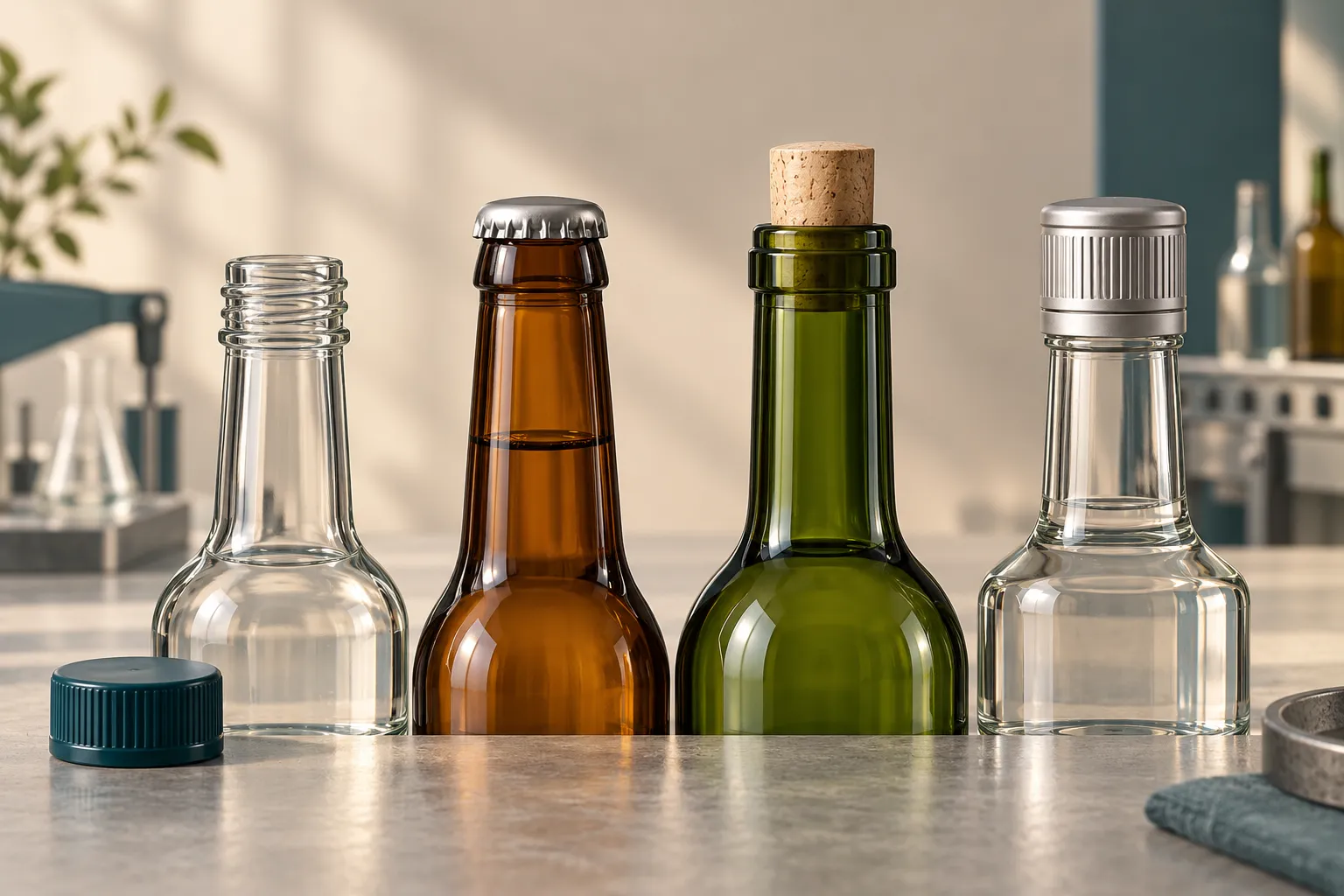
Bottle Neck Finishes and Closure Compatibility
How to read finish designations such as 28-400 and the T, E, I, H and S dimensions, and why a matching nominal diameter does not prove a closure fits.
Read the guide
How to Evaluate Glass Bottle Suppliers
A mismatched bottle order can stop a filling run. Compare supplier identity, product evidence, samples and delivery terms before committing to bulk glass.
Read the guide