
750 ml Empty Bottle: Finish and Punt Checks
Choose a 750 ml empty bottle for still wine by checking its neck finish, closure, brimful capacity, punt profile and temperature-specific fill position.
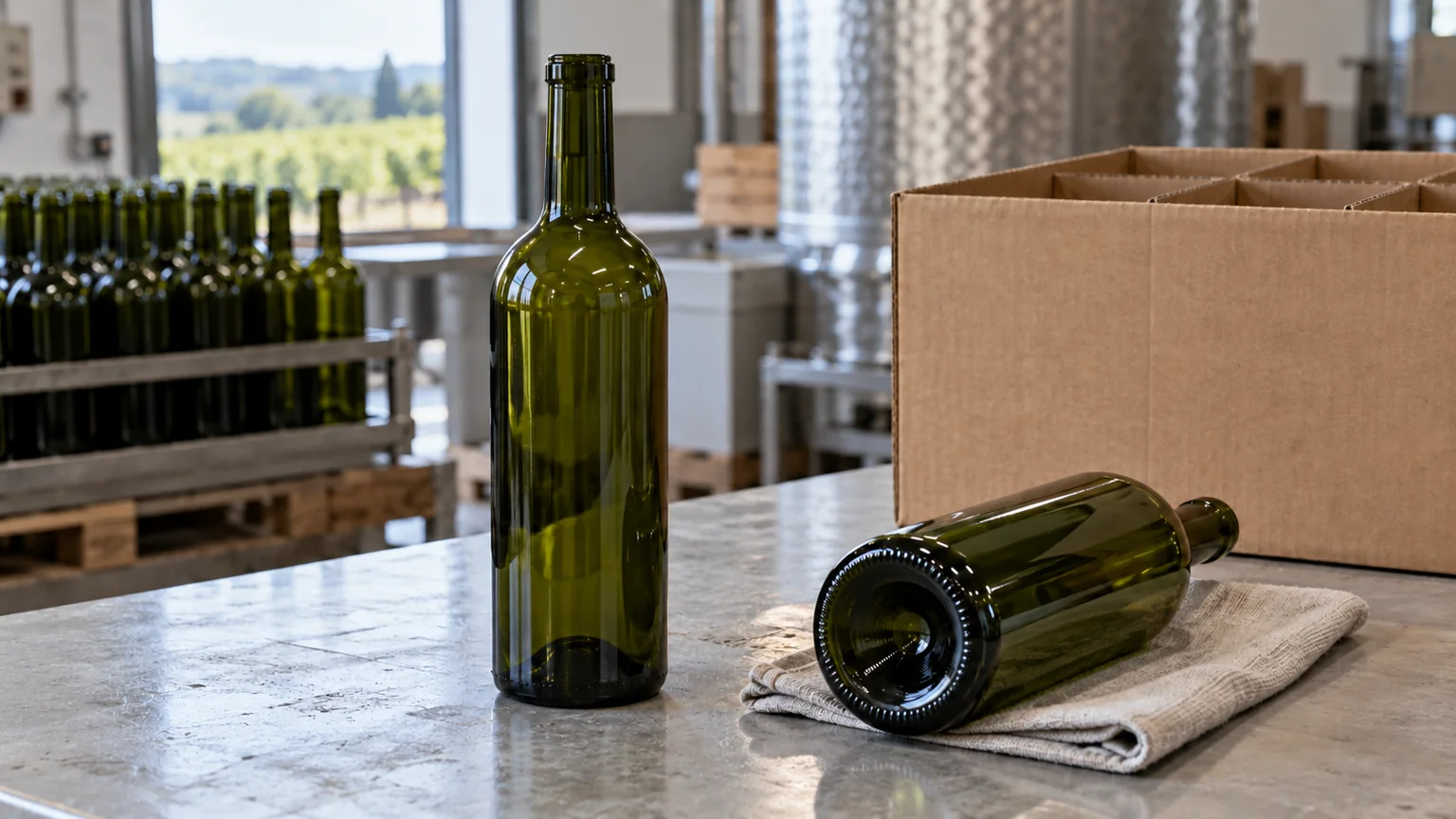
A 750 ml empty bottle for still wine needs a matching neck finish and closure, plus a capacity drawing that locates the fill line and punt. Select those together before approving the bottle for a filling line.
Start with the exact bottle article and its current drawing. A 750 mL designation gives the nominal capacity; brimful capacity, exterior dimensions and the fill position are separate checks. Match the closure to the complete finish, then check the remaining space above the wine at the specified temperature. The selection sequence below connects the bottle drawing, closure choice and line verification so that a familiar volume does not hide a different sealing or filling requirement.
Quick checks before selecting a bottle
Compare candidate bottles using the same inputs. Keep the selected closure beside the bottle drawing throughout the comparison.
Swipe or scroll horizontally to see all columns.
| Check | Information to obtain | Decision it supports |
|---|---|---|
| Bottle identity | Article number and drawing revision | Keeps samples and specifications tied to one design |
| Capacity | Nominal and brimful volumes, with tolerances | Separates intended fill from capacity to the rim |
| Finish and closure | Complete finish drawing and exact closure specification | Establishes the sealing interface |
| Base profile | Punt section and depth measured from a named datum | Makes base geometry comparable |
| Fill position | Measurement endpoints and reference temperature | Defines the liquid level for that bottle |
| Line fit | Overall dimensions, neck passage and closure application requirements | Guides sample and changeover checks |
For the broader choice of container shape, color and material, start with the glass container overview.
What does 750 mL tell you about the empty bottle?
It identifies a capacity, not a complete bottle geometry. On the filled wine package, the net-contents statement describes the quantity of wine, as explained in TTB’s Wine Labeling: Net Contents guidance. The empty bottle drawing supplies the additional dimensions needed to place that quantity in the container.
Cristallo’s Bordeaux VIP drawing dated 9 May 2022 illustrates the distinction:
Swipe or scroll horizontally to see all columns.
| Drawing field | Value for this Bordeaux VIP bottle | How to use it |
|---|---|---|
| Declared capacity | 750 mL | Identifies the nominal bottle format |
| Brimful capacity | 771 mL | Records the separate capacity to the rim |
| Distance from bottle top to marked 75 cl fill line | 70 mm | Locates this drawing’s fill position |
| Overall height | 300 ± 1.8 mm | Defines the bottle’s vertical envelope |
| Body diameter | 75.2 ± 1.4 mm | Defines the body envelope |
Use the current drawing and its reference conditions for the article being purchased. A different 750 mL bottle can require a different liquid level. The difference between nominal and brimful volume also has to accommodate any closure projecting into the bottle; sealed headspace is assessed with the selected closure installed.
Which finish matches the closure?
Choose the sealing system before treating two bottle samples as interchangeable. The finish is the shaped region at the mouth that receives the closure; for an inserted stopper, the internal neck profile matters as well.
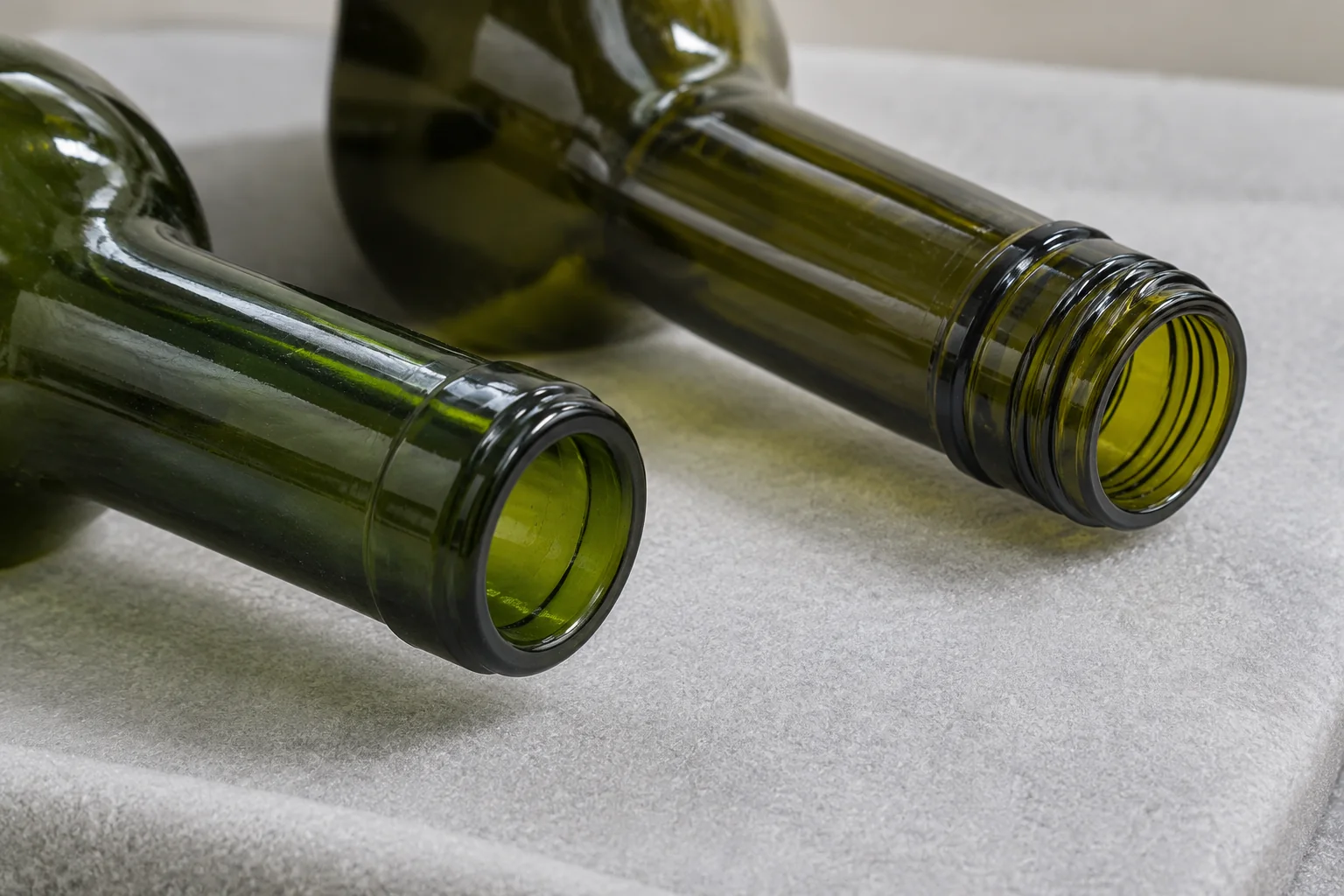
Swipe or scroll horizontally to see all columns.
| Closure route | Bottle and closure information to match | Check before approval |
|---|---|---|
| Driven cylindrical cork | Internal neck profile, cork dimensions and insertion position | Review the sealing length and remaining clearance above the wine |
| BVS screw cap applied by ROPP equipment | Specified BVS finish, matching cap and its application specification | Verify the finish/cap pairing and capping setup together |
| Bar-top stopper | Mating neck profile and the stopper’s plug and seating geometry | Obtain the intended pairing and verify the assembled seal with samples |
The Australian Wine Research Institute’s Applying cylindrical closures explains that a cork seals along its contact with the inside of the neck. Cetie’s Guide No. 6 covers still-wine screw capping on BVS finishes, while Guide No. 11 addresses metallic screw-capping defects. A bottle’s mouth diameter alone therefore cannot settle the closure choice.
Use the neck finish and closure guide to read the full specification. Once the pairing is selected, the closure application and capping guide provides the wider process context.
How should you assess the punt?
Read the punt as part of the bottle’s base geometry and capacity specification. The punt is the inward recess in the base; the heel is the transition between the body wall and bottom. Diam’s Good practices for still wine closure and bottling identifies these features in its bottle anatomy drawing.
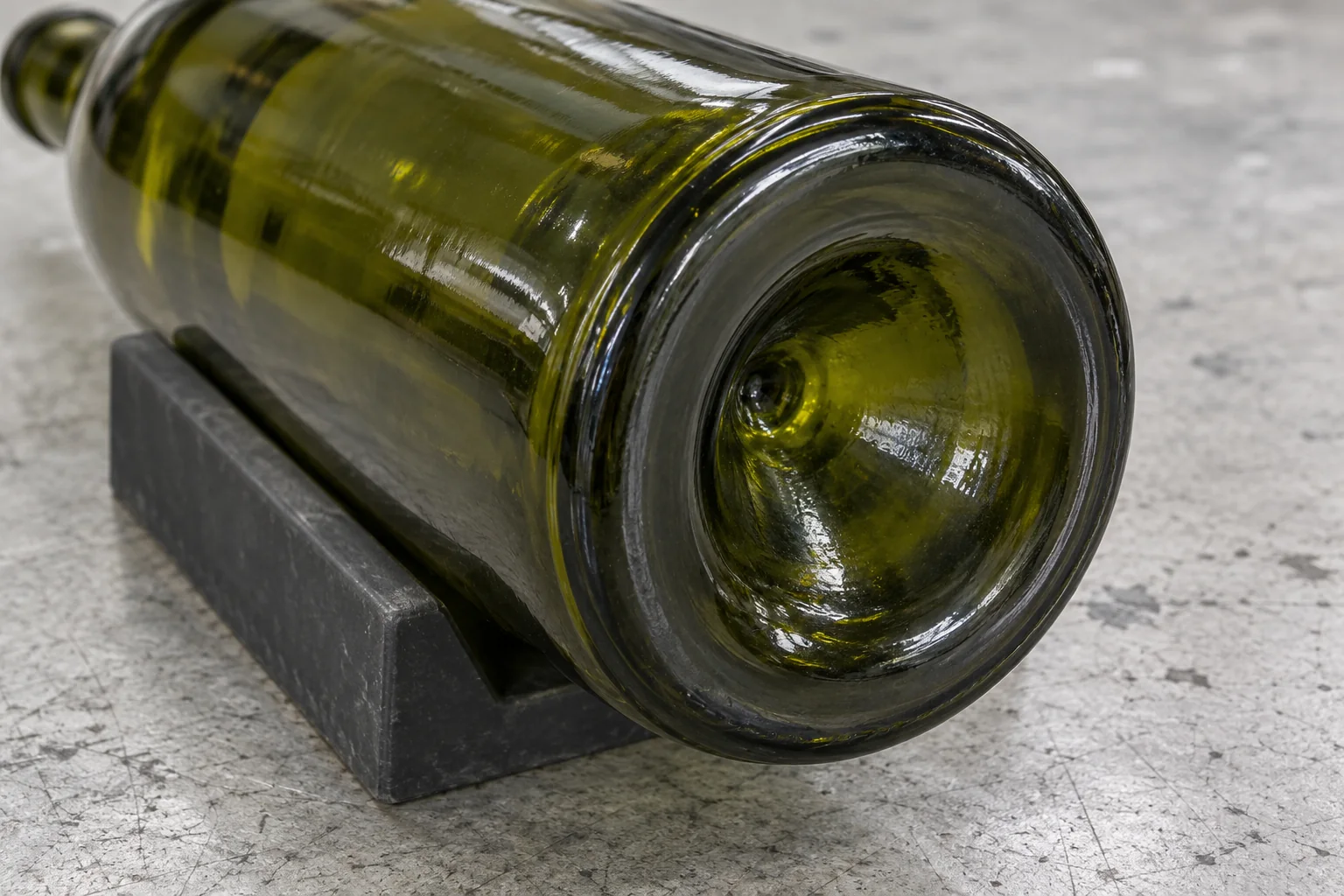
If comparing punt depth, ask for a section drawing that states where the measurement begins and ends. Then compare the nominal capacity, brimful capacity and marked fill position on that same drawing. A deeper recess can be accommodated by other changes to the bottle geometry, so bottles with different punts can still share the same nominal fill.
Keep the drawing fields together: copying a fill distance from another bottle because both carry a 750 mL designation bypasses the geometry check. Select the base profile you need, then verify the intended fill and closure clearance on the chosen article.
How do fill distance and cork clearance differ?
The rim-to-liquid distance and the liquid-to-cork clearance have different endpoints. For an upright corked bottle, AWRI calls the first the fill height and the second the ullage distance. Use explicit endpoints on inspection records to avoid confusing the two.
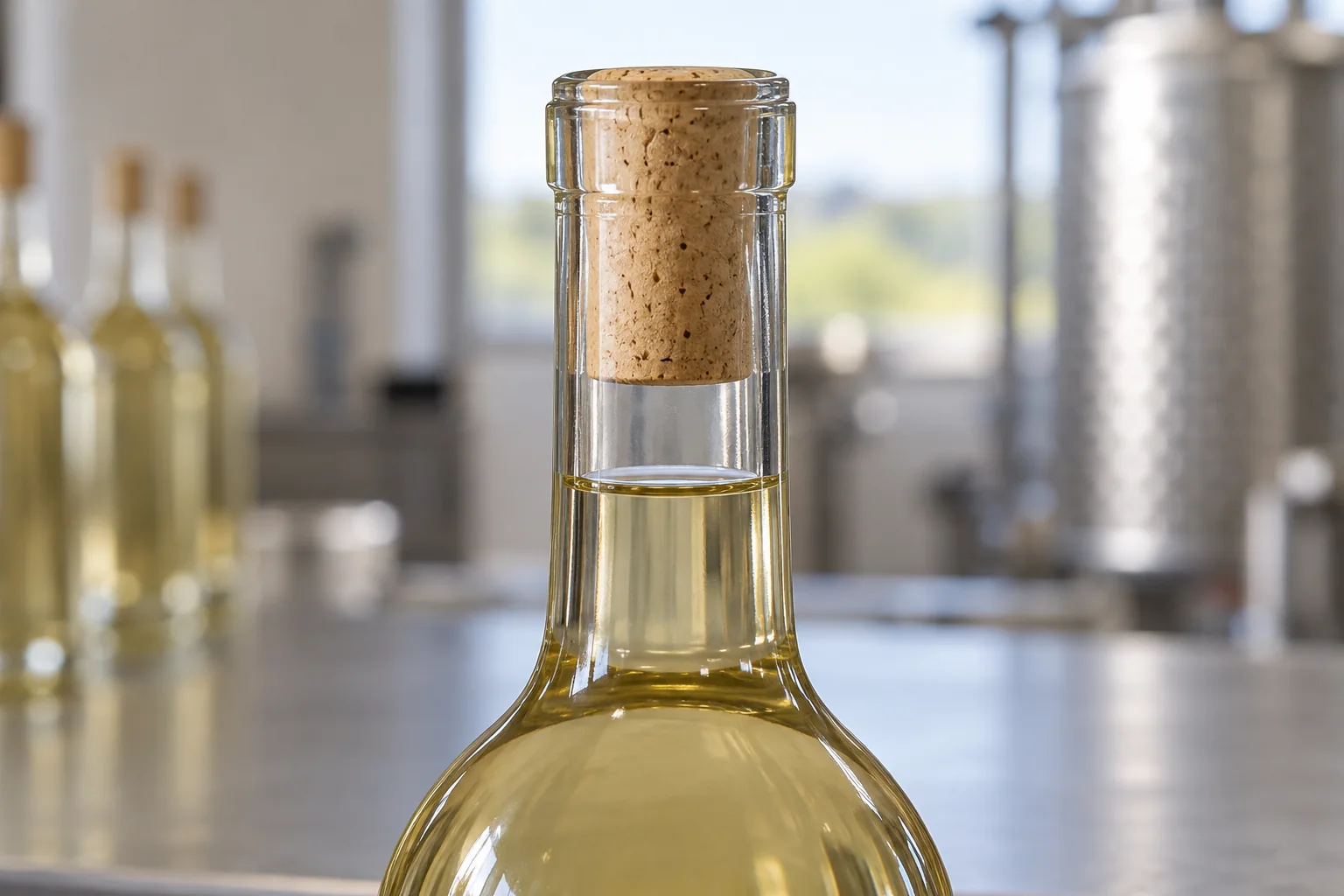
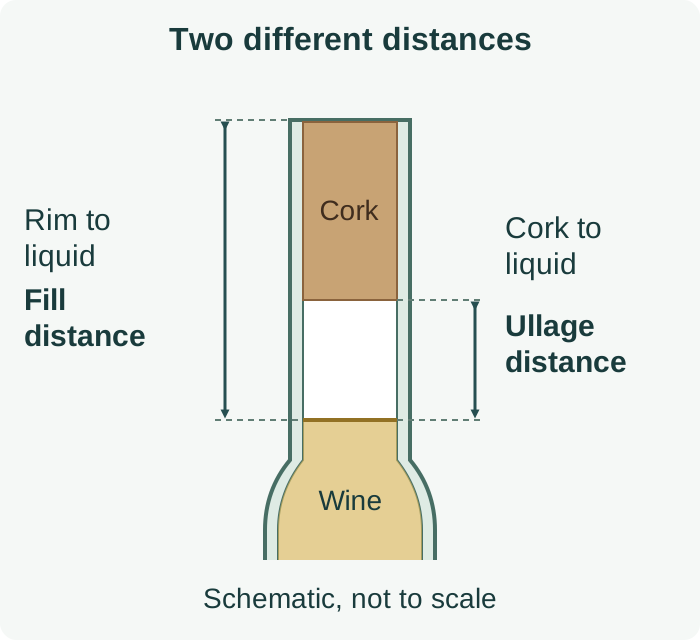
Wine expands as it warms, consuming some of the available space. Check the wine temperature when establishing the fill position and assess clearance with the chosen cork installed. A longer or more deeply inserted cork changes the space left above the same liquid level.
Diam’s bottling guide, pages 13–15, connects the bottle-specific fill position to temperature and calls for checks during bottling. Follow that sequence when changing bottle articles or when the wine temperature changes during a run.
What should be verified on the filling line?
Approve representative bottle-and-closure samples against the drawings, then confirm the fill quantity and closing result on the intended equipment. A visually consistent fill line is useful for routine observation, but volume control needs its own measurement method.
- Identify the sample. Record the bottle article, drawing revision and selected closure. Compare its overall dimensions, finish and base with the approved specification.
- Set the fill condition. Establish the target quantity, wine temperature and corresponding bottle-specific fill position before adjusting the line.
- Verify quantity. Diam describes volumetric checking and weighing the bottle empty and filled, using the wine’s density to determine volume. Apply the agreed method at its specified reference conditions.
- Check the closure after application. For a corked bottle, inspect insertion and liquid-to-cork clearance. For a screw cap or bar-top, use the selected closure’s application and seal checks.
- Track variation during the run. Recheck temperature and level after changes. If variation follows a filling head, investigate that head and its maintenance condition; Diam identifies nozzle and equipment differences among sources of fill variation.
Before ordering, request the current bottle and finish drawings, nominal and brimful capacities with tolerances, fill-point and reference-temperature specification, punt profile with its depth datum, and exact sealing type. Send that set, the selected closure specification and representative samples to the bottler to agree the line setup and acceptance checks. For a separate bottle-weight decision, continue to lightweight wine bottle considerations.
Common questions about 750 mL wine bottles
Why is a wine bottle commonly 750 mL?
750 mL is an established wine-packaging format: Diam’s still-wine guide describes the standard 75 cl bottle, and TTB lists 750 mL among the authorized US standards of fill. Other sizes are also authorized. For procurement, the format establishes the quantity while the selected drawing establishes fit.
Are all 750 mL wine bottles the same size?
Their exterior dimensions can differ. Glaspack’s wine catalogue lists article 0470 at 300 mm high with a cork finish and article 1297 at 350 mm with a BVS 30/60 finish; both are 750 mL. Compare article-specific drawings when planning filling, closing and packing.
Technical references
- Australian Wine Research Institute, Applying cylindrical closures, sections on sealing, fill height, ullage and filling temperature.
- Cetie, Bottling guides, Guide No. 6 on BVS screw capping and Guide No. 11 on screw-capping defects.
- Diam, Good practices for still wine closure and bottling, pages 5 and 12–15.
- Cristallo, Bordeaux VIP 750 ml, drawing dated 9 May 2022.
- Glaspack, Wine catalogue, articles 0470 and 1297.
- TTB, Wine Labeling: Net Contents, updated May 2026.
Related guides

Bottle Neck Finishes and Closure Compatibility
How to read finish designations such as 28-400 and the T, E, I, H and S dimensions, and why a matching nominal diameter does not prove a closure fits.
Read the guide
Glass Bottle Closures: Steam-Vacuum Lug, Continuous Thread and ROPP Capping Specs
Compare glass bottle closures across steam-vacuum lug, continuous thread (CT), and ROPP aluminum caps with torque, liner compression, and dud-detection specs.
Read the guide
Lightweight Wine Bottles: What Buyers Should Verify
Beyond the gram count: glass distribution, strength test evidence, finish fit, line trials and how to read weight and carbon claims on light wine bottles.
Read the guide