
Sauce and Dressing Bottling Lines: Matching Product, Container and Equipment
Write product properties, container choice and equipment needs as one specification for sauce lines, from viscosity and acidity to hot-fill and vacuum.
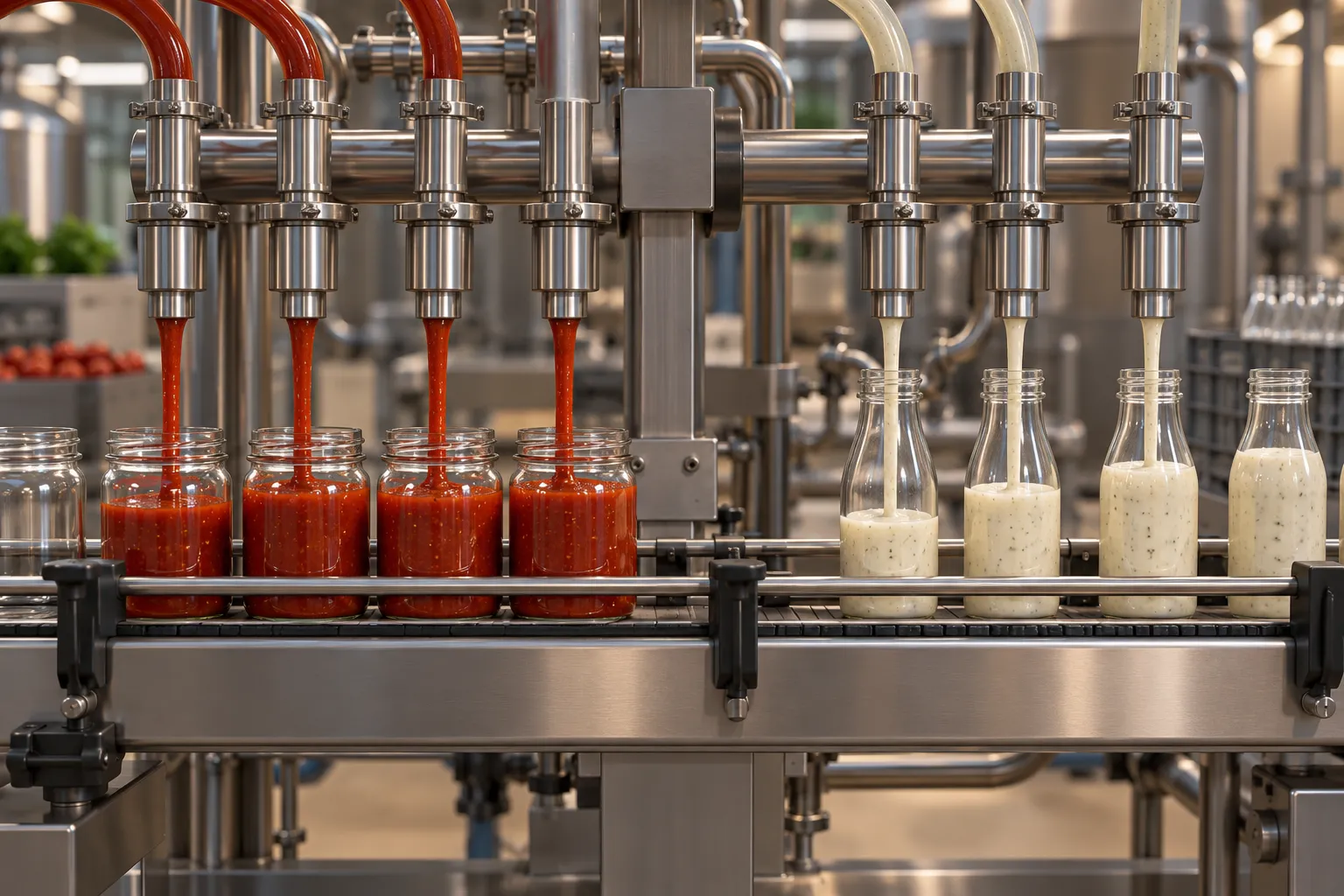
Separate product, container and equipment specifications leave suppliers quoting different assumptions and can leave the sealing surface contaminated. Write them as one requirement, with the process authority defining any thermal process and the packaging and equipment suppliers confirming their interfaces.
Swipe or scroll horizontally to see all columns.
| Product property | Container implication | Equipment implication |
|---|---|---|
| Viscosity and flow behavior | Opening size and finish for filling and pouring | Filler principle, nozzle size, heated hopper or lines |
| Particulates (pieces, seeds, spice) | Wide enough mouth; clean sealing surface | Filler passages that pass particles; fill control to keep product off the sealing surface |
| Acidity (pH) and formulation | Glass or lined closure compatible with acid | Process authority review; recordkeeping |
| Fill temperature | Glass and closure rated for the temperature | Hot hopper and lines, steam capper, cooling |
| Shelf-life and storage (ambient or refrigerated) | Hermetic seal and vacuum indicator, if needed | Vacuum formation, headspace control, closure inspection |
For a process-authority-approved hot-fill sauce, use the acidity and process classification checks and closure/headspace requirements. For oil that is not hot-filled or vacuum-sealed, follow the oil bottle and pouring-closure route. These are separate specification paths, not treatment recipes.
One requirement, three layers
Use the opening table for every proposal. Confirm the product at its actual filling temperature; indicative viscosity categories alone do not select a filler.
Product properties to document
Viscosity and particulates
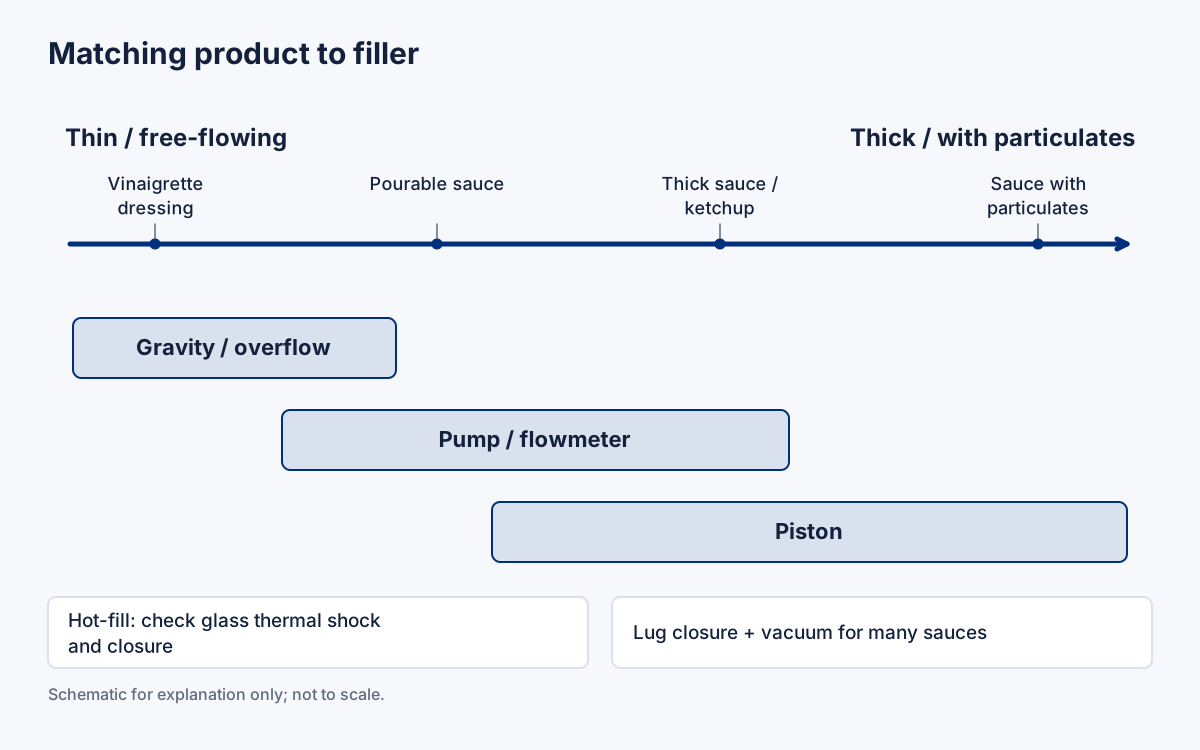
Equipment-maker explainers agree on the broad rule but not on the boundaries. Apex Filling Systems matches gravity fillers to thin, free-flowing liquids, overflow fillers to low-to-medium viscosity and foamy products, pump fillers to medium and high viscosity, and piston fillers to thick or chunky products such as salsa or yogurt with fruit.
Because the cutoffs vary by source, don’t rely on a number. Give suppliers the actual product: viscosity at filling temperature, how it behaves under flow, particle size, particle share and any tendency to foam or separate. Apex adds that foaming, particulates, container size, fill volume and sanitation requirements matter alongside viscosity. Ask suppliers for a trial on your product at your fill temperature, and read glass bottle filling machines for how filling principles compare more broadly.
Acidity and regulatory category
The regulatory category affects the whole line. Under FDA’s regulation for acidified foods (21 CFR Part 114), acid foods have a natural pH of 4.6 or below, while acidified foods are low-acid foods to which acid or acid foods are added and which reach a finished equilibrium pH of 4.6 or below with water activity above 0.85. The same section excludes certain acid foods, including some dressings and condiment sauces with small amounts of low-acid ingredients, and foods stored, distributed and retailed under refrigeration. Whether your product falls into or outside that part is a classification question, not an equipment question.
University extension services explain the practical consequences. Washington State University states that a process authority determines the classification and processes for low-acid and acidified foods, and lists extensive required records for acidified foods, including fill temperatures, process times, container closure inspections and process deviations. Kansas State University’s fact sheet describes hot-fill-hold as a method for acid and acidified foods in which filled, closed containers are inverted and held, and says specific parameters are verified by a process authority. These sources apply to products and facilities under FDA jurisdiction and differ in detail from state and country rules, so confirm your own obligations with a process authority and the relevant regulator.
Container choice: jar, bottle and finish
Choose the glass container for a sauce together with the closure. Silgan Closures notes that its steel lug closures were designed for standardized Glass Packaging Institute finishes, and that glass dimensional deviations or defects can lead to application problems or loss of seal. The bulletin lists issues such as height variation, jar tilt, out-of-specification finish dimensions, and missing hot-end or present cold-end coatings on the finish. Kansas State recommends metal cans, glass jars or bottles with metal caps lined with plastisol for hermetic seals in acid and acidified foods and cautions that some plastic containers cannot withstand high filling temperatures.
In practice this comes down to four decisions.
- Jar or bottle. Wide-mouth jars suit particulates and spoon-out use. Narrow-neck bottles suit pourable dressings and thin sauces, and may need a dispensing closure. Check how the choice affects the filler nozzle and the closure type. Glass jars for food covers shapes, finishes and closures in detail.
- Finish and closure. State the finish designation and closure type together, and obtain both the glass and closure drawings. Record both suppliers’ compatibility confirmation in the responsibility checklist.
- Hot-fill rating. Ask the glass and closure suppliers to confirm suitability for your fill temperature, any steam application and your cooling method, rather than assuming it.
- Sealing surface. Silgan advises that product should not contact the top sealing surface because entrapment can lead to loss of seal. So fill control and nozzle design matter as well as the glass.
Oils: glass bottle, color and pouring closure
Bottled edible oils, and dressings sold in oil bottles, change the container questions. Hot fill and vacuum may not apply at all, so the closure is chosen for pouring, protection and tamper evidence instead. If your oil is not hot-filled or vacuum-sealed, the headspace and vacuum guidance above does not set the closure; confirm the process with your closure supplier. Three decisions go into the specification: glass color, the pouring closure and its matching finish, and how the oil is filled.
Glass color and light
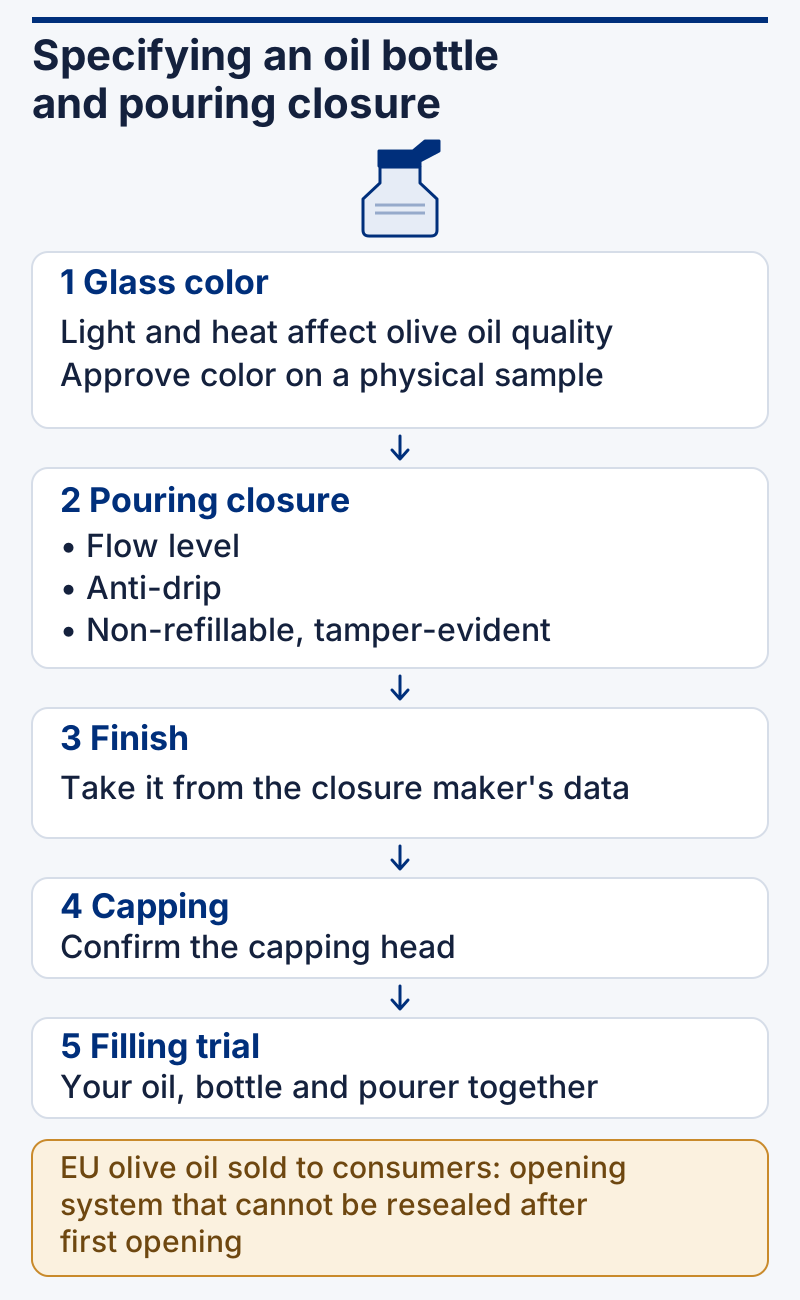
For olive oil, EU marketing rules state that numerous scientific studies have shown light and heat adversely affect quality, and they require storage conditions to be shown on the label. That makes glass color a product-protection decision as well as an appearance choice. Ask the glass supplier which colors the chosen shape is made in and whether light-transmission data exist for that color, and decide how cases and display will limit light. Color names are not consistent between suppliers, as the buyer’s reference on glass bottle types and sourcing explains, so approve color against a physical sample.
Pourers, flow control and anti-drip
Closure makers describe a separate family of oil closures. Guala Closures says its oil range includes long and short closures, pourers designed for the viscosity of oil, and anti-drip devices that stop drips when pouring is interrupted. Grupo Torrent says its olive oil pouring caps come in several flow levels and use a drop-control mechanism. These are the makers’ descriptions of their products, not test results, but they show what to specify:
- Flow level. How fast the oil should pour from the bottle in use. Ask for samples at different flow levels and pour them with your actual oil.
- Drip behavior. Whether the closure must stop drips when pouring stops, so the bottle and label stay clean.
- Refill and tamper evidence. Guala describes non-refillable systems with a tamper-evident seal and valve that let a buyer check the package at purchase.
- Material. Guala lists oil closures in plastic or in plastic and aluminum, which matters for appearance and for how the closure is applied.
Retail “glass oil dispensers” sold for kitchen use are designed to be refilled. A packed retail oil bottle is a different object, and market-specific rules can require an opening system that shows it has been opened. Check the original seal and refill-prevention design separately from whether a cap can physically be put back on.
Rules that can fix the closure for you
For olive oil sold into the EU, confirm the applicable pack size and opening-system requirements in the current consolidated regulation and the destination country’s provisions before selecting a pourer. The EUR-Lex source below identifies the original act, but its full text could not be reopened in this recheck; no numeric packaging limit is prescribed here.
Finish, capping and filling
Every pourer is made for a specific glass finish, so take the finish from the closure maker’s data, then confirm the bottle drawing against it. Neck finishes and closure compatibility explains why a matching diameter is not enough. Ask the closure maker how the closure is applied and which capping head it needs, then check that against capping equipment for glass bottles and jars.
For filling, Apex Filling Systems’ comparison table lists oils among the products for pump fillers, in the medium-to-high viscosity range. As with sauces, treat that as one equipment maker’s guidance. Give suppliers the oil’s viscosity at your filling temperature and the fill level you need in the bottle, and ask for a trial on your oil, bottle and pourer together.
Equipment requirements
Filler type
Match the filler to the properties above, using a trial rather than a rule of thumb. Piston and pump designs are candidates for heavier or particulate products; overflow designs are candidates where the visible level matters. Confirm passage sizes, product behavior and filling performance in a trial. Ask whether product-contact parts are heated, how the filler is cleaned, and how fill volume and level are verified.
Closure, headspace and vacuum
The closure equipment depends on the closure and process. Silgan’s bulletin explains that headspace allows a package to form vacuum during capping, that a higher fill temperature produces higher finished vacuum, and that cap chute steam softens plastisol and is not a means of sterilizing closures. It also recommends cold-water vacuum-efficiency checks at least once per shift and states a general headspace guideline of above 6 percent, adding that requirements vary by application. Treat that as the closure maker’s guidance and take the actual headspace from your closure data sheet and process authority. For choosing capper types, see capping equipment for glass bottles and jars.
Cooling and post-process checks
Silgan notes that moisture should be removed from the closure area after cooling to avoid corrosion, and recommends a closure inspection at the back of the line, typically after labeling, because button-closure vacuum may not be reached until after processing. Put cooling, drying and a closure check in the scope rather than leaving them for later.
How this fits the whole line
A hot-fill sauce route may include hot product, steam, vacuum and wet cooling. Include the applicable tank, piping, heating, cooling, drying, labeling and packing interfaces; omit steps that the approved process does not use. Use planning a glass bottling line to place each step and its interfaces, and keep the written product-container-equipment table in your RFQ.
Questions to send suppliers
Use this responsibility checklist alongside the product-container-equipment table. Put a named owner and document revision against each open item before comparing proposals.
Swipe or scroll horizontally to see all columns.
| Responsible party | Deliverable to confirm | Owner / reference / open action |
|---|---|---|
| Process authority and relevant regulator | Product classification, applicable market, approved process and required records | ____ |
| Glass and closure suppliers | Compatible drawings, thermal suitability, sealing surface, headspace and closure-specific checks; oil pourer features where relevant | ____ |
| Filler and capper suppliers | Product trial; particle passages, sealing-surface cleanliness, heating and cleaning scope; agreed closure application | ____ |
| Cooling, labeling and inspection suppliers | Handoff temperature/moisture, drying, post-process closure inspection and records | ____ |
| Project integrator / plant lead | Format changes, factory/site acceptance, spares and training; signed interface responsibilities | ____ |
Use the bottling equipment RFQ checklist to compare the evidence and exclusions.
Evidence and limitations
This guide is editorial analysis of public regulatory, extension and equipment-maker material, not a process validation or regulatory advice. Whether a product is acid or acidified, which process applies, and what the process authority requires depend on the formulation, container, jurisdiction and facility. Filler and closure statements come from manufacturers and describe general capabilities, so confirm them against your product and configuration. No thermal process parameters are given here on purpose. The oil section relies on closure makers’ product descriptions and on EU olive oil rules; it is not legal advice, and closure performance must be checked with your oil, bottle and capper.
- 21 CFR Part 114, Acidified Foods, U.S. Office of the Federal Register (eCFR); U.S. FDA jurisdiction; current-text access checked October 8, 2026. Part 114 definitions and scheduled-process provisions; confirm applicability for the formulation and facility.
- Product Evaluation: Processing Shelf Stable Acidified Foods in Sealed Containers, Washington State University Extension; process authority role, classification and record requirements. Accessed October 8, 2026.
- Hot-Fill-Hold Process for Acid and Acidified Foods (MF3671), Kansas State University; hot-fill-hold method, container and closure considerations. Accessed October 8, 2026.
- Steel Closure Operating Guidelines (TAB4), Silgan Closures, Technical Assistance Bulletin 004, Revision B, issued April 7, 2022; reviewed October 8, 2026. Supplier guidance for its steel closures, rather than a market-wide regulation; applicability requires the closure-specific data sheet.
- How to Choose the Right Liquid Filling Machine for Your Product Viscosity, Apex Filling Systems; equipment-maker comparison of filler types by viscosity and particulates. Accessed October 8, 2026.
- Commission Delegated Regulation (EU) 2022/2104, EUR-Lex; EU olive oil marketing standards, original 2022 act, recital 9 and Article 4; access attempted October 8, 2026; full text unavailable in this recheck. Check the current consolidated text and national foodservice provisions for the destination market.
- Custom Oil Bottle Caps: Dispensers and Pourers, Guala Closures; closure maker’s description of oil pourers, anti-drip devices and non-refillable systems. Accessed October 8, 2026.
- The Non-refillable Pouring Cap for Olive Oil, Grupo Torrent; closure maker’s description of flow levels and drop control. Accessed October 8, 2026.
Related guides
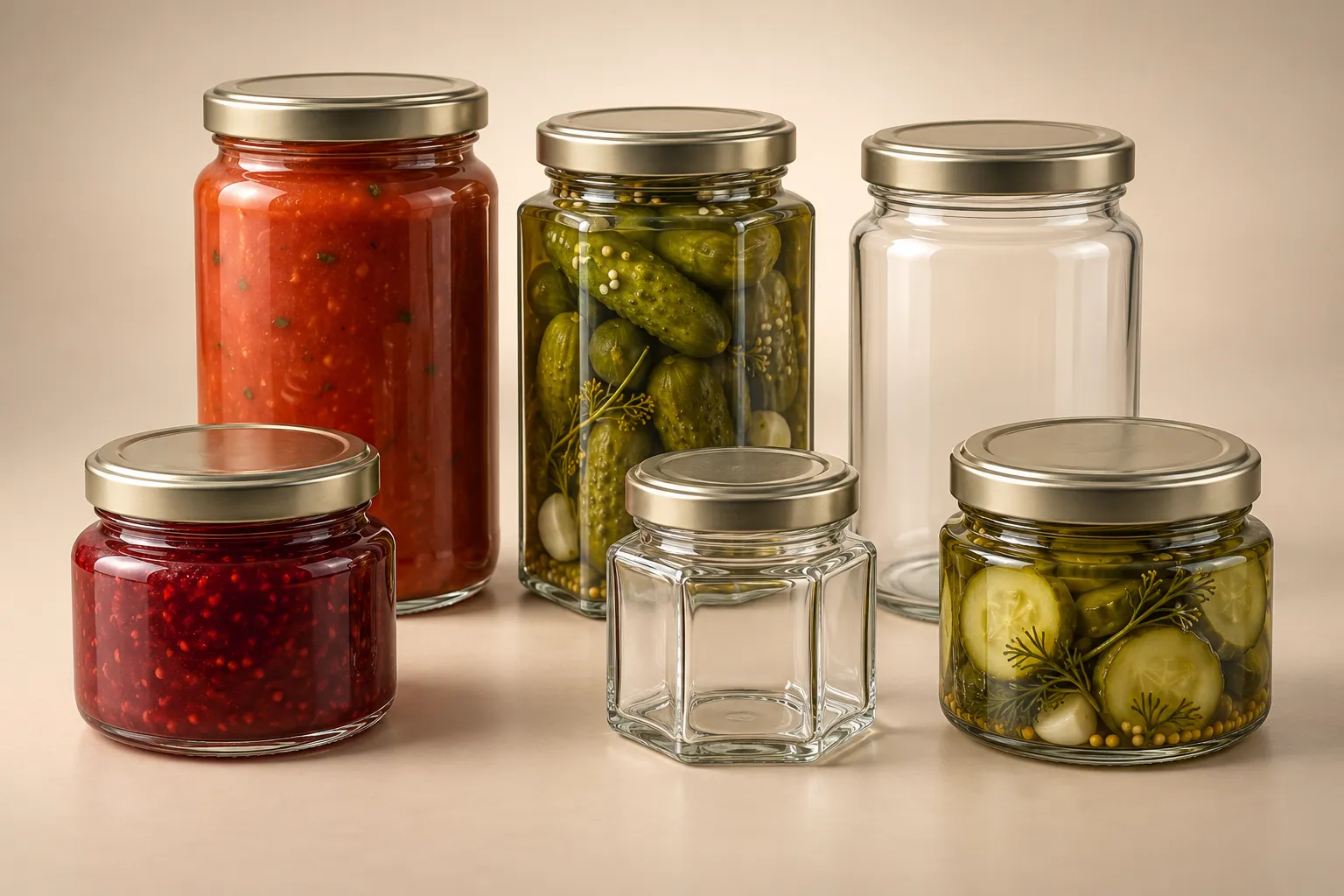
Glass Jars for Food: Choosing Shapes, Finishes and Closures
How to choose a food jar by treating the body, the finish and the closure as one package, with notes on lug, CT and PT caps, vacuum sealing and hot fill.
Read the guide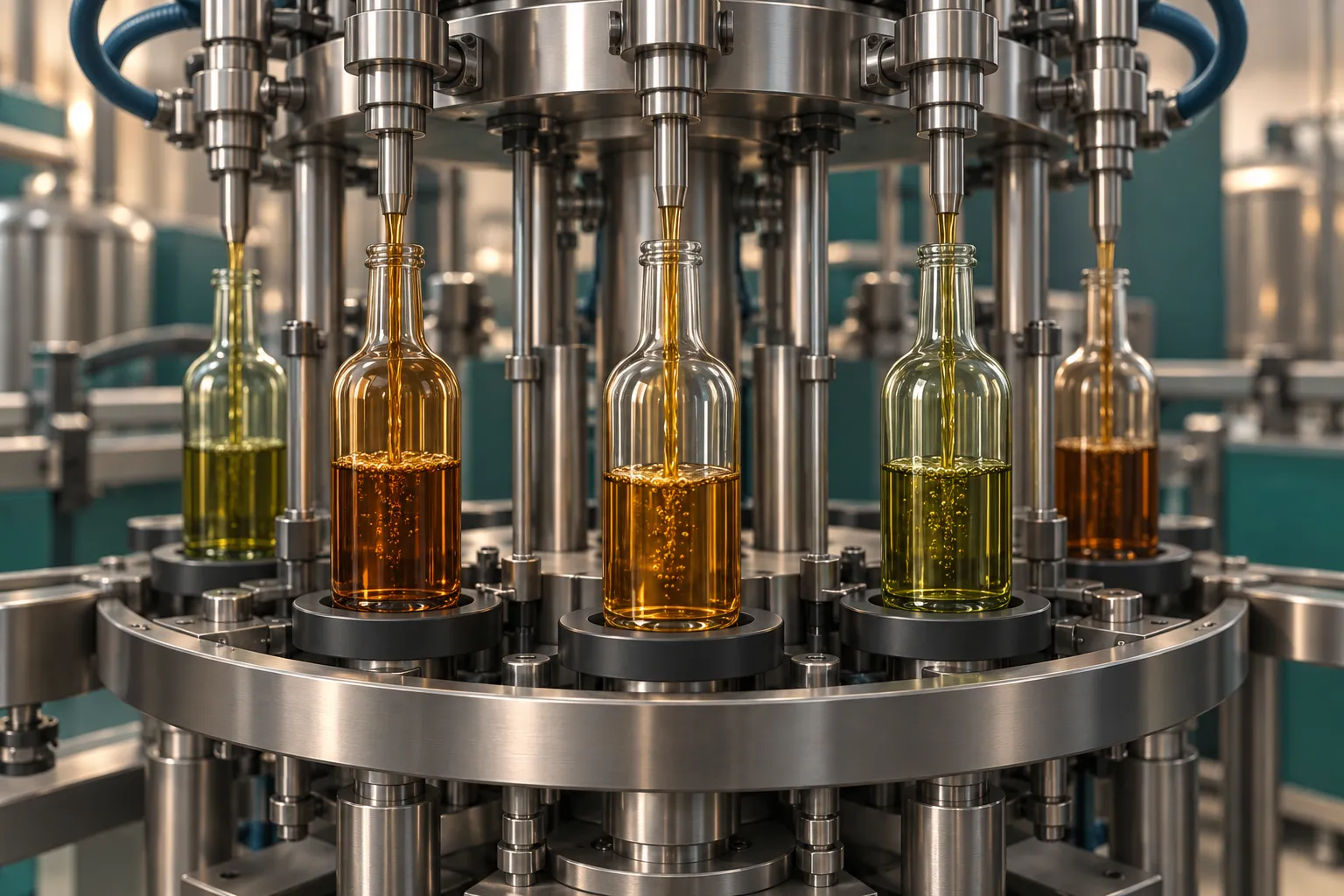
Glass Bottle Filling Machines: How to Compare Filling Principles
Compare gravity, vacuum, counter-pressure, piston and flowmeter filling for glass bottles by product, container and line fit, and learn what to ask suppliers.
Read the guide
Bottling Equipment RFQ Checklist: Comparing Supplier Proposals
How to write a bottling equipment RFQ so suppliers quote the same inputs, scope and performance basis, with a matrix for FAT, SAT, spares and warranty.
Read the guide